Road Trip: Conclusion

Road Trip

As we have gone through this series, we have made several stops where we found those who were traveling from one place to another.

  • On the road to Jericho, we found the Good Samaritan who stopped to help one who had fallen among robbers. This taught us a lesson about loving our neighbor.
  • On the road to Emmaus, we encountered two disciples who were visited by the resurrected Lord. There we learned about recognizing Jesus.
  • On the road to Gaza, we met a man from Ethiopia who studied the Scriptures with Phillip. This taught is about preaching Jesus.
  • On the road to Damascus, we were introduced to Saul who would later be known as the apostle Paul. Through this example we learned about converting the enemy.

In each of these examples, the individuals who traveled down these roads had the opportunity to do some good deed or learn some valuable lesson. Yet it is important to note that these opportunities and lessons were not the intended purpose of the journey. The travelers had other reasons for their trips, yet these noteworthy encounters met them along the way.Continue Reading

The Fruit of the Spirit

But the fruit of the Spirit is love, joy, peace, patience, kindness, goodness, faithfulness, gentleness, self-control; against such things there is no law” (Galatians 5:22-23).

In the passage above, Paul talked about the fruit of the Spirit. He listed several characteristics that would be included in this category. Those traits are what the fruit of the Spirit looks like.

He described this as fruit for a reason. Fruit is what grows on a tree or plant of some sort. It does not grow independently; instead, it is a natural product of the life of the plant. In the same way, these characteristics do not spring up independently in our lives; they are the natural product of the Spirit’s influence on our lives. This influence will affect our conduct as we “walk by the Spirit” (Galatians 5:16) and will impact our decisions as we are “led by the Spirit” (Galatians 5:18).Continue Reading

Does Persecution Cause the Church to Grow?

Persecution

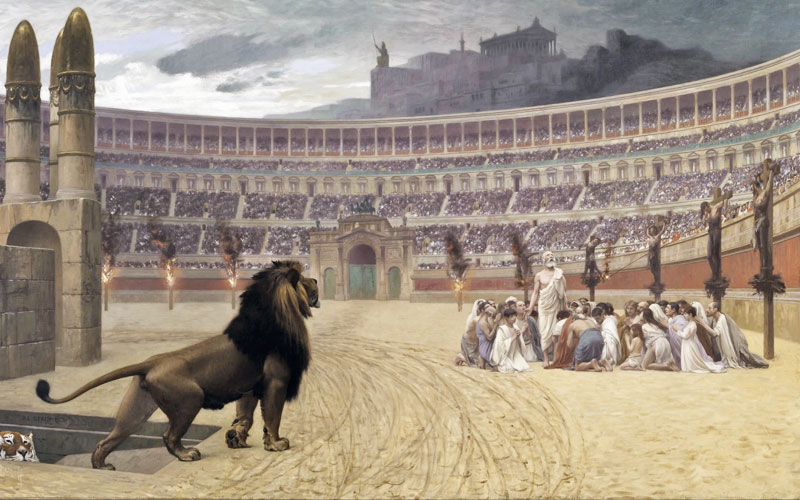
Following the death of Stephen, a time of persecution began against the church in Jerusalem. The result of this was that the disciples were scattered and the gospel was preached and received in other places.

Saul was in hearty agreement with putting him to death. And on that day a great persecution began against the church in Jerusalem, and they were all scattered throughout the regions of Judea and Samaria, except the apostles. Some devout men buried Stephen, and made loud lamentation over him. But Saul began ravaging the church, entering house after house, and dragging off men and women, he would put them in prison. Therefore, those who had been scattered went about preaching the word” (Acts 8:1-4).

The early church faced much persecution. It also experienced a lot of growth. We do not experience the same degree of persecution today (at least not in this country). We also do not see the same rate of growth (generally speaking).

Because of this, some have wondered if we might see more growth if we experienced persecution. If persecution and growth seem to go together, does that mean a lack of persecution will result in a lack of growth? It is a good topic to consider. So let us examine the question: Does persecution cause the church to grow?Continue Reading

The Church as a Self-Edifying Body

Legos

When we read through the New Testament, we find the church being described in several different ways. In the passage below, the church is depicted as a self-edifying body.

And He gave some as apostles, and some as prophets, and some as evangelists, and some as pastors and teachers, for the equipping of the saints for the work of service, to the building up of the body of Christ; until we all attain to the unity of the faith, and the knowledge of the Son of God, to a mature man, to the measure of the stature which belongs to the fullness of Christ.

As a result, we are no longer to be children, tossed here and there by waves and carried about by every wind of doctrine, by the trickery of men, by craftiness in deceitful scheming; but speaking the truth in love, we are to grow up in all aspects into Him who is the head, even Christ, from whom the whole body, being fitted and held together by what every joint supplies, according to the proper working of each individual part, causes the growth of the body for the building up of itself in love” (Ephesians 4:11-16).

In these verses, Paul indicated that when the church functions according to God’s design, it causes itself to grow and be built up. What does this mean? How did God design the church to do this? How are we to act in order to help accomplish this?

Let us consider these questions as we learn how the church is a self-edifying body.Continue Reading

Remember Those Who Led You

Hebrews 13:7

Remember those who led you, who spoke the word of God to you; and considering the result of their conduct, imitate their faith” (Hebrews 13:7).

People across the country are getting ready to celebrate Memorial Day – a day to remember those who died while serving in the armed forces. It is good for us to remember these individuals as their sacrifices have greatly contributed to our ability to lead a “tranquil and quiet life” (1 Timothy 2:2).

However, there are others who are worthy of our remembrance. The Scriptures teach that we should remember those who have led us in the faith. These will be the ones we will focus on in this article.Continue Reading

Plain Bible Teaching Podcast (Season 12)

Plain Bible Teaching Podcast

We recently wrapped up Season 12 of the Plain Bible Teaching Podcast. The theme of this season was Peter’s instruction to add to our faith (2 Peter 1:5-11). You can listen to the audio from all of the episodes on this page. You can also click on the link for each episode to see the show notes and download the audio files if you’d like.
Continue Reading

The Sect That Is Spoken Against Everywhere

Paul in Rome

When Paul came to Rome as a prisoner, he was permitted to meet with the Jewish leaders in that city. The apostle used this opportunity to explain why he was there – not as an enemy of the Jewish people but that he was suffering “for the sake of the hope of Israel” (Acts 28:17-20). The Jewish leaders had not heard about Paul, but they had heard about the church.

They said to him, ‘We have neither received letters from Judea concerning you, nor have any of the brethren come here and reported or spoken anything bad about you. But we desire to hear from you what your views are; for concerning this sect, it is known to us that it is spoken against everywhere” (Acts 28:21-22).

The church was this “sect…spoken against everywhere.” Why was this the case?

When we study the book of Acts, we find several reasons why the church was “spoken against everywhere.” As we follow the same pattern that they followed, this will often happen to us as well. We will be “spoken against” by others. It is not that we should seek out trouble or conflict. Paul told the Romans, “If possible, so far as it depends on you, be at peace with all men” (Romans 12:18). However, we do need to be prepared for this reality.Continue Reading