Blessings and Burdens of Spiritual Independence

Earlier this week, Americans celebrated Independence Day, commemorating the day when the thirteen colonies declared their independence from England. In breaking ties, the colonies affirmed that they were able to govern themselves and no longer needed to be dependent upon a distant monarch.

There were certainly blessings that came from this independence. The most notable were freedom and having a government that could better relate to the concerns of the people. However, with independence also comes burdens – additional responsibilities that must now be fulfilled by the independent entity since they would no longer be dependent upon others as they were previously.

Blessings and burdens will exist anytime a person or a people determine to be independent from others. It was true with the thirteen American colonies. At the time of the Exodus when the Israelite people became independent from the Egyptians, they enjoyed blessings (freedom from bondage) and faced burdens (they could no longer rely upon the Egyptians to provide for them – Exodus 16:3). When a young adult moves out of the house and becomes independent from his parents, there are blessings in his new independence and burdens in the greater responsibilities since he now has to provide for himself. Independence, in any context, contains both blessings and burdens.

In this article, I want us to examine our independence as it pertains to spiritual matters. Through the provisions He has given, God has made it so that each one of us can faithfully serve Him, regardless of what others might choose to do. This is not to say that we should not work together or that we cannot help one another; rather, we must take responsibility as individuals for our own spiritual lives.Continue Reading
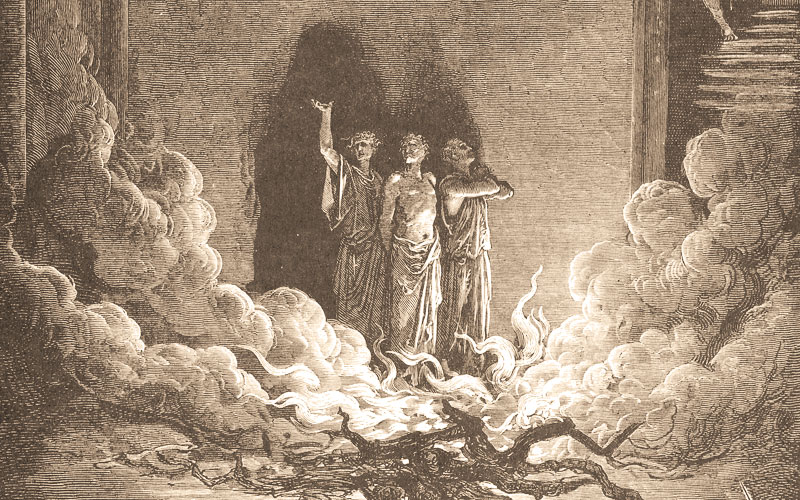

The Faith of Daniel’s Friends

Shadrach, Meshach, and Abed-nego

While the Jews were in Babylonian captivity, King Nebuchadnezzar made a huge, golden statue and commanded the people of every nation and language to fall down and worship the image when they would hear the sound of the music. Those who refused would be cast into a furnace of fire (Daniel 3:1-6).

Most of the people complied with the king’s order and worshiped the image at the prescribed times (Daniel 3:7). However, three young men – Shadrach, Meshach and Abed-nego – did not (Daniel 3:12). These men were among the Jews who had been taken captive and were companions of Daniel (Daniel 1:6-7). They now found themselves before an angry king:
Continue Reading

Resolutions for the New Year

Notebook

As one year quickly draws to a close and we look forward to a new year, we usually take some time for self-evaluation and making resolutions to improve our lives. Many resolutions that are made have to do with our lives here on this earth: improving our finances and health, eliminating bad habits, etc. These are all good, but we must remember that improving our spiritual lives is far more important.

For bodily exercise is only of little profit, but godliness is profitable for all things, since it holds promise for the present life and also for the life to come” (1 Timothy 4:8).

In the new year, you may get in shape, eat healthier, quit a bad habit, and get out of debt. Those are all great goals, but none of them will matter if your spiritual life is not in order. So as you make your resolutions for the new year, here are six suggestions for improving your spiritual life.
Continue Reading

What If Our Prayers Go Unanswered?

Prayer

James wrote, “The effective prayer of a righteous man can accomplish much” (James 5:16). With this in mind, many people pray to God hoping that their prayer will be answered. They want to have a divine response that is visible and tangible. When we pray for the sick, we want to see the sick recover. When we pray for someone’s safe travel, we want to see that they reach their destination without incident. When we pray for help finding a job, we want to actually find a job. There are many other examples as well. We pray and let our “requests be made known to God” (Philippians 4:6). Since “the effective prayer of a righteous man can accomplish much,” we expect to see – at least some of the time – real and positive responses from God to our prayers.

But what if we do not see this? What if our prayers, as far as we can tell, go unanswered? This is likely something that most of us have perceived at some point. It can be discouraging, but we should not allow it to shake our faith in God. After all, Paul wrote, “Faith comes from hearing, and hearing by the word of Christ” (Romans 10:17). It does not say that true faith comes as a result of something happening that we determine must be God’s answer to our prayer. Sadly, many allow their faith to be either established or shattered based upon their own labeling of certain events as being God’s answers to their prayers. This is purely subjective. This is not true Bible faith.
Continue Reading

Balm of Gilead

By Deror_avi - Own work, CC BY-SA 3.0, https://commons.wikimedia.org/w/index.php?curid=36512852

We sometimes sing the song, “Did You Think to Pray?” In one of the verses, it mentions the “Balm of Gilead.” This may be an unfamiliar term to us. What exactly is the Balm of Gilead? In order to have a better understanding and appreciation for the words we are singing, let us notice what the Bible says about it.
Continue Reading

Making the Most of Your Time

Pocket Watch

Each one of us is busy with obligations and responsibilities that have been placed upon us and that we have taken upon ourselves. Our lives can be hectic and we sometimes wonder how we will ever have time to do what we need to do. This is just as much of a challenge for Christians as it is for anyone else.

Paul provided some instructions about time management that would be good for us to heed:

Therefore be careful how you walk, not as unwise men but as wise, making the most of your time, because the days are evil” (Ephesians 5:15-16).

Continue Reading

God Knows What We Need Before We Ask

Prayer

In teaching about prayer, Jesus taught to avoid using “meaningless repetitions.” He explained that using “many words” does not mean that God is going to hear us any better (Matthew 6:7).

Jesus went on to explain one reason why repeating the same words over and over is meaningless: “Your Father knows what you need before you ask Him” (Matthew 6:8).
Continue Reading