An Unknown but Knowable God

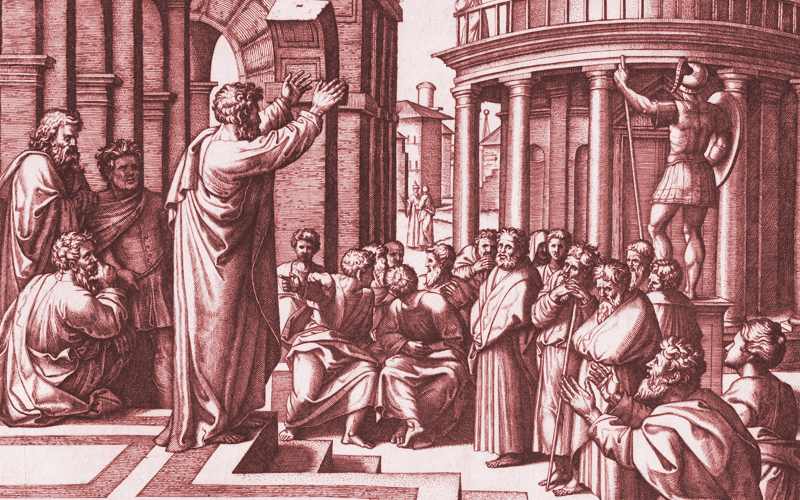
Paul preaching in Athens

When Paul was in Athens, Luke recorded that “his spirit was being provoked within him as he was observing the city full of idols” (Acts 17:16). This prompted him to teach “in the synagogue” and “in the market place every day with those who happened to be present” (Acts 17:17). His message piqued the interest of the philosophers who brought him to the Areopagus so they could hear more about the “strange things” (Acts 17:20) he was teaching.

Though the people of the city were “very religious” (Acts 17:22), the God of heaven was “unknown” (Acts 17:23) to them. So Paul proceeded to teach them about the one true God.

The God who made the world and all things in it, since He is Lord of heaven and earth, does not dwell in temples made with hands; nor is He served by human hands, as though He needed anything, since He Himself gives to all people life and breath and all things; and He made from one man every nation of mankind to live on all the face of the earth, having determined their appointed times and the boundaries of their habitation, that they would seek God, if perhaps they might grope for Him and find Him, though He is not far from each one of us; for in Him we live and move and exist, as even some of your own poets have said, ‘For we are His children.’ Being then the children of God, we ought not to think that the Divine Nature is like gold or silver or stone, an image formed by the art and thought of man” (Acts 17:24-29).

We encounter many today who are like the Athenians. They simply do not know God. How can we begin to teach them? Consider what Paul explained on this occasion to these pagan philosophers.Continue Reading

Answering Basic Questions (Part 7): What Is the Plan of Salvation?

Answering Basic Questions

Jesus came to earth and died on the cross in order to make salvation possible. But how can we take advantage of His sacrifice and be saved? The New Testament shows how this can be done.

So what is the plan of salvation? Let us consider four points in this article.Continue Reading

Here I Raise My Ebenezer

From time to time we sing the song, “O Thou Fount of Every Blessing.” The second verse begins with the phrase, “Here I raise my Ebenezer, hither by Thy help I’ve come.” This term (Ebenezer) is not one we use today, yet it is important for us to understand the words we sing. Paul said we are to “sing with the spirit, and…with the understanding also” (1 Corinthians 14:15, KJV).

In this article, we are going to look at the story in the Old Testament about the Ebenezer. This was a stone set up to remind the Israelites of an important lesson. As we look at this, we will see some lessons for us as well.Continue Reading

Practicing Church Discipline

Empty pews

Church discipline is often not a pleasant topic to discuss and is even more difficult to practice. Because of this, some congregations hardly discuss it at all. Then when a situation arises that requires it, they are either unsure how to proceed or they ignore it altogether and hope the problem simply goes away.

However, while church discipline is often difficult and painful to practice, there are times when it is absolutely necessary. Furthermore, the Scriptures show us that when it is done for the right reason and in the right way, it is actually for the good of the congregation and of the one from whom the church withdrew fellowship.

In this article, we are going to consider several passages in the New Testament that talk about this topic; but we will use Paul’s instructions in 1 Corinthians 5 as the outline for our study.Continue Reading

Why People Do Not Receive Jesus

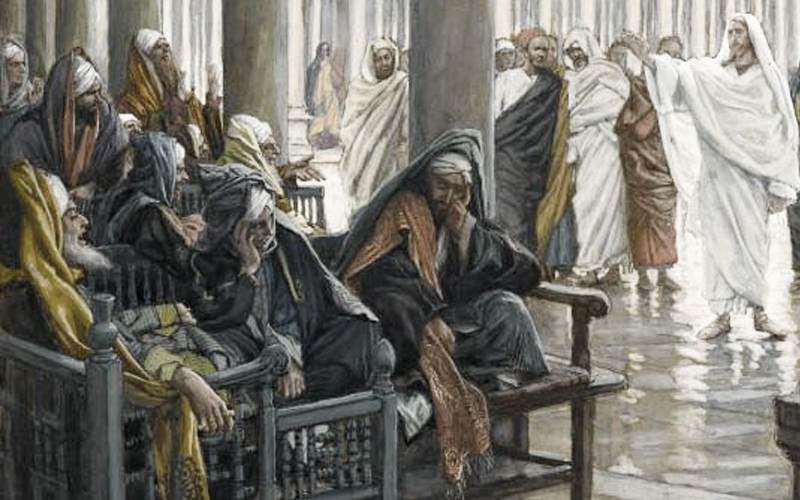
Scribes and Pharisees

He came to His own, and those who were His own did not receive Him. But as many as received Him, to them He gave the right to become children of God, even to those who believe in His name” (John 1:11-12).

When Jesus came and preached to the Jews, many “did not receive Him.” What does this mean?

Some today might explain this as receiving Jesus as their Savior and inviting Him into their heart. Certainly, we must see Jesus as our Savior; however, this is about more than that. This is about receiving Jesus as the Son of God and obeying Him as Lord. John said, “He who believes in the Son has eternal life; but he who does not obey the Son will not see life, but the wrath of God abides on him” (John 3:36). To believe in the Son is to accept that Jesus is the Son of God. To obey the Son is to recognize Him as Lord – the one with the right to rule over us and expect us to do His will.

In his gospel account, John recorded certain events in Jesus’ life. The purpose of this record was to produce faith in us (John 20:30-31). Yet today, many are like “His own” who “did not receive Him.” Why? People today will often reject Jesus for the same reasons that people did during His time on earth. We will not be considering an exhaustive list of the reasons why people refuse to accept Jesus, but will notice some of the reasons recorded for us in the gospel of John.Continue Reading

Thankful (Part 3): Thankful for God’s Mercy

Thankful

I thank Christ Jesus our Lord, who has strengthened me, because He considered me faithful, putting me into service, even though I was formerly a blasphemer and a persecutor and a violent aggressor. Yet I was shown mercy because I acted ignorantly in unbelief; and the grace of our Lord was more than abundant, with the faith and love which are found in Christ Jesus. It is a trustworthy statement, deserving full acceptance, that Christ Jesus came into the world to save sinners, among whom I am foremost of all. Yet for this reason I found mercy, so that in me as the foremost, Jesus Christ might demonstrate His perfect patience as an example for those who would believe in Him for eternal life” (1 Timothy 1:12-16).

As Paul wrote to Timothy, he told of his own background as a persecutor of the church and how he considered himself as the “chief” of sinners (KJV). Yet he was able to be forgiven and become a part of the Lord’s work because of the mercy that was shown to him. He explained to Timothy that the Lord’s treatment of him is an example for all believers. As Paul received mercy, we also receive mercy from God. As Paul thanked the Lord for this, we are to be thankful for God’s mercy as well.Continue Reading

Regular Christians (Part 12): John Mark

Regular Christians

John Mark was one who departed, but returned to faithfulness. We can read about his failing during the first preaching tour of Paul and Barnabas.

Now Paul and his companions put out to sea from Paphos and came to Perga in Pamphylia; but John left them and returned to Jerusalem” (Acts 13:13).

Continue Reading