A False Sense of Security

The prophet Amos said, “Woe to those who are at ease in Zion and to those who feel secure in the mountain of Samaria” (Amos 6:1). Amos was prophesying of the coming judgment against the nation of Israel. Despite the warnings, the people felt at ease. They believed they were safe and that nothing could happen to them. Yet they were not safe. They had a false sense of security.

Just before this he spoke of the “day of the Lord” (Amos 5:18). Throughout Scripture, this phrase is used to denote judgment – punishment of the wicked and reward of the righteous. Those who were “at ease” and felt “secure” (Amos 6:1) would look forward to this day. The righteous should always look forward to the day of the Lord. Yet these people had no reason to look forward to it.
Continue Reading

Quenching the Spirit

Near the close of Paul’s first epistle to Thessalonica, he gave several brief exhortations. One of these was the instruction, “Do not quench the Spirit” (1 Thessalonians 5:19). What does it mean to “quench the Spirit”? The Greek word that is translated quench means to extinguish, or put out. This makes us think of extinguishing a fire. The word of God is compared to a fire elsewhere as Jeremiah described it as “a burning fire shut up in my bones” (Jeremiah 20:9).

We should also remember that the gospel is “the power of God for salvation” (Romans 1:16). To “quench the Spirit” is to remove the power from the gospel. After all, the revealed word is the product of the Spirit (2 Timothy 3:16; 1 Corinthians 2:10-13; John 15:26-27). The gospel is designed to convert the lost and edify the saved. Quenching the Spirit prevents these things and, ultimately, will cause us to forfeit our salvation. So we should look at how we are to preach so as not to quench the Spirit. How do we “quench the Spirit”?
Continue Reading

A Brief Review of Calvinism

We are not to believe everything we hear. John warned, “Do not believe every spirit, but test the spirits to see whether they are from God, because many false prophets have gone out into the world” (1 John 4:1). We test the spirits (teachers and their teaching) by the inspired, infallible word of God (2 Timothy 3:16; John 17:17; Psalm 119:160).

Some of the most common doctrines in the denominational world fall under the heading of Calvinism. Calvinism simply refers to the doctrines and teachings of John Calvin and his followers. Calvin was a theologian from the 1500′s who greatly influenced the Reformation movement. He was a brilliant man, but brilliance does not always translate into faithfulness to God or one accurately handling His word (cf. 1 Corinthians 1:26-27). These doctrines are accepted by many, but are not taught in the word of God.
Continue Reading

The Purpose of Preaching

Man with Open Bible

From the beginning of the New Testament we read about preaching. First we see John the Baptist “preaching in the wilderness of Judea” (Matthew 3:1). A little while later “Jesus began to preach” (Matthew 4:17) and went “throughout all Galilee, teaching in their synagogues and proclaiming the gospel of the kingdom” (Matthew 4:23). Jesus commanded His disciples on different occasions to go out and preach the gospel (Luke 9:1-6; Mark 16:15; Acts 1:8). Throughout the New Testament, this is what we see – the gospel being preached. Though men may see this as foolish, this is what God desires (1 Corinthians 1:18-21).

God designed preaching to accomplish certain things. Let us notice the purpose of preaching.
Continue Reading

Doing the Will of God

Man at Sunset

Not everyone who says to Me, ‘Lord, Lord,’ will enter the kingdom of heaven, but he who does the will of My Father who is in heaven will enter. Many will say to Me on that day, ‘Lord, Lord, did we not prophesy in Your name, and in Your name cast out demons, and in Your name perform many miracles?’ And then I will declare to them, ‘I never knew you; depart from Me, you who practice lawlessness’” (Matthew 7:21-23).

In the Sermon on the Mount (Matthew 5-7), Jesus described the character of one who would be a citizen of His kingdom. The kingdom is open to all; but sadly, not all will choose to enter. Who is it that will enter the kingdom? Jesus said, “He who does the will of My Father who is in heaven will enter.” Do we want to be a part of God’s kingdom? If so, we need to do the will of God.
Continue Reading

The Love of the Truth

Then that lawless one will be revealed whom the Lord will slay with the breath of His mouth and bring to an end by the appearance of His coming; that is, the one whose coming is in accord with the activity of Satan, with all power and signs and false wonders, and with all deception of wickedness for those who perish, because they did not receive the love of the truth so as to be saved” (2 Thessalonians 2:8-10).

Those who do not possess a love of the truth will be lost. Their fate will be the same as the “lawless one” – the one who acts contrary to God’s revealed will who will be slain by the Lord. Why is it that we need to have a “love of the truth” in order to be saved? What will a love of the truth cause us to do?
Continue Reading

Calling on the Name of the Lord

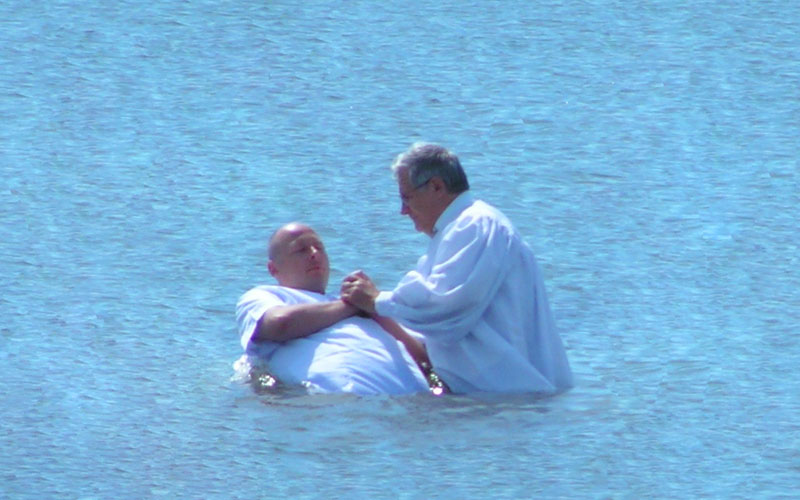
Baptism

The Scriptures plainly teach that calling on the name of the Lord results in salvation. Nowhere is this affirmed more plainly than in Romans 10:13 – “For ‘Whoever will call on the name of the Lord will be saved.’” I would imagine that the vast majority of professing Christians believe that we must call on the name of the Lord in order to be saved. The point in which we have controversy is how we call on His name.
Continue Reading