The Gospel of the Grace of God

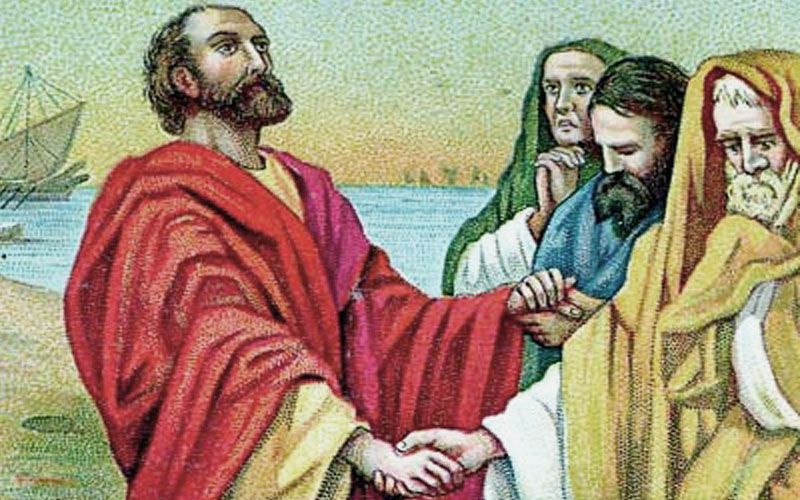
Paul and the Ephesian Elders

On his way to Jerusalem, Paul stopped in Miletus to meet with the elders from the church in Ephesus (Acts 20:17ff). In this farewell address, Paul reminded them that the message he brought to them was “the gospel of the grace of God” (Acts 20:24). This was the message that Paul preached “everywhere in every church” (1 Corinthians 4:17). He preached the gospel to those who were already Christians (Romans 1:15) and to those who had not yet heard of Jesus (Romans 15:20). The gospel is the message that Jesus told His apostles to preach (Mark 16:15) and is the message that we must preach today (Galatians 1:8-9).
Continue Reading


Those Who Will Be Saved

Open Bible

Shortly before His ascension, Jesus gave His apostles the Great Commission: “Go into all the world and preach the gospel to all creation. He who has believed and has been baptized shall be saved; but he who has disbelieved shall be condemned” (Mark 16:15-16). This passage succinctly tells us who it is that will be saved. Those who believe and are baptized will be saved.

This order seems pretty simple. A person believes, then they are baptized, and then they are saved. Though this seems simple, many have the order wrong. They think that a person believes, then they are saved, and sometime later they are baptized. This is not what Jesus taught. He taught that those who will be saved are those who believe and are baptized.
Continue Reading

The Free Gift of God

Gift

For the wages of sin is death, but the free gift of God is eternal life in Christ Jesus our Lord” (Romans 6:23).

Many use this verse to show that we are saved by the grace of God and that there is nothing we can do to affect our salvation. In other words, works (acts of obedience) are not necessary for salvation. We all recognize the fact that “all have sinned and fall short of the glory of God” (Romans 3:23), so it is true that all are deserving of spiritual death. But those who say grace is unconditional try to say that those who believe grace is conditional also believe they can earn their salvation.
Continue Reading

What is the church of Christ?

There are many different churches across the religious landscape. Each of them is distinct in name, doctrine, and practice.

You may have heard of a church of Christ. It is possible you know someone who is a part of a church of Christ. Is this just another denomination like all the rest? Or is it different? What is the church of Christ?
Continue Reading

Rebaptism

From time to time, the question arises as to whether or not one who has been baptized needs to be baptized again. This is an important question to answer given the emphasis the New Testament places upon baptism. Some may be quick to point out that we do not read of a second baptism, or “rebaptism” in Scripture. But the fact that a second baptism is not mentioned does not automatically mean that the practice is unauthorized. However, since it is not specifically mentioned, we must consider certain principles to help us answer the question.
Continue Reading

Looking at the Big Picture

The sum of Your word is truth” (Psalm 119:160).

Considering only one verse to prove a point can be dangerous. Many verses, when taken out of context, have several plausible interpretations. But if we settle on one interpretation without considering the sum of God’s word, we can easily find ourselves with an improper understanding of God’s will. Consider the following example with reference to salvation:
Continue Reading

Constants in a Changing World

River

This world is full of constant change. Many things come and go, whether they are people, cultures, governments, trends, or fashions. Yet the writer of Ecclesiastes noted, “There is nothing new under the sun” (Ecclesiastes 1:9). The changes we see are just perpetual cycles that exist in this world. But in the midst of the changes we face in this life, there are certain fundamental truths that will always remain constant.
Continue Reading