Righteousness Exalts a Nation (Season 13, Episode 1)

Subscribe: iTunes | Stitcher | RSS

Righteousness Exalts a Nation (Season 13, Episode 1)

In this season, we’re discussing social issues – problems that are facing our society and what the Bible has to say about these issues.

Righteousness exalts a nation, but sin is a disgrace to any people” (Proverbs 14:34). As we discuss issues that face our society, we must seek to determine what is righteous. The standard of righteousness is found in the word of God (Romans 1:16-17; 2 Timothy 3:16). Therefore, we need to consider the Scriptures as we try to navigate the wicked and difficult world in which we live.

Mentioned in this episode:

  • Plain Bible Teaching Quarterly Review – Free PDF for Plain Bible Teaching subscribers. Sign up here!

If you found this episode to be useful, please share it with others. Also, if you enjoyed the podcast, please leave a rating on iTunes or Stitcher. This also helps others hear about the podcast. Thanks.

Who Is to Blame for the Abortion Tragedy?

Ultrasound

Many who defend the practice of abortion attempt to classify it under the heading of “health care” or as “a woman’s right to choose.” The reality is that the practice of abortion is the act by which the life of a child in the womb is deliberately terminated. In other words, when an abortion is performed, an unborn child (a human being) is intentionally killed.

In our society, the issue about abortion has shifted away from the question about when life begins. If it does not matter when life begins, then it does not matter when an abortion occurs. This means one of two things:

  1. EITHER abortion is wrong at every stage of pregnancy (this is the pro-life position);
  2. OR abortion is acceptable at every stage of pregnancy, even up to the point of birth (this is now the pro-abortion position).

Continue Reading

Secularism

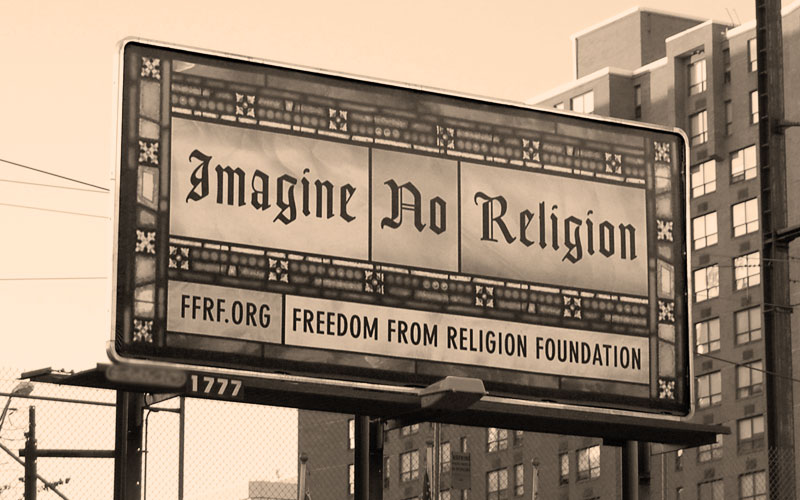
Imagine No Religion (billboard)

In his letter to the saints in Rome, Paul described the condition of the Gentile world as a whole: “And just as they did not see fit to acknowledge God any longer, God gave them over to a depraved mind, to do those things which are not proper” (Romans 1:28). They had rejected God in favor of their “gods.” Their “gods” – since they were a product of their own imagination – allowed them to do anything they wanted to do. As a result, they no longer felt hindered by God’s laws.

We live under similar conditions today. People in our society do not serve the same idols, but the similarity is in the sense that people see no reason to follow God’s laws. They are content to live without seeing any need for religion. This is secularism.

We live in an increasingly secular society. There are certain challenges that come with this. But why is a secular society a challenge for Christians? Let us consider secularism and the challenges it presents in this article.
Continue Reading

What Hasn’t Changed Since the Election

Sunrise

The United States has just gone through an unpredictable and divisive Presidential campaign season. Our society has changed a lot over the last few decades and more changes are surely coming – whatever those changes might be. Yet there are certain things that have not changed since the election and will not change. In this article, we are going to consider six things that this election has not changed.

Note: This article was written before the election. This was done deliberately. I wanted to be sure to focus on what is true regardless of what the results might be and not react to whatever might have happened in the election. With that being said, let us consider six things that have not changed.
Continue Reading

The Entitlement Mentality

Minimum Wage

Our society has developed what is often called an “entitlement mentality” – particularly among the young, but it is still widespread through all ages. Those with this attitude believe that because they exist, they are entitled to certain things (standard of living, happiness, interpretation of truth, etc.).

The Israelites adopted this mindset while they were in Egypt. Despite their sufferings, they became accustomed to what they enjoyed there. While they were enslaved, they “cried out” to God “for help because of their bondage” (Exodus 2:23). After a series of plagues, God delivered them from bondage (Exodus 13:3). However, even with their newly acquired freedom, they complained about what they lacked:
Continue Reading

The Need for Godly Men

Man at Sunset

Over the last several years, our society has become more corrupt, immoral, confused, and dangerous. At the same time, feminism has attacked the role of men in society, homosexuality and same-sex “marriage” have perverted the role of men in the home, and transgenderism is now seeking to normalize the idea of men ceasing to be men. This is not a coincidence. The result of men not being men, particularly godly men, has had a direct impact upon the deterioration of our society.
Continue Reading

Bible Lessons for Times of Civil Unrest

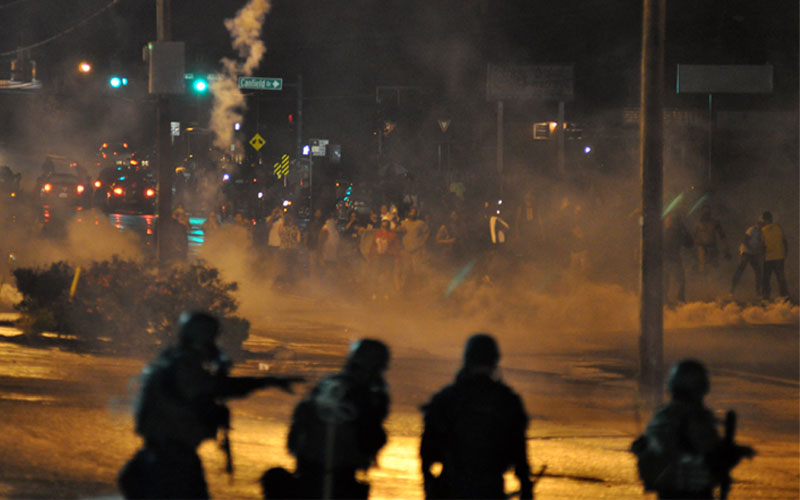
Ferguson Riots

Then all the city was provoked, and the people rushed together, and taking hold of Paul they dragged him out of the temple, and immediately the doors were shut. While they were seeking to kill him, a report came up to the commander of the Roman cohort that all Jerusalem was in confusion. At once he took along some soldiers and centurions and ran down to them; and when they saw the commander and the soldiers, they stopped beating Paul. Then the commander came up and took hold of him, and ordered him to be bound with two chains; and he began asking who he was and what he had done. But among the crowd some were shouting one thing and some another, and when he could not find out the facts because of the uproar, he ordered him to be brought into the barracks. When he got to the stairs, he was carried by the soldiers because of the violence of the mob; for the multitude of the people kept following them, shouting, ‘Away with him!’” (Acts 21:30-36).

In the passage above, Luke recorded an episode of civil unrest in the city of Jerusalem. When we see news stories about protesting, rioting, and looting in major cities, we need to remember that this is nothing new (cf. Ecclesiastes 1:9). The unrest in Jerusalem was marked by violence, confusion, an increased military presence, and protests. In a similar situation in Philippi, there was also injustice on display as the authorities had Paul and Silas wrongly beaten and imprisoned (Acts 16:22-24, 37). We see the same things today during times of civil unrest.

These news stories of protesting, rioting, and looting in response to an act of injustice (real or perceived) by law enforcement happen much too frequently in our society. During such times of civil unrest, while specific details may vary in each situation, there are certain Biblical principles that we need to remember. Let us be reminded of some of these principles now.
Continue Reading