How Can People Know We Are Christians?

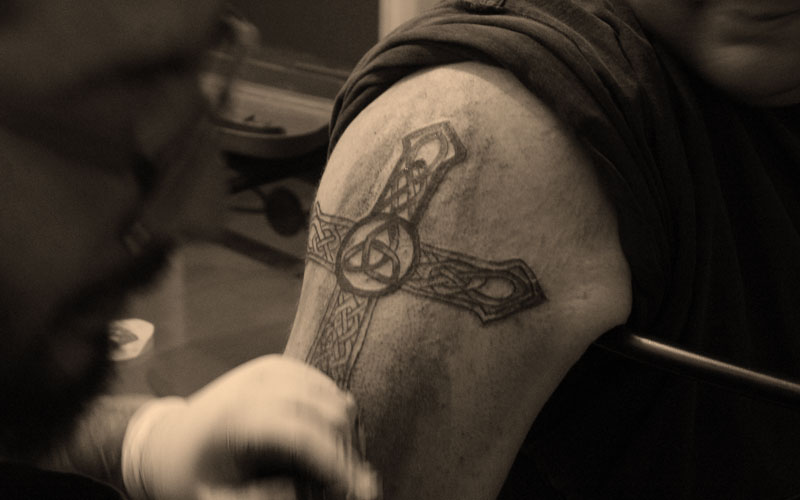
Cross Tattoo

I recently read an article that talked about a group using tattoos as a fundraiser for a church project. Those who were participating were getting tattoos that were meant to convey the message that they were Christians. On one hand, it is tempting to see this as commendable. With tattoos being (relatively) permanent, one could argue that they can be a good expression of our commitment to following Jesus.

However, the Bible never says that Christians are to indicate their identity as disciples of Jesus by some markings on their skin. In fact, the concept is just like the practice of the Pharisees who would “broaden their phylacteries and lengthen the tassels of their garments” (Matthew 23:5). The Pharisees wanted people to see, based upon the accessories that they wore, that they were zealously religious. Those who get tattoos (or wear certain jewelry or clothing) that are designed to convey a religious message and identify them as Christians are doing the same thing.

Jesus said there is another way that people should recognize us as being His followers – it is by the fruit that is produced in our lives.
Continue Reading

The Evils of Alcohol

Alcoholic

Many have questions about the use of alcohol – whether or not a Christian can or should drink and whether we should condone (or even advocate for) the practice. While many might have different opinions about this, we need to know what the Bible says about it. So in this article, we are going to consider what the Bible says about the evils of alcohol.
Continue Reading

Those Who Have No Right to Speak God’s Word

Microphone

We sometimes hear celebrities, politicians, and other godless people quoting (or misquoting) the Bible. They often do so in an attempt to defend an unscriptural position (e.g. support for same-sex “marriage,” opposition to the death penalty, etc.). When we hear them, we might think, “What business do they have in speaking about the Bible?” God asked the same type of question in the following text.

But to the wicked God says, ‘What right have you to tell of My statutes and to take My covenant in your mouth? For you hate discipline, and you cast My words behind you. When you see a thief, you are pleased with him, and you associate with adulterers. You let your mouth loose in evil and your tongue frames deceit. You sit and speak against your brother; you slander your own mother’s son. These things you have done and I kept silence; you thought that I was just like you; I will reprove you and state the case in order before your eyes” (Psalm 50:16-21).

There are certain ones who have no right to speak God’s word. Let us notice who was identified in the text.
Continue Reading

Using Our Bodies as Instruments of Righteousness

Romans 6:13

Therefore do not let sin reign in your mortal body so that you obey its lusts, and do not go on presenting the members of your body to sin as instruments of unrighteousness; but present yourselves to God as those alive from the dead, and your members as instruments of righteousness to God. For sin shall not be master over you, for you are not under law but under grace” (Romans 6:12-14).

Our bodies can be used one of two ways – either for God or for sin. As Christians, we are to present our bodies as living sacrifices to God (Romans 12:1). Our bodies are “for the Lord” (1 Corinthians 6:13); therefore, Paul said, “Glorify God in your body” (1 Corinthians 6:20).

How do we use the members of our bodies as instruments of righteousness? Let us consider what the Scriptures teach about this.
Continue Reading

Make No Provision for the Flesh

Romans 13:13-14

Let us behave properly as in the day, not in carousing and drunkenness, not in sexual promiscuity and sensuality, not in strife and jealousy. But put on the Lord Jesus Christ, and make no provision for the flesh in regard to its lusts” (Romans 13:13-14).

When Paul told the saints in Rome to “make no provision for the flesh,” his admonition had a specific context. He was not warning them about food and shelter for the body. These are necessities (1 Timothy 6:8) and Christians must make provisions in regard to these things (Acts 20:34; 2 Thessalonians 3:8-10). Neglecting such things does not make one more spiritual and righteous. Instead, when Paul addressed this sort of “severe treatment of the body,” he called it “self-made religion” that was “of no value against fleshly indulgence” (Colossians 2:23).

Rather than warning against the necessities of this life, Paul warned the Romans about the lusts of the flesh. James explained why lust is so dangerous:

But each one is tempted when he is carried away and enticed by his own lust. Then when lust has conceived, it gives birth to sin; and when sin is accomplished, it brings forth death” (James 1:14-15).

Continue Reading

The Application of Wisdom: Speech (Part 3)

Notes on Proverbs

As we noticed in the previous section, we should never underestimate the power of words – both good and evil. Understanding how important our speech is, we must be sure that our words reflect wisdom at all times.
Continue Reading

The Application of Wisdom: Speech (Part 2)

Notes on Proverbs

We sometimes hear the saying, “The pen is mightier than the sword.” This concept of words being more powerful than physical force is similar to the idea expressed by Solomon: “Death and life are in the power of the tongue” (18:21). Words are powerful. The wise man shows us the power of both good and evil words.
Continue Reading