Pray for Those in Authority

Prayer

One of our specific obligations in prayer is to pray for those in positions of civil authority. Paul made this clear in his first letter to the young evangelist Timothy:

First of all, then, I urge that entreaties and prayers, petitions and thanksgivings, be made on behalf of all men, for kings and all who are in authority, so that we may lead a tranquil and quiet life in all godliness and dignity. This is good and acceptable in the sight of God our Savior, who desires all men to be saved and to come to the knowledge of the truth” (1 Timothy 2:1-4).

Not only did Paul teach that Christians are to pray for their leaders, he explained why we are to pray for them. There is a specific desire for which we should pray that is according to the will of God. Before we consider this, we should first be reminded of the purpose for which God ordained civil authorities.
Continue Reading

We Will Go, Worship, and Return (1/19)

Thought from today’s Bible reading from Genesis 22-24.

Abraham said to his young men, ‘Stay here with the donkey, and I and the lad will go over there; and we will worship and return to you’” (Genesis 22:5).

There is nothing particularly unusual about a father and son going somewhere to worship. Lots of people worship God. It is certainly commendable but not particularly unusual.

What makes Abraham’s plan remarkable are the circumstances. God told him to sacrifice his son (Genesis 22:2), and Abraham was prepared to do it (Genesis 22:6,9-10). Only an angel’s intervention prevented him from offering Isaac on the altar (Genesis 22:11-12). This demonstrates Abraham’s great faith and shows his trust in God’s promises and His commandments.
Continue Reading

Blessed Be the Name of the Lord (1/4)

Thought from today’s Bible reading from Job 1-5.

Blessed be the name of the Lord” (Job 1:21).

It is typically easier and more natural to praise God during times of blessing and prosperity. Yet this was not the occasion with Job. He had just received word that his sons and daughters and much of his wealth was gone. All of this was unexpected. Satan was sure this would provoke Job to curse the Lord (Job 1:11). Yet notice Job’s response to this great calamity:
Continue Reading

After the Flood

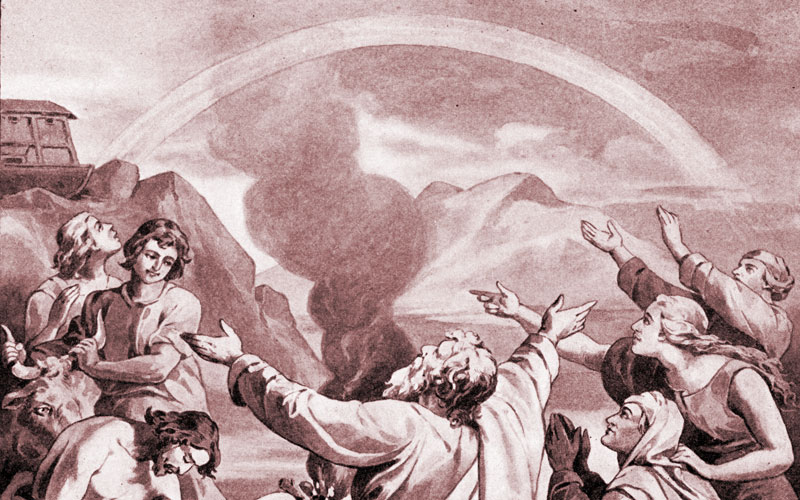
Noah and the Rainbow

Children grow up learning about Noah and the ark. As adults, we study the record of the flood and strive to learn the lessons it teaches – why it happened, how Noah was saved, Noah’s example of obedience, as so on. But there are also important lessons for us that came immediately after the flood. We will notice a few in this article.Continue Reading

Finding Reasons to Praise God in the Midst of an Economic Crisis

Our struggling economy took another hit when the United States’ credit rating was downgraded for the first time in history. This sent the stock market tumbling and made many people even more anxious about the future. Whether this is just a bump in the road or the trigger to the economic downfall of the United States remains to be seen. But even during uncertain times like these, we should be reminded of some important reasons why we ought to praise God.
Continue Reading

Some Reflections on the 2011 Florida College Chorus Tour

Being a former student of Florida College and knowing a good number of people who have an affinity to the school, I thought it was important to pass along this article about the troubling practice of the Florida College Chorus performing religious songs.

The performance of these types of songs by the Chorus is nothing new. But the announcement for this year’s tour indicated that “songs, narrations, and scripture readings focusing on the death and resurrection of Jesus” would be included in the performance. During the two years I attended Florida College, I never attended a Chorus concert (even then, I was uncomfortable with these religious songs being performed as entertainment). Shortly after leaving the school, I reluctantly agreed to attend one of these performances when the Chorus came to town on their tour — perhaps I would see my concerns were unfounded (I learned they were not). But I do not remember “narrations and scripture readings” being part of the performance. This appears to be one more step away from the New Testament pattern and toward a pattern of denominational-styled worship experiences.
Continue Reading

Lessons from the Melodeon at Midway

Midway Melodeon

One of the most significant events of the Restoration Movement was the introduction of a melodeon in the assembly of the church in Midway, Kentucky. According to L.L. Pinkerton, the preacher at Midway, this was the first time an instrument had been successfully introduced among those of the Restoration Movement. He made this claim in 1860.

The reason why this was significant was because of the plea voiced by the preachers of the Restoration – speak where the Bible speaks and be silent where it is silent. Every religious practice would have to pass the test of Scripture. If one could not demonstrate that a practice was according to the New Testament pattern (2 Timothy 1:13), that practice was to be rejected because everything must be done by the authority of Christ (Colossians 3:17). Therefore, instrumental music in worship was widely rejected in the Restoration Movement. It did not fit the pattern revealed in the New Testament which, therefore, made it unauthorized.

So how did the melodeon find its way into the worship of the church in Midway? It certainly did not happen overnight. If we can learn the lessons from this event, then we will hopefully be prepared to guard ourselves against potential apostasies today.
Continue Reading