Forgetting the Past

Hand Reaching

In writing to the church in Philippi, Paul spoke of the pursuit of his goal – the resurrection of the dead to the hope of eternal life. This should be our goal as well.

Brethren, I do not regard myself as having laid hold of it yet; but one thing I do: forgetting what lies behind and reaching forward to what lies ahead, I press on toward the goal for the prize of the upward call of God in Christ Jesus” (Philippians 3:13-14).

Continue Reading

A Better Country

Following an election like we have had in this country, it is expected that some will be pleased with the outcome and some will not. As Christians, whatever side on which we fall, in this and every election, it is important to keep things in perspective.

Those of us who live in the United States of America have the blessing of being able to live in what is arguably the greatest country on earth. We have the freedom to worship God and teach the gospel. We have the opportunity to work and provide for our families. We live without fear of persecution or harassment from the government. Many around the world cannot ever expect to experience these blessings in their lifetime.

However, as great as this country is, we seek a better country. This better country is not contained in campaign promises and political rhetoric. It is not obtained through congressional legislation or presidential policy. It is not preserved and maintained by law enforcement and military might. The better country we desire is one we will never see here on earth.

Continue Reading

The Lord’s Prayer in the Garden

Jesus in the Garden

Shortly before His arrest, trials, beatings, and crucifixion, Jesus spent time in the Garden of Gethsemane praying to the Father. Some interpret this prayer in such a way as to try and show that Jesus was praying that He might escape death. They say that this was a moment of weakness for Jesus and describe Him as being in dread of the cross. They depict Jesus (perhaps unwittingly) as if He were some miserable coward. Can such an interpretation be correct?

Notice Matthew’s account of the Lord’s prayer:

Then Jesus came with them to a place called Gethsemane, and said to His disciples, ‘Sit here while I go over there to pray.’ And He took with Him Peter and the two sons of Zebedee, and began to be grieved and distressed. Then He said to them, ‘My soul is deeply grieved, to the point of death; remain here and keep watch with Me.’ And He went a little beyond them, and fell on His face and prayed, saying, ‘My Father, if it is possible, let this cup pass from Me; yet not as I will, but as You will.’ […] He went away again a second time and prayed, saying, ‘My Father, if this cannot pass away unless I drink it, Your will be done” (Matthew 26:36-39, 42).

After reading of His prayer, let us seek to answer this question: Did Jesus wish to avoid the cross?
Continue Reading

The Importance of Assembling

People (silhouettes)

Last month I posted an article titled, The Importance of the Assembly. The article was an exhortation for brethren to not forsake the assembly of the local church and showed why the assembly is important.

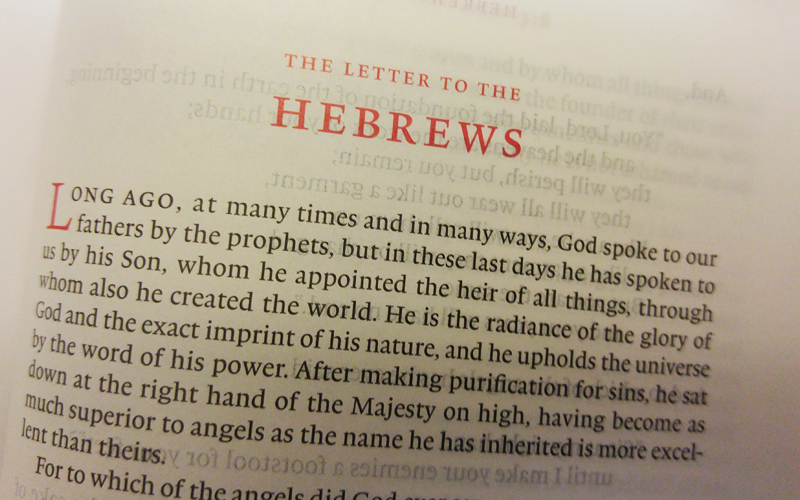
As we should understand the importance of the assembly, there is something else we must also understand. The assembly should not be the extent of our interaction with our brethren. The Hebrew writer gave this instruction:
Continue Reading

The Anti-Christ

Periodically, different ones will make the claim that the end of the world is near. They point to various “signs” that indicate that the time is upon us. These signs are ripped from the book of Revelation and other places in the Bible with no regard to the context or the purpose of the book. The reality is that “the day of the Lord will come like a thief” (2 Peter 3:10), not with signs so we will expect it. But this certainly does not keep people from creating these fanciful theories.

One of the supposed signs of the end is the coming of the “anti-christ.” This entity is often linked with the beasts of Revelation 13. Many believe the anti-christ will be some political leader. Some have even suggested certain leaders in this country as the anti-christ. But I can tell you with certainty that none of these are the anti-christ.
Continue Reading

The Eternal Gospel

Crosses

We generally divide Biblical history into three dispensations: the Patriarchal age, Mosaic age, and the Gospel age. When people speak of “dispensations,” they are simply referring to the method by which God revealed His will to man. First He revealed His will to the heads of families (Patriarchal age). Then He gave the nation of Israel the Law of Moses (Mosaic age). Finally, the gospel of Christ was revealed (Gospel age). We live in this third and final dispensation.

While these are perfectly acceptable distinctions, we need to recognize that the gospel is different from the other messages that have been delivered. In the book of Revelation, this final message is described as “an eternal gospel” (Revelation 14:6). When we talk about the three dispensations, we ought to recognize that the gospel had its beginning before either of the first two.

The term gospel simply means “good news.” The “good news” is the message of Christ and His salvation. As we can see from the Scriptures, this good news began long before we read of it in the New Testament.
Continue Reading

Do Not Move the Ancient Boundary

Landmark

Do not move the ancient boundary which your fathers have set” (Proverbs 22:28).

This short proverb refers to instructions that were given in the Law of Moses (Deuteronomy 19:14; 27:17). Job gave us a reason why someone would want to move these boundary marks: “Some remove the landmarks; they seize and devour flocks” (Job 24:2).
Continue Reading