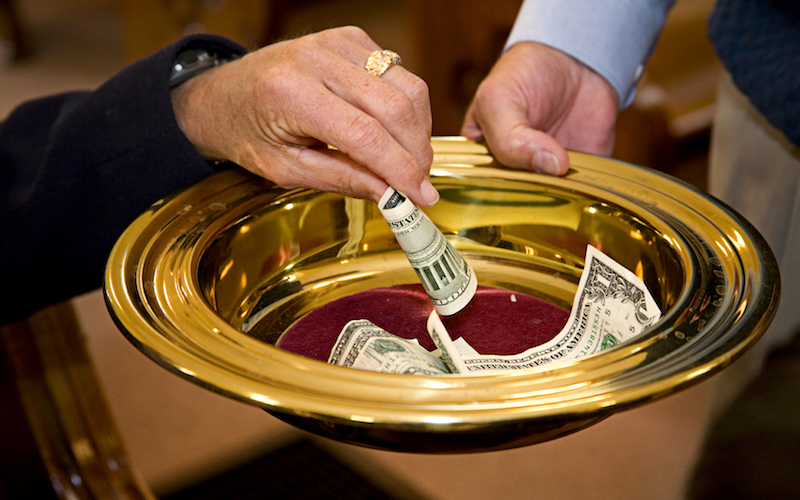
Christians are commanded to partake of the Lord’s Supper. Paul gave instructions regarding the practice when he wrote to the church in Corinth (1 Corinthians 11:20-34). He relayed to them the command he had “received from the Lord” (1 Corinthians 11:23). The command from Christ was to “do this in remembrance of Me” (1 Corinthians 11:24). As the Christians in Corinth were commanded to partake of the Lord’s Supper, we are to partake as well.
Continue Reading
Proper Practice of the Lord’s Supper
Doing the Will of God

“Not everyone who says to Me, ‘Lord, Lord,’ will enter the kingdom of heaven, but he who does the will of My Father who is in heaven will enter. Many will say to Me on that day, ‘Lord, Lord, did we not prophesy in Your name, and in Your name cast out demons, and in Your name perform many miracles?’ And then I will declare to them, ‘I never knew you; depart from Me, you who practice lawlessness’” (Matthew 7:21-23).
In the Sermon on the Mount (Matthew 5-7), Jesus described the character of one who would be a citizen of His kingdom. The kingdom is open to all; but sadly, not all will choose to enter. Who is it that will enter the kingdom? Jesus said, “He who does the will of My Father who is in heaven will enter.” Do we want to be a part of God’s kingdom? If so, we need to do the will of God.
Continue Reading
The All Sufficiency of the Church

When we speak of the church being “all sufficient,” what do we mean? The claim that the church is all sufficient means that the church is fully capable of doing all the work God gave it to do. It does not need the aid of institutions to carry out this work. Christians do not need to look to other institutions or organizations to do the work that can be done through the church.
The Bible speaks of the church in two different ways – the universal church and the local church. Which way are we using the term “church” when we say the church is all sufficient? Is the universal church all sufficient? Of course. The universal church is composed of all the believers who have been baptized into the body of Christ (Mark 16:16; Acts 2:47; 1 Corinthians 12:13; Galatians 3:27). But what about the local church? To say the church is all sufficient universally, but not locally, could lead one to accept the “sponsoring church arrangement.” But the New Testament teaches that the local church is all sufficient, fully capable of doing the work God gave for it to do.
Continue Reading
Marks of Devotion
[Article written by Matt Nevins. Originally published in his email newsletter “The Lamp.”]
Dedication and devotion to a person, idea, or object can be admired in many facets of our lives. Most importantly is the individual’s devotion to God. Reflecting upon this idea has led me to observe people around me. Those who are devoted to God display different attributes from those who are not devoted. The differences in attributes cause God’s children to be viewed as strange. This is no new thing; Peter said “they think it strange that you do not run with them in the same flood of dissipation, speaking evil of you” (1 Pet. 4:4). People in the world see the marks of the different things Christians are doing. These marks are simply indicators of our devotion to God. Individuals will either display these marks with great joy, attempt to hide the marks, or in many cases refuse to bear such markings.
Continue Reading
Praying to Jesus

Prayer is one of the great privileges we have as Christians. Through prayer, we are able to make our requests known to God (Philippians 4:6), ask for help in time of need (Hebrews 4:16), cast our cares upon Him (1 Peter 5:7), and ask for forgiveness of sins (Acts 8:22). We are not to be negligent in this, but instead we ought to “pray without ceasing” (1 Thessalonians 5:17).
The Scriptures teach that we are to pray to God (Romans 10:1; 15:30; 2 Corinthians 13:7). Nowhere does the Bible command or authorize us to pray to any other. Some believe in praying to saints or deceased family members. The word of God speaks of no such practice in the life of a Christian. Though there are three persons of God (the Father, the Son, and the Holy Spirit), brethren typically think of the Father as the one to whom prayer is addressed. When Jesus taught the multitudes about prayer in Sermon on the Mount, He presented a model prayer. This example prayer – which some refer to as the “Lord’s Prayer” – was addressed to the Father: “Our Father who is in heaven…” (Matthew 6:9).
Does this serve as an exclusive pattern for our prayers today? That is to say, are we only authorized to pray to the Father? Many believe this is the case. They believe that whenever we pray, we are to pray to the Father. What about praying to Jesus? Some say we cannot do this. What do the Scriptures say?
Continue Reading











