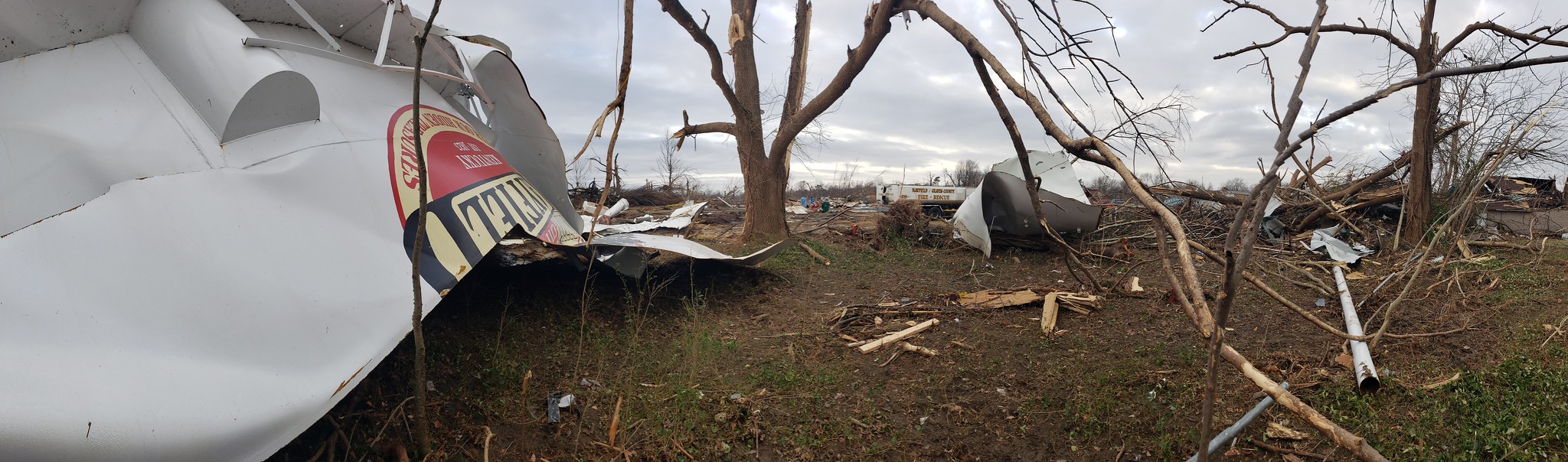
Photo by Dave Malkoff – Creative Commons license (CC BY-NC-SA 2.0)
Christians are people of faith. The Scriptures are very clear that it is “impossible to please [God]” without faith (Hebrews 11:6), that we cannot obey the gospel without faith (Mark 16:16), and that we are “justified by faith” (Romans 5:1). More than anyone else, we should recognize not only that God exists, but that He “is able to do far more abundantly beyond all that we ask or think” (Ephesians 3:20).
At the same time, while God has the power to do more than we could imagine, the Scriptures also indicate that there are times when things happen as a result of chance or happenstance. The wise man wrote, “I saw again under the sun that the race is not to the swift and the battle is not to the warriors, and neither is bread to the wise nor wealth to the discerning nor favor to men of ability; for time and chance overtake them all” (Ecclesiastes 9:11). When a race, battle, or some other event turns out unexpectedly, that does not necessarily mean that God was directly involved in the outcome. The wise man did not say that “the hand of God” or “the will of God” produced the unexpected result; rather, it was due to “time and chance” which God allows to happen in this life.
As I am writing this article, clean-up and recovery efforts are ongoing following a tornado that went through Bowling Green, Kentucky (and several other areas). Many homes and businesses were destroyed. Several people lost their lives and many more have been deeply impacted by losses sustained in the storm. Thankfully, our family was out of the path of the tornado. However, not far from us there were people who lost everything.
Following events like this one, it is natural to wonder why some were spared and others were not. Why did some lose all of their earthly possessions – or even their lives – while others suffered little or no damage? Was this simply a matter of chance or was it something more? As we contemplate questions like these, it is important that we understand the difference between conclusions that are matters of faith and ones that are simply assumptions.Continue Reading

 With the rise of the internet and the instantaneous communication and continuous stream of information that is now available to us through our computers and smart phones, there is a real danger that we may be consuming too much of what is harmful, frivolous, inaccurate, and inferior, and not enough of what can provide us with the wisdom that comes from above. As we learn how to manage our use of such technology, we need to make sure we keep it in its proper place so that (1) it does not hinder our pursuit of God and His wisdom and (2) we can actually derive some benefit from this technology. (Yes, both are possible.)

 The world around us has changed immensely during the current generation. Some changes may be seen as beneficial (such as certain advancements in technology); however, we usually think of this in negative terms. The reason for this is because our society – as a whole – has departed from a Biblical worldview. This has made the culture around us more ungodly and the sins that used to be shameful even for the world to speak of have become prevalent and accepted.