What Happens After Death?

Cemetery

Job asked, “If a man dies, will he live again?” (Job 14:14). Many people wonder about this: Is there life after death?

  • Many say “no” – They believe that our existence here is all that there is.
  • The Bible says “yes” – There is life after death, but what happens after death?

In this article, we will consider some various theories that people have about the afterlife and compare these theories with what the Bible teaches.
Continue Reading


The Real Pharisees: Introduction

The Real Pharisees

When Jesus warned of the “leaven of the Pharisees” (Matthew 16:6), He was referring to their influence. There were several reasons why He warned about this. We will address these in our study. Jesus pointed out the Pharisees’ errors in their teachings and the sins in their own lives.

Some today are eager to warn of the “leaven of the Pharisees.” Yet too many do not understand just how the Pharisees were wrong. As a result, the label is often used improperly against those who teach and practice the truth.

So in this series, we are going to examine who the real Pharisees are today. We will do this by considering the sins and errors of the Pharisees in the first century that we are to avoid.
Continue Reading

Plain Bible Teaching Podcast (Season 5)

Plain Bible Teaching Podcast

This week we wrapped up Season 5 of the Plain Bible Teaching Podcast. The theme of this season was the church. You can listen to the audio from all of the episodes on this page. You can also click on the link for each episode to see the show notes and download the audio files if you’d like.
Continue Reading

What We Should Not Pray

Woman praying

On one occasion, Jesus’ disciples said, “Lord, teach us to pray” (Luke 11:1). It is important that we know how to pray as we should. However, when we think of learning how to pray, we usually think in terms of praying for certain things. Yet there are also some things for which we should not pray.

So in this article, let us consider five things for which we should not pray.
Continue Reading

Cities of Refuge

City of Refuge

Since the Levites were not given a territory in the land of Canaan like the other tribes, they were given “forty-eight cities” (Numbers 35:7). Six of these cities would be designated as “cities of refuge” (Numbers 35:6). If someone killed someone else unintentionally, he could flee to one of these cities.

Then the Lord spoke to Moses saying, ‘Speak to the sons of Israel and say to them, “When you cross the Jordan into the land of Canaan, then you shall select for yourselves cities to be your cities of refuge, that the manslayer who has killed any person unintentionally may flee there. The cities shall be to you as a refuge from the avenger, so that the manslayer will not die until he stands before the congregation for trial”’” (Numbers 35:9-12).

In this article, we are going to notice five key points about these cities of refuge and how they parallel the church today.
Continue Reading

Why “Book, Chapter, and Verse” Preaching?

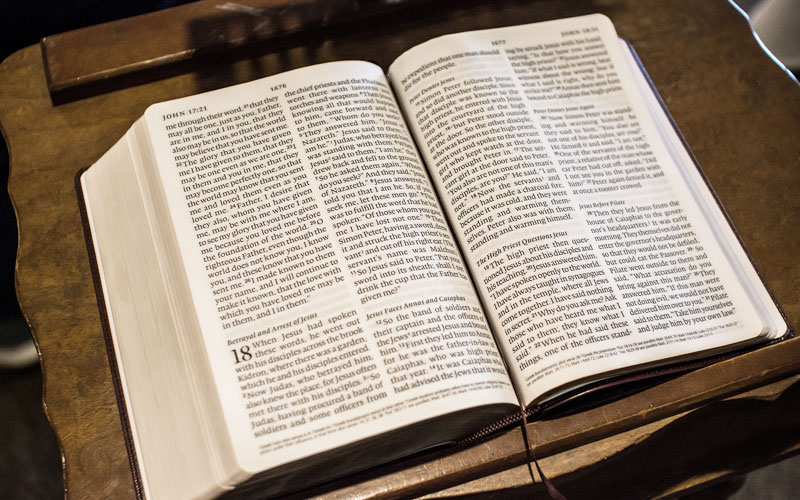
Bible on a lectern

After the wall around Jerusalem had been rebuilt, the people gathered to hear the law read to them. Ezra and the Levites “read from the book, from the law of God, translating to give the sense so that they understood the reading” (Nehemiah 8:8). What they did was very simple – they read the law and explained it so that the people understood what it meant.

This is the same thing we must do in our preaching today. We want people to understand what God’s word means, but how can we help them do that? We sometimes hear brethren use the phrase “book, chapter, and verse” preaching. This is the kind of preaching that is necessary to accomplish the goal of explaining the Scriptures so that people will understand them. In this article, we will consider why “book, chapter, and verse” preaching is the method we need to use in our preaching.
Continue Reading

Friendship with the World

James 4:4

You adulteresses, do you not know that friendship with the world is hostility toward God? Therefore whoever wishes to be a friend of the world makes himself an enemy of God” (James 4:4).

When James warned Christians about “friendship with the world,” he did not say that it was possibly unwise or potentially dangerous. Instead, he used very strong language indicating that being “a friend of the world” makes one “an enemy of God.

Knowing this danger, it is important that we know what the inspired writer meant by “friendship with the world.” In this article, we are going to consider what “friendship with the world” looks like and also see what a Christian’s relationship with the world should be.
Continue Reading