“I Alone Am Left”

Elijah at Horeb

After contending with the prophets of Baal on Mount Carmel and proving to the people the power of God, Elijah was forced to flee from the wrath of Jezebel. He then spoke to the Lord at Horeb about what was troubling him.

Then he came there to a cave and lodged there; and behold, the word of the Lord came to him, and He said to him, ‘What are you doing here, Elijah?’ He said, ‘I have been very zealous for the Lord, the God of hosts; for the sons of Israel have forsaken Your covenant, torn down Your altars and killed Your prophets with the sword. And I alone am left; and they seek my life, to take it away’” (1 Kings 19:9-10).

Elijah had just been a part of a decisive victory for the Lord over Baal on Mount Carmel. But despite this, he was in such a depressed state that he wished the Lord would take his life (1 Kings 19:4). He was focusing on the challenges, hardships, and persecution before him, while being convinced that there was no one else who was of like-mind striving to serve the Lord.

As Christians, we may also feel isolated from others and, as a result, face what seems to be a daunting task of enduring the hardships that will come for servants of God (2 Timothy 3:12) without aid, comfort, or encouragement from others. We may feel as though we are alone in standing for the truth while everyone around us seems to be compromising, apostatizing, or wholly apathetic about contending for the faith. During such times, it is important to remember a few points.
Continue Reading

Turning Grace into a License to Sin

Grace - Sin

Jude said that we must “contend earnestly for the faith which was once for all handed down to the saints” (Jude 3). There are many ways in which the faith may come under attack, requiring us to contend for it.

  • There could be officials who give “strict orders not to continue teaching,” in which case we “must obey God rather than men” (Acts 5:28-29) and continue to teach anyway.
  • There may be false teachers, making it necessary to engage in “great dissension and debate with them” (Acts 15:2). Such debate is necessary “so that the truth of the gospel would remain” with those who had previously been taught it (Galatians 2:5).
  • There could be idolatry that exists all around us, and as Paul’s “spirit was…provoked within him,” leading him to speak out against the idols (Acts 17:16), we may be compelled to speak out as well.

But there is another threat to the faith that requires us to contend for it. This threat was mentioned by Jude in the next verse:

For certain persons have crept in unnoticed, those who were long beforehand marked out for this condemnation, ungodly persons who turn the grace of our God into licentiousness and deny our only Master and Lord, Jesus Christ” (Jude 4).

Continue Reading

What to Call the Preacher

We hear people use different terms to identify those who preach – preacher, minister, pastor, etc. In this article we will address two things: what the Bible calls those who preach the gospel and what the religious world calls those who preach.

Why is this important? Names mean something. The terms that are used to identify those who preach are used for a reason. They help describe the work or the perceived work. It is good for us to call Bible things by Bible names and for those who preach to do the work they ought to be doing.

This list is not exhaustive, but it addresses some of the more common names used today.
Continue Reading

“These Who Have Turned the World Upside Down”

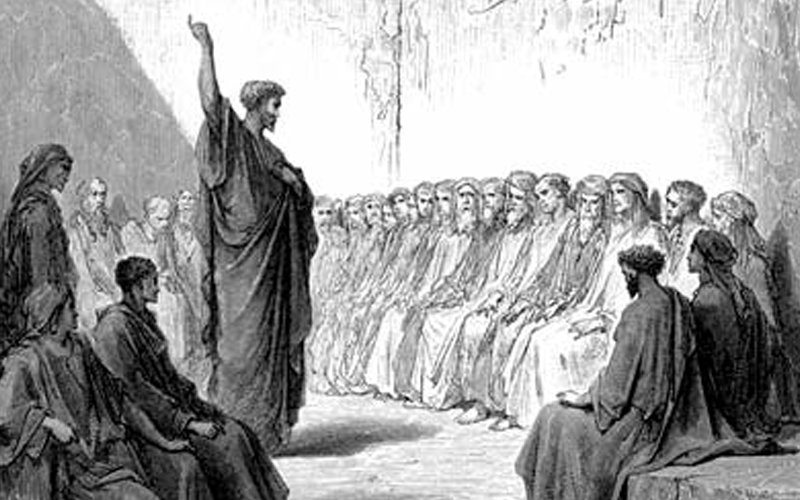
Paul preaching in Thessalonica

After just a few weeks of Paul preaching in Thessalonica, the gospel had been received by some of the Jews and “a large number of the God-fearing Greeks and a number of the leading women” (Acts 17:1-4). In an effort to try to silence this message, the Jews intended to capture Paul and Silas. When they could not find them, they took Jason and some of the brethren and brought them before the authorities in order to accuse them.

When they did not find them, they began dragging Jason and some brethren before the city authorities, shouting, ‘These men who have upset the world have come here also; and Jason has welcomed them, and they all act contrary to the decrees of Caesar, saying that there is another king, Jesus’” (Acts 17:6-7).

Continue Reading

Appalling and Horrible and the People Love It So!

At the time when Jeremiah prophesied, God was preparing to send Judah into Babylonian captivity in order to punish them for their sins (Jeremiah 1:14-16). But it was not just the common people that had devolved into a state of spiritual corruption. The prophets and priests were involved as well.

An appalling and horrible thing has happened in the land: The prophets prophesy falsely, and the priests rule on their own authority; and My people love it so!” (Jeremiah 5:30-31).

The inhabitants of Judah had learned to tolerate and celebrate sin. “Where they ashamed because of the abomination they have done? They were not even ashamed at all; they did not even know how to blush” (Jeremiah 6:15). The prophets spoke lies and the priests followed their own rule. “For from the least of them even to the greatest of them, everyone is greedy for gain, and from the prophet even to the priest everyone deals falsely. They have healed the brokenness of My people superficially, saying ‘Peace, peace,’ but there is no peace” (Jeremiah 6:13-14). Yet even as judgment was planned because of these things, God invited His people to repent and turn back to Him.
Continue Reading

“Easier for a Camel to Go through the Eye of a Needle”

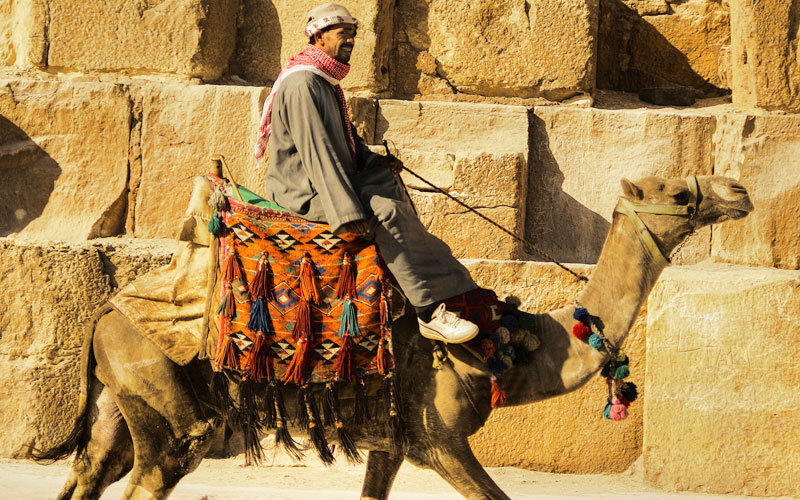
Camel

And Jesus said to His disciples, ‘Truly I say to you, it is hard for a rich man to enter the kingdom of heaven. Again I say to you, it is easier for a camel to go through the eye of a needle, than for a rich man to enter the kingdom of God.’ When the disciples heard this, they were very astonished and said, ‘Then who can be saved?’ And looking at them Jesus said to them, ‘With people this is impossible, but with God all things are possible.’” (Matthew 19:23-26).

This is one of the difficult statements of Jesus. It almost seems as though He was discouraging a portion of His followers and future followers (the rich) from coming after Him. Yet His statement was not meant to be discouraging, but a warning of the potential danger that riches can be to one’s spiritual well-being.
Continue Reading

The Fall of King Solomon

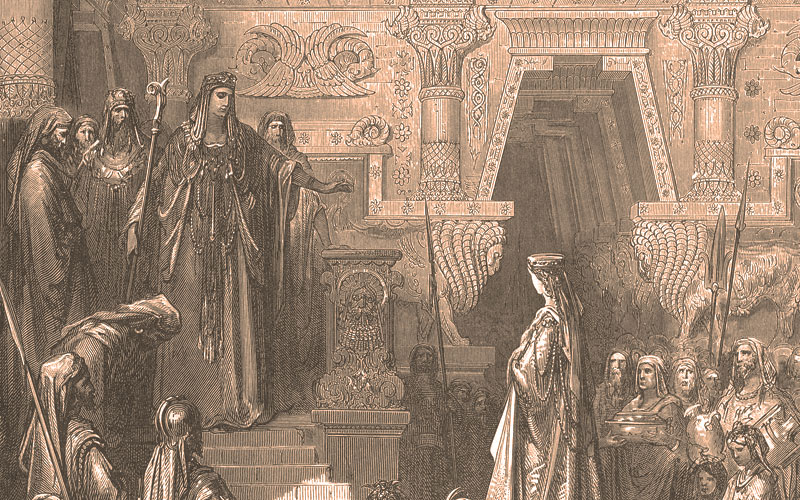
Solomon and the Queen of Sheba

When the Queen of Sheba visited Solomon, she wanted to find out for herself if the reports of his greatness and wisdom were true. As she discovered, they certainly were.

Then she said to the king, ‘It was a true report which I heard in my own land about your words and your wisdom. Nevertheless I did not believe the reports, until I came and my eyes had seen it. And behold, the half was not told me. You exceed in wisdom and prosperity the report which I heard. How blessed are your men, how blessed are these your servants who stand before you continually and hear your wisdom. Blessed be the Lord your God who delighted in you to set you on the throne of Israel; because the Lord loved Israel forever, therefore He made you king, to do justice and righteousness” (1 Kings 10:6-9).

It is interesting that she recognizes a fundamental principle that applies to all civil governments. They are in place to “do justice and righteousness.” Solomon recognized this as well.Continue Reading