By Your Providence

Sunset

God’s providence is something that many people take for granted, yet do not have a definitive way to explain it. We often resort to a “who knows” approach in trying to explain providence, citing the example of Mordecai as he spoke to Esther about her position as Queen: “And who knows whether you have not attained royalty for such a time as this?” (Esther 4:14).

If we are going to talk about God’s providence, instead of taking a “who knows” approach, allowing anything and everything to be attributed to God, we should endeavor to speak where the Bible speaks. What does the Bible say about providence?
Continue Reading

God Wants Men to Be Free

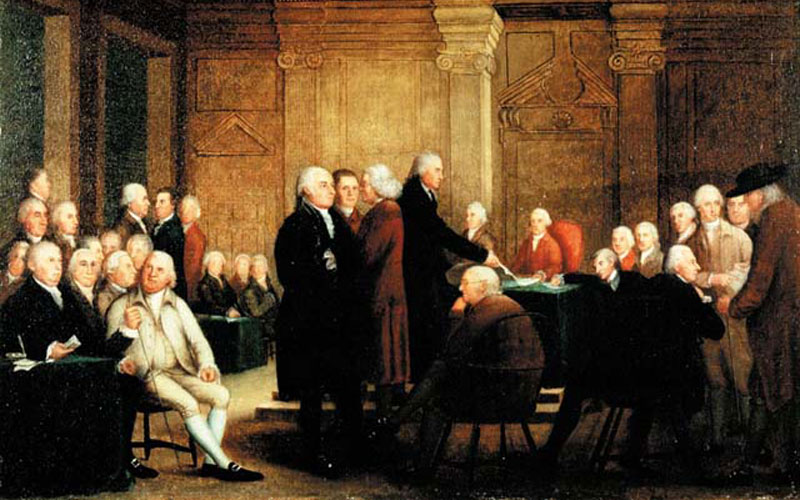
Congres Voting for Independence

July 4, 1776, thirteen American colonies declared their independence from the British Empire. One of the fundamental reasons cited for doing this was the fact that each individual has been given freedom by God. The Declaration of Independence states that all men “are endowed by their Creator with certain unalienable Rights, that among these are Life, Liberty and the pursuit of Happiness.” To this day we celebrate the birth of this nation that was founded on these principles.

As we reflect upon the principles of liberty and freedom, it is important to do so from a Biblical perspective. God wants men to be free. Let us notice what the Bible says about God’s desire for our freedom.
Continue Reading

“Hallelujah!” – A Call for Praise or a Thoughtless Exclamation?

Man at Sunrise

We are used to hearing and seeing the word hallelujah as we read the Bible, sing spiritual songs, and listen to teaching from the word of God. I have also noticed this word being used with increasing frequency as a mere exclamation that one utters when something good happens to them.

  • We found a parking space close to the door – Hallelujah!
  • Our electric bill was down this month – Hallelujah!
  • It’s five o’clock and time to clock out and go home – Hallelujah!

Is this how we ought to be using this word? Does it matter? Let us consider a few things from the Scriptures.
Continue Reading

The “Benefits” of Sin

Tree of Knowledge of Good and Evil

Sin separates one from God and will ultimately cause one to be eternally lost (Isaiah 59:2; Romans 6:23). Yet Satan tries anyway to convince us to continue in sin to the jeopardy of our souls. He extols the benefits (or perceived benefits) of sin, too often causing even the strong to fall for his temptations.

He has employed this tactic from the beginning. In the garden, Eve was tempted to sin and eat of the fruit of the forbidden tree. Despite the fact that she understood that this had been prohibited, she still gave in to the temptation.
Continue Reading

The Certainty of the Scriptures

The faith that God wants us to have is an “assurance of things hoped for, the conviction of things not seen” (Hebrews 11:1). He does not expect us to take a “leap of faith” — choosing to believe something, even though there is no evidence upon which to base our belief. Instead, He has provided a reasonable basis for our faith.

The most notable example of this is in the coming of Christ. His arrival into this world, His death on the cross, His resurrection and ascension, as well as His reign as King over His kingdom was all prophesied to occur. But can we really believe that it actually happened? Skeptics and critics say that we cannot accept what the Bible says. But Peter gave us two reasons why we can and should accept it.
Continue Reading

A Lesson from the Gulf Oil Spill

On April 20th, an oil rig exploded in the Gulf of Mexico causing oil to begin spewing into the water from the floor of the Gulf, about a mile underwater. After more than six weeks, the oil is still flowing. BP is working to try to stop the leak while other efforts are underway to try to deal with this disaster both in the water and along the coast.

No matter what work is done at the surface to deal with the oil that has already spilled into the Gulf, all of the efforts will be in vain unless/until the leak is stopped. The cleanup is important, but the cleanup will never be successful if the oil keeps spewing from the leak.
Continue Reading

The Death of Eli

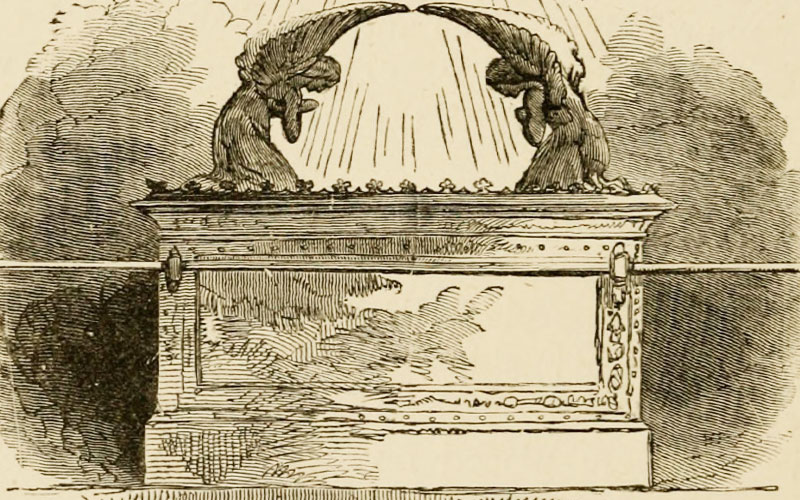
Ark of the Covenant

Eli, a man who judged Israel for forty years, died on a day of great conflict between the children of Israel and the Philistines. He did not die in battle, nor was he killed by the sword of his enemy. Instead, he died a sad death upon hearing news of the battle.

The man said to Eli, ‘I am the one who came from the battle line. Indeed, I escaped from the battle line today.’ And he said, ‘How did things go, my son?’ Then the one who brought the news replied, ‘Israel has fled before the Philistines and there has also been a great slaughter among the people, and your two sons also, Hophni and Phinehas, are dead, and the ark of God has been taken.’

When he mentioned the ark of God, Eli fell off the seat backward beside the gate, and his neck was broken and he died, for he was old and heavy. Thus he judged Israel forty years” (1 Samuel 4:16-18).

There were four troubling pieces of news that Eli received before he died.
Continue Reading