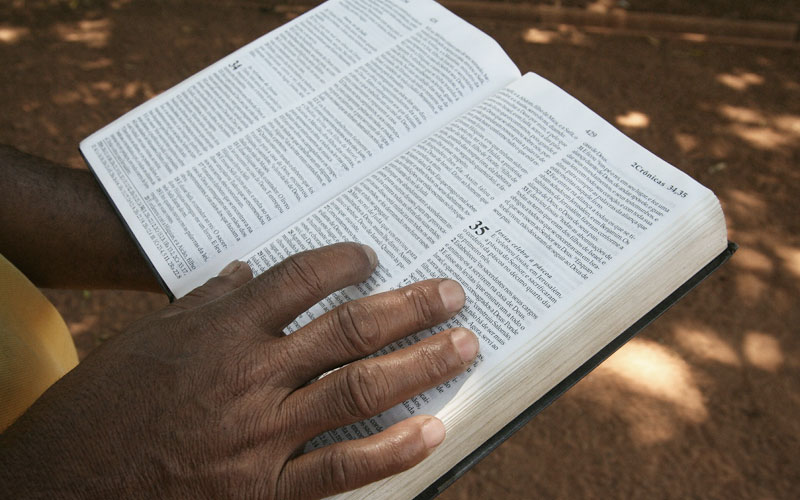
The Value of the Old Testament

Bible reading

At the first of the year, I started a Bible reading plan that would take me through the Bible in one year. There are several different reading plans people use to read through the Bible. Some sort the books by chronological order. Others arrange the schedule so that one reads a portion of both the Old and New Testaments each day. The plan I followed this year went through the books of the Bible in the order they appear. I have been able to keep up with the schedule (though there were times I was playing catch-up) and am currently up to date with the readings.

On October 1, I finished the book of Malachi. That means it took just over nine months to finish the Old Testament.

This served as a simple reminder that we cannot ignore the Old Testament Scriptures. Yes, we are under a new law (Hebrews 8:8-10) and the old law was nailed to the cross (Colossians 2:14). But that does not mean the Old Testament is worthless to us today.
Continue Reading

Wasting the Teenage Years

The teenage years are an important time in one’s life. Therefore, we ought to think seriously about how these years are spent. How are parents to teach and encourage their teenage children? What should children be pursuing in their teenage years?

I read a post from Jason Hardin that got me thinking along these lines. It contained excerpts from the book, Do Hard Things by Alex and Brett Harris. I haven’t read the book, so I’m not qualified to endorse it. But the quotes that Jason shared from it were very good. The basic theme is that we, as a culture, have allowed the teenage years to evolve into a wasted time of short-sighted irresponsibility.

The way many in the world view these years is that it is a time to focus on social interactions, unrestrained fun, freedom from responsibility, and schooling – not for the purpose of life preparation, but simply for the sake of education, even if it is without direction and usefulness.
Continue Reading

Government: A Minister of God, or of Satan?

Capitol Building

Christians live in the world, but are not of the world (Romans 12:2). We are part of a kingdom that is spiritual and eternal (John 18:36; Daniel 2:44). Yet while here on the earth, we live under the rule of civil authorities. How are we, as Christians, to view these leaders?
Continue Reading

A Noble Reception of the Gospel

After being run out of town in Thessalonica, Paul was sent to Berea. Here he continued doing the very thing that had previously stirred up opposition against him – teaching the gospel (Acts 17:1-5, 10). Fortunately, these individuals in Berea were “more noble-minded” than the ones Paul encountered in the last city. What was it that made them noble-minded? It had to do with their reception of the gospel.

Now these were more noble-minded than those in Thessalonica, for they received the word with great eagerness, examining the Scriptures daily to see whether these things were so” (Acts 17:11).

This verse shows us three reasons why the Bereans were called “noble-minded.” In addition, we can see how we should receive preaching and teaching today.
Continue Reading

Burning Books

A small church in Gainesville, Florida has caused no small disturbance with their plan to host a Quran burning this Saturday to mark the anniversary of the September 11, 2001 attacks. Terry Jones, the leader of this church, has been urged by Muslims, religious leaders, and government officials to cancel the event for fear of violence that could erupt. The latest news, at the time of this writing, is that the event has been cancelled, but that Jones could still change his mind. It will be interesting to see what, if anything, happens.

But what about this? Is this something a church ought to be doing? Jones and his church are well within their legal and Constitutional rights to burn copies of the Quran (assuming they are their own personal copies and not stolen). But that’s not what we’re going to discuss here. Instead, we want to consider whether or not a Christian should burn copies of the Quran as this church had planned to do.
Continue Reading

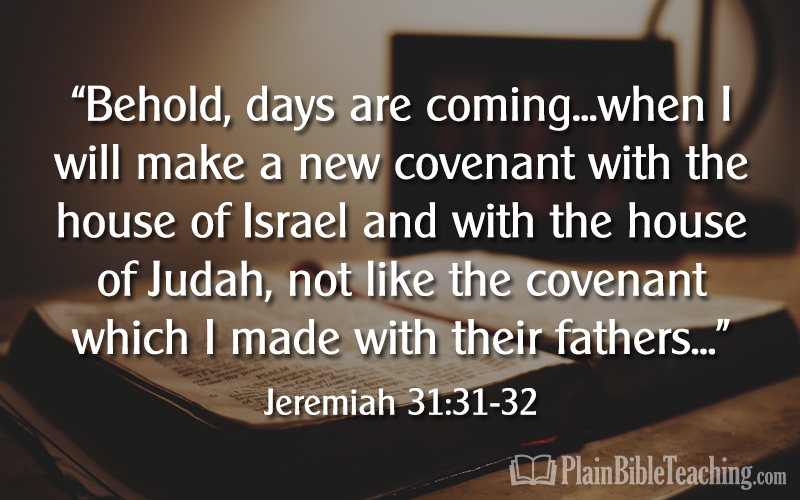
A New Covenant

Jeremiah 31:31-32

Some have a misunderstanding about the nature of God’s covenant with us today. Has there been one everlasting covenant throughout the history of mankind? Or is the covenant currently in force today different from the one we read about in the Old Testament? If we consider one of the prophecies from Jeremiah, we will get a clearer picture of the nature of the new covenant which is currently in effect.
Continue Reading

Leaving an Inheritance to One’s Grandchildren

Grandparent

A good man leaves an inheritance to his children’s children, and the wealth of the sinner is stored up for the righteous” (Proverbs 13:22).

In this passage, the Proverb writer indicated that one of the marks of a good man is that he leaves an inheritance for his grandchildren.

Of course, when we study the Proverbs, it is important to remember that many of the statements are generalizations. One may be a good man and have no grandchildren to whom he can leave an inheritance. There may be financial circumstances in one’s life beyond his control that would prevent him from doing this. But in considering this passage, we should ask the question: What would it take for one to be able to leave an inheritance to his grandchildren?
Continue Reading