Redemption & Forgiveness; Sin & Judgment

[This article was written by Robert A. Sochor.]

In Ephesians 1:3-10, salvation is described using very noble words and ideas, especially verse 7 which contains much information concerning the New Testament plan and need of salvation. Redemption through His blood presents the idea to buy back that which would otherwise be lost. It is central to the gospel — one might say it is the gospel. The purpose of the gospel is not to make the world better but to redeem some out of the world. Titus 2:14 shows we are redeemed by Christ to be a special, pure people zealous for good works. Christians are to consider redemption as most precious because of the great price paid for it (1 Peter 1:18,19). The spiritual blessings we have in high places (Ephesians 1:3) we have because of the blood of Christ (Revelation 5:9,10).

Forgiveness of sins is also mentioned in Ephesians 1:7. Forgiveness is defined as giving up resentment against or the desire to punish — to stop being angry with — also, to cancel or remit a debt (Webster). This idea is also central to the New Testament. It must be very special to the Christian (1 John 2:12). It must be central to gospel preaching (Acts 13:38) and based upon the work of Jesus and the terms of the gospel. The idea of pardon also helps describe forgiveness. We might think of a convicted prisoner who has no right by his or her own merit to be free again but is granted a pardon or forgiveness of the crime by one in authority, thus regaining freedom. Christians have forgiveness of sins through blood and by grace which make it quite important in light of Romans 6:23. In the affairs of men, forgiveness of crime or wrongdoing may or may not come with conditions. In the area of eternal salvation, forgiveness has very well defined conditions required in the gospel.

Ephesians 1 uses very eloquent terms to describe what God has done for our salvation. But there are some very common ideas today that undermine the teaching of this chapter and much of the New Testament. If we believe there is no such thing as sin or fail to see our works as transgressions before God, then we will never appreciate passages like Ephesians 1 which speak of redemption and forgiveness of sins. If sin does not exist or is really not so bad, then redemption (or the blood of Christ) has little meaning to us. If sin does not result in eternal loss (Romans 6:23), then why did Jesus die? It would have little or no significance to us. We cheapen the ideas of redemption and forgiveness by dismissing the idea of sin, and passages such as Ephesians 1 could be removed from the Bible and not be missed. It has been said that true understanding of sin and its consequences is the only way to fully understand and appreciate the grace of God, our salvation, and the price that was paid for it.

The same thing could be said for denying the idea of Judgment Day or that anyone could be lost eternally at that time. Some believe God will save all at the last day. The Bible is clear that there will be a day of judgment (Romans 14:10) and that some will be eternally lost that day (Matthew 25:46). If this is not true, then why would we ever need the blood of Christ? We would need redeeming from what and for what?

Our salvation is great and precious. Having a good Bible understanding of sin and eternal loss will help us understand what Christians have been blessed with in heavenly places (Ephesians 1:3-10).
Modern Disasters & Divine Judgment

Did the September 11, 2001 terrorist attacks represent God’s judgment against the United States? Did Hurricane Katrina devastate New Orleans because of the rampant immorality there? Is God going to send some natural or man-made disaster to punish this country for the slaughter of millions of innocent lives through the practice of abortion?

A lot of people will answer “yes” to these questions. But what does the Bible say? Jesus’ words in Luke 13 help answer this question for us:Continue Reading

How to Handle a Recession

Recession

Many people in the United States are anxious about the country’s economy. This is understandable with all of the job losses, home foreclosures, and falling value of investments. These things do not just face this country, but many places in the world are also facing economic turmoil.

The book of Revelation warned of the fall of the Roman empire that was to come. Naturally, when the empire fell, the global economy suffered. Under Roman rule “the merchants of the earth [had] become rich” (Revelation 18:3). When Rome fell, the merchants would “weep and mourn over her, because no one [would buy] their cargoes anymore” (Revelation 18:11). “And they threw dust on their heads and were crying out, weeping and mourning” (Revelation 18:19). But the Christians in that day were to have a different perspective: “Rejoice over her, O heaven, and you saints and apostles and prophets, because God has pronounced judgment for you against her” (Revelation 18:20). While the merchants were mourning, Christians were rejoicing.

We should understand that the collapse of the American economy is not exactly parallel with the fall of Rome. Rome was punished by God for sin (Revelation 18:4-8). The United States suffers because of irresponsibility and other factors. But like the Christians in the early church, our perspective about these things should naturally be different from that of the people of the world. So let us look and see what principles we find in the Bible to help us handle our current economic hardships.
Continue Reading

Unity of the Spirit

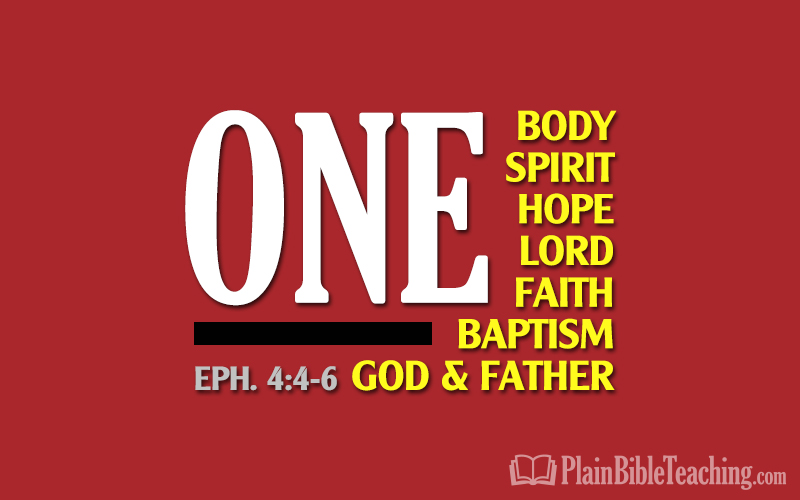
Ephesians 4:4-6

Paul instructed the church in Ephesus to be “diligent to preserve the unity of the Spirit in the bond of peace” (Ephesians 4:3). He then went on to explain the reason for unity and the basis of it.

Our unity must be based upon the following:
Continue Reading

The Lord of Sabaoth

Bible study

There are several different names and titles used for God in the Bible. One interesting one is “Lord of Sabaoth” and is used twice in the New Testament (Romans 9:29; James 5:4). What exactly does this name mean?
Continue Reading

At What Point Does a Non-Christian Become a Christian?

Water at sunset

When does a person cease being a non-Christian and become a Christian? Is it possible to make a distinction between the two groups?

As important as this question may be, you will not get the same answer from all professed Christians. Some believe that one is saved and, therefore, a Christian at the point of faith. Others believe this happens after one says a “sinner’s prayer.” Still others think that one can simply be a good person and be considered a Christian on that basis.

First, let us look at the word of God and see what is not the dividing line between the Christian and the non-Christian.
Continue Reading

The Proof of God in Man

Man and Northern Lights

[This article was written by Tim Haile.]

If the Bible is what it claims to be, then God does exist. Conversely, if God does exist, then it is reasonable to believe that He would reveal Himself to His creatures, and particularly to a sentient creature like man. It is important to remember that, if the Bible is true, all unbelievers will experience the kind of pain that one would experience if he were to be cast into a lake of burning sulfur (Rev. 21:8). The difference is that the lake of judgment will inflict pain and torment to the soul, not the body (Matthew 10:28), and that the punishment will be experienced for ever and ever (Revelation 20:10; 14:11). Such a prospect behooves us to consider these matters soberly and fully.
Continue Reading