When talking with people and the topic of religion comes up, they sometimes ask, “What denomination are you a part of?” In answering this question, I tell them I am not part of a denomination. This is a strange concept for many and, as a result, provides some opportunity to discuss spiritual matters with them. Many cannot envision Christianity without denominations. Denominationalism is only natural for them. But is it something that should be accepted or rejected?
Continue Reading
December 1, 2007
Denominationalism
August 12, 2007
The All Sufficiency of the Church
I came across Daniel Sommer’s commentary on the New Testament. I thought a couple of his comments regarding the church in particular were quite good.
Continue Reading
August 1, 2007
The Gospel of the Grace of God
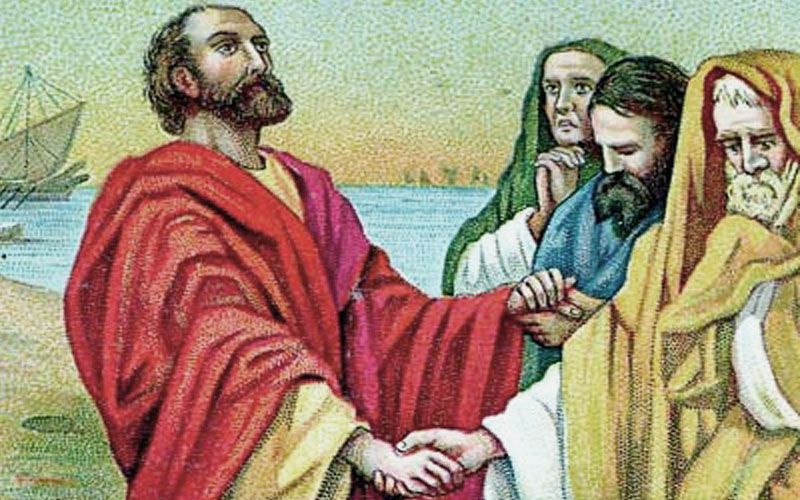
On his way to Jerusalem, Paul stopped in Miletus to meet with the elders from the church in Ephesus (Acts 20:17ff). In this farewell address, Paul reminded them that the message he brought to them was “the gospel of the grace of God” (Acts 20:24). This was the message that Paul preached “everywhere in every church” (1 Corinthians 4:17). He preached the gospel to those who were already Christians (Romans 1:15) and to those who had not yet heard of Jesus (Romans 15:20). The gospel is the message that Jesus told His apostles to preach (Mark 16:15) and is the message that we must preach today (Galatians 1:8-9).
Continue Reading
July 1, 2007
Non-Church Religious Collectives: Are They Authorized?

“Whatever you do in word or deed, do all in the name of the Lord Jesus, giving thanks through Him to God the Father” (Colossians 3:17).
This verse is often cited to show the need for us to do only those things that have been authorized in God’s word. To do something “in the name of the Lord” is to do what He has authorized us to do. This principle needs to govern all that we do in our lives.
When the Bible is silent on a particular practice, are we to conclude that it is authorized or prohibited? Some look for a specific prohibition before they will say that a thing is wrong. But the principle in Hebrews 7:14 shows that God’s silence is prohibitive. Jesus could not be a priest under the old law because He was “descended from Judah.” Men from this tribe were prohibited from serving as priests because “Moses spoke nothing concerning priests.” Men from Judah were excluded from becoming priests simply because the Law said nothing about it.
We also need to understand the difference between generic and specific authority. When God specifies something (such as the tribe of Levi for priests), everything else is excluded (Judah and others). When God’s word does not specify something (such as the type of location in which a congregation ought to assemble), we are at liberty to use various options or expedients, provided those options do not violate another instruction or principle (1 Corinthians 10:23).
Continue Reading
June 1, 2007
The Establishment of the Kingdom

Not everyone agrees about when Jesus established His kingdom. There are three major views on the date of its establishment – (1) the first Pentecost following the ascension of Christ (Acts 2), (2) A.D. 70 at the destruction of Jerusalem, and (3) some future date when Christ returns. Let us notice five key passages that show us when Christ’s kingdom was established.
Continue Reading
April 15, 2007
Merger
The Christian Chronicle recently reported that the Highland Oaks Church of Christ has recently merged with the nearby Pitman Creek Church of Christ. Yet what is unique about this merger is that each congregation is going to remain where they currently are. They will now be “one congregation meeting in two locations,” sharing “a common staff, eldership, budget and vision.”