Local Church Autonomy

The Bible teaches that each local church is to be autonomous. That is, they are not answerable to another local church or council of churches. Elders are to shepherd the flock which is among them (Acts 20:28; 1 Peter 5:1-2). No man or group of men has been given authority in the New Testament to rule or govern any other congregation(s).

Sometimes though, the Bible teaching of local church autonomy is misapplied or abused by brethren. Many believe that autonomy means we cannot be critical of what another congregation practices or teaches. When a concerned brother does speak out against error or apostasy in another local church, “autonomy” is the club used to attack this man. After all, to speak out against the error or apostasy in another congregation is to violate that church’s autonomy. Really?
Continue Reading

“Preach Christ, Not the Church”

Crosses

In the religious world, we have what seems to be a countless number of churches. All have their particular name, creed, organization, and practices. But when we turn to the pages of the New Testament, we read of the one true church. Jesus promised to build one church (Matthew 16:18). Jesus purchased one church (Acts 20:28). Jesus is the head of one church (Ephesians 1:22-23). The one true church is the universal body of the saved.

Whenever we read of churches (plural) in the New Testament, it refers to local churches. “All the churches of Christ greet you” (Romans 16:16). Paul wrote “to the churches of Galatia” (Galatians 1:2). The book of Revelation was addressed to the “seven churches” in Asia (Revelation 1:11). Notice these are all local churches, not confederations of local churches, or denominations (i.e. the Baptist church, Methodist church, Episcopal church, etc.).

Yet this teaching that there is but one true church is not popular. Most professed Christians believe that one church is as good as another. People are told to join the church of their choice. After all, they all believe in Christ, so they are all basically the same. This is the mentality of many. They do not want to condemn or be critical of any other church. They do not think we should do so either. So they tell us to preach Christ, not the church.
Continue Reading

Did Alexander Campbell Start the Church of Christ?

[This article was written by Justin Monts.]

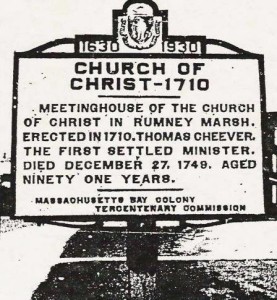
Church of Christ 1710Alexander Campbell did not start the church of Christ. The church of Christ began in 30 AD on the Day of Pentecost (Acts 2:38, 47). Campbell was born in 1788, long after the first century. Jesus Christ founded the church that bears his name. In Matthew 16:18, Jesus said, “I will build my church.” God gave him to be head over all things to the church which is his body (Ephesians 1:22-23). Further, the Hebrew writer tells us that Jesus is the minister of the true tabernacle which the Lord erected and not man (Hebrews 8:2). Since Jesus Christ erected his own church, Campbell could not have possibly started the church of Christ. The apostle Paul wrote in 58 AD, “The churches of Christ salute you” (Romans 16:16).

Continue Reading

Constants in a Changing World

River

This world is full of constant change. Many things come and go, whether they are people, cultures, governments, trends, or fashions. Yet the writer of Ecclesiastes noted, “There is nothing new under the sun” (Ecclesiastes 1:9). The changes we see are just perpetual cycles that exist in this world. But in the midst of the changes we face in this life, there are certain fundamental truths that will always remain constant.
Continue Reading

What Is Baptism?

Baptism

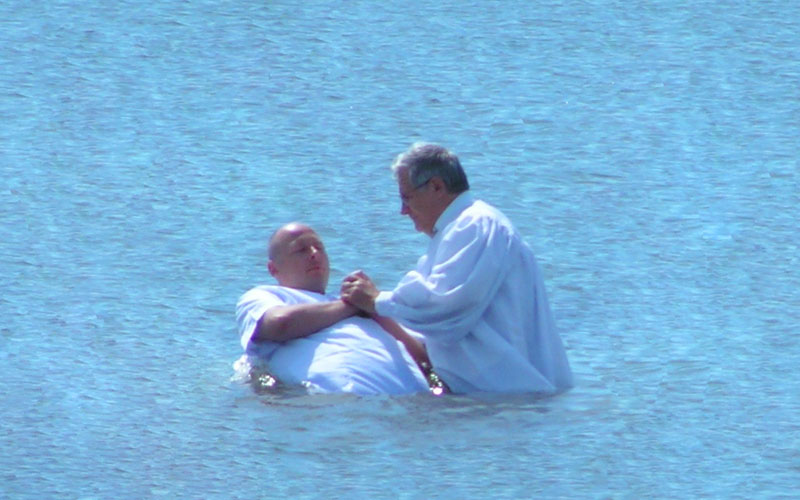
Baptism is discussed numerous times throughout the New Testament. There are also different baptisms that are mentioned. John the Baptist mentioned three baptisms – the baptism of John, the Holy Spirit, and fire (Matthew 3:11). In his letter to Corinth, Paul made reference to baptism for the dead (1 Corinthians 15:29). There is also the baptism that is done in the name of Jesus (Acts 2:38). It is this baptism that is repeatedly referred to in the New Testament as being applicable to men today (Matthew 28:19; Acts 10:48; 19:5).

Many people have various opinions about baptism. Some believe baptism is unnecessary because they believe we are saved by faith alone. Others believe baptism is merely a confession of faith – an outward sign of an inward grace. Some see baptism as necessary for gaining membership into a local church, but that one is already saved before being baptized. Still others believe that baptism is for the remission of sins and through it one gains entrance into the universal church. It is important that we understand what baptism is. Part of our “platform for unity” is the “one baptism” (Ephesians 4:5). Let us consider what the New Testament teaches about baptism so we can unite around that teaching.
Continue Reading

Institutionalism

As we look at the work God has given to the church, we find a great amount of work to do. Jesus told His disciples, “The harvest is plentiful, but the workers are few” (Matthew 9:37). This means that there is plenty for all of us to be doing. Each local congregation has much work to do. There will never come a time as long as the earth stands when the Lord’s church has done all the work it can do.

Some look at the overwhelming amount of work to be done and try to devise a better way to do the works of evangelism, edification, and benevolence. One method men have created is what has been referred to as institutionalism. That is, they form organizations separate from the church to do the work of the church. However, when we read the New Testament, we find no organization other than the church that God has approved to do these works. This is not to say that we, as individuals, cannot perform these works. Individuals can spread the gospel (Acts 8:4), edify other Christians (Hebrews 3:13), and help those in need (Galatians 6:10). In fact, we are to do these things. But the only organization or collective we find in Scripture authorized to do these works is the church. We simply find no authority for Christians to form human organizations to do the work God gave the church to do.
Continue Reading

The All Sufficiency of the Church

Country Church

When we speak of the church being “all sufficient,” what do we mean? The claim that the church is all sufficient means that the church is fully capable of doing all the work God gave it to do. It does not need the aid of institutions to carry out this work. Christians do not need to look to other institutions or organizations to do the work that can be done through the church.

The Bible speaks of the church in two different ways – the universal church and the local church. Which way are we using the term “church” when we say the church is all sufficient? Is the universal church all sufficient? Of course. The universal church is composed of all the believers who have been baptized into the body of Christ (Mark 16:16; Acts 2:47; 1 Corinthians 12:13; Galatians 3:27). But what about the local church? To say the church is all sufficient universally, but not locally, could lead one to accept the “sponsoring church arrangement.” But the New Testament teaches that the local church is all sufficient, fully capable of doing the work God gave for it to do.
Continue Reading