The Deity of Christ in Hebrews 1

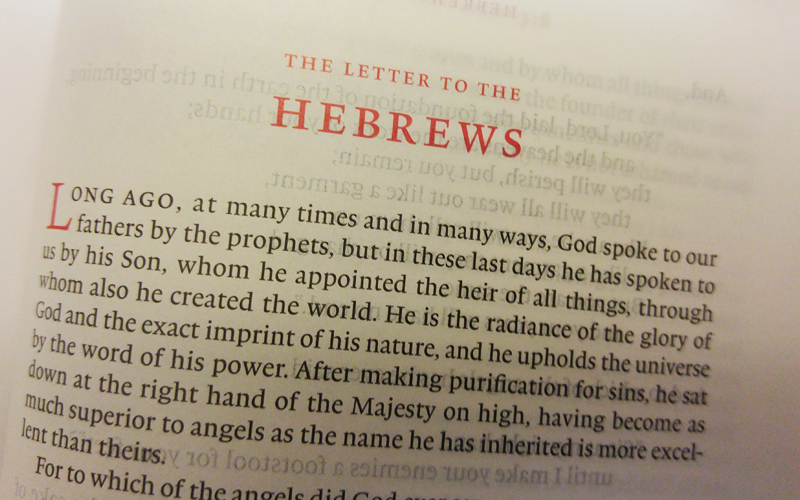
Hebrews

Jesus is the Son of God (Matthew 3:17). While He was on the earth “all the fullness of Deity [dwelt] in bodily form” (Colossians 2:9). Yet there are some who reject the Deity of Christ, claiming that He surrendered His Deity when He came to earth.

The Hebrew writer appealed to his audience to not go back to the Old Law. He made several points about why the new way with Christ was better than the old way. He began the book by talking about Christ. In the first chapter alone, there are several statements that show us that Jesus is God:
Continue Reading

Spirit of Faith

Sunrise

But having the same spirit of faith, according to what is written, ‘I believed, therefore I spoke,’ we also believe, therefore we also speak” (2 Corinthians 4:13).

Paul wrote this verse as he told the Corinthians of the ministry he had been given, the hardships he faced for it, and the hope he had for eternal life. He quoted from Psalm 116 – a psalm of deliverance – in which the psalmist expressed his faith and trust in God even in the face of severe trials.

We are to have the same spirit of faith that Paul had. Having this spirit of faith, we will do certain things.
Continue Reading

The Eternal Gospel

Crosses

We generally divide Biblical history into three dispensations: the Patriarchal age, Mosaic age, and the Gospel age. When people speak of “dispensations,” they are simply referring to the method by which God revealed His will to man. First He revealed His will to the heads of families (Patriarchal age). Then He gave the nation of Israel the Law of Moses (Mosaic age). Finally, the gospel of Christ was revealed (Gospel age). We live in this third and final dispensation.

While these are perfectly acceptable distinctions, we need to recognize that the gospel is different from the other messages that have been delivered. In the book of Revelation, this final message is described as “an eternal gospel” (Revelation 14:6). When we talk about the three dispensations, we ought to recognize that the gospel had its beginning before either of the first two.

The term gospel simply means “good news.” The “good news” is the message of Christ and His salvation. As we can see from the Scriptures, this good news began long before we read of it in the New Testament.
Continue Reading

Waiting Patiently

The Lord is not slow about His promise, as some count slowness, but is patient toward you, not wishing for any to perish but for all to come to repentance” (2 Peter 3:9).

In the context surrounding this verse, Peter was talking about the coming day of the Lord. This judgment would not come as quickly as some thought it would, which caused them to mock the idea and believe it would never happen (2 Peter 3:3-4).

The length of time until the day of the Lord is not the result of God being slow about His promise. After all, Peter said, “With the Lord one day is like a thousand years, and a thousand years like one day” (2 Peter 3:8). God is not bound or regulated by time like we are. The wait until that day is not due to God’s slowness, but God’s patience.
Continue Reading

No One Is Good Except God Alone

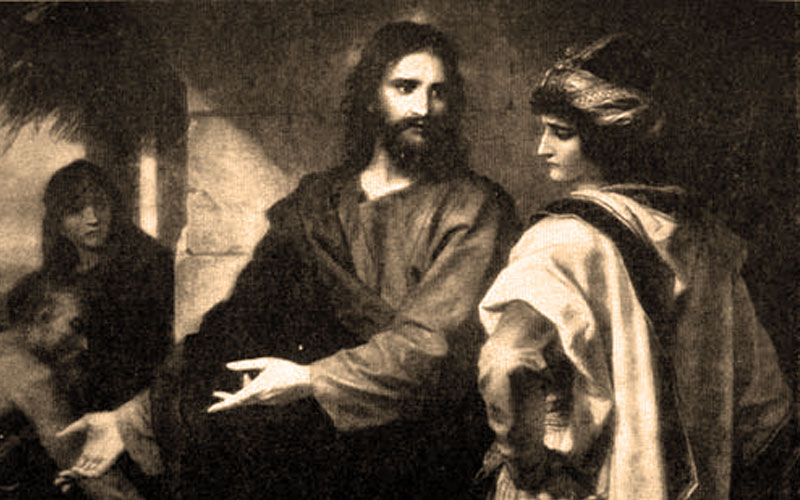
Jesus and the Rich Young Ruler

Luke recorded the occasion when a rich young ruler came to Jesus with a question: “Good Teacher, what shall I do to inherit eternal life?” (Luke 18:18).

When we talk about this passage, we often begin with Jesus instructing this man to keep the commandments contained in the Law of Moses (Luke 18:20). The man responded that he had done this from his youth (Luke 18:21). So Jesus told him what else he needed to do to inherit eternal life: “Sell all that you possess and distribute it to the poor…and come, follow Me” (Luke 18:22). This man was unwilling to do this and departed (Luke 18:23).
Continue Reading

In the Days of Those Kings

While in Babylonian captivity, Daniel had the opportunity to meet with King Nebuchadnezzar and interpret the king’s dream. The magicians and sorcerers of the land were unable to interpret the dream for the king because he required them to first tell him his dream. Daniel, however, was able to both tell and interpret the dream by the power of God. All of this is recorded in Daniel 2.
Continue Reading

Prayer

Christians are to be known as a people of prayer. Why? We are children of God (Romans 8:16). Prayer is how we communicate with our Father (Philippians 4:6). Prayer is to be part of our lives as individuals (Matthew 6:6; 14:23) and our collective assemblies with God’s people (Acts 2:42; 12:12). It is important then to study the topic of prayer to learn and to be reminded how to be most pleasing to God in this area of our lives.
Continue Reading