Over the past few years, it seems that we are hearing more about “conspiracy theories.” A number of people have expressed increasing concern over Christians embracing such theories. Notice the following excerpt from an article from Lifeway Research. [Note: We discussed this on the podcast a couple of months ago, but I thought it would be good to deal it here as well.]
“A new study from Nashville-based Lifeway Research finds 49% of U.S. Protestant pastors say they frequently hear members of their congregation repeating conspiracy theories they have heard about why something is happening in our country. Around 1 in 8 (13%) strongly agree their congregants are sharing conspiracy theories, defined by Merriam-Webster as ‘a theory that explains an event or set of circumstances as the result of a secret plot by usually powerful conspirators.’” (Lifeway Research)
The article contrasts “conspiracy theories” with “truth,” assuming that they must be opposites. Yet that will not always be the case. What conspiracy theories were these pastors hearing? We are not told in the article. However, there is an assumption – not just from the author of the article, but an assumption that is held by many – that whatever has been labeled as a “conspiracy theory” must necessarily be false. (Keep this in mind and we will revisit this point later.)
Again, the article did not mention any specific conspiracy theories that were being spread by church-goers. And in this article, I will not be discussing any specific conspiracy theories either, whether they are about the pandemic, the recent Presidential election, or anything else. However, I do want us to consider some general principles. There are some who are very quick to believe any conspiracy theory that comes along. Others are very quick to dismiss all “conspiracy theories.” As Christians, we should not take either of these approaches.
So what are some Biblical principles we need to remember about “conspiracy theories”? In this article, we are going to consider six points.Continue Reading

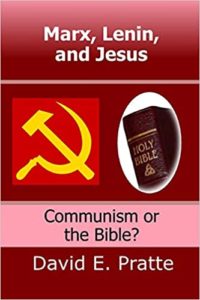
After an election season, many may be burned out by politics. However, the subject of this book is still an important topic and one that is more than just a political one. The book we will review here is one that I recently read: Marx, Lenin, and Jesus: Communism or the Bible? by David E. Pratte.