Harvest Is Past

Countryside

In Jeremiah 8, the prophet condemned the people of Jerusalem for their sins. The condemnation was not for an occasional misstep, but for the persistent practice of sin and their stubborn refusal to repudiate it: “Why then has this people, Jerusalem, turned away in apostasy? They hold fast to deceit, they refuse to return” (Jeremiah 8:5).

The deceit to which they held fast consisted of the lies of the scribes (Jeremiah 8:8) and of the priests who would say “‘Peace, peace,’ but there is no peace” (Jeremiah 8:11). They had become so accustomed to their sin that they were no longer “ashamed of the abomination they had done…and they did not know how to blush” (Jeremiah 8:12). They had replaced the Lord with “graven images” and “foreign idols” (Jeremiah 8:19).

After outlining this miserable state of the people, the prophet said, “Harvest is past, summer is ended, and we are not saved” (Jeremiah 8:20).
Continue Reading

What Have You Done?

Cain and Abel

What have you done?” Children often hear this question from their parents. They quickly learn that this question means three things: (1) they did something wrong, (2) they were caught, and (3) there are consequences to follow.

Our heavenly Father asked this question twice in the early chapters of the Bible with the same kind of meaning. The first came after Adam and Eve sinned by eating of the forbidden fruit. He asked Eve, “What is this you have done?” (Genesis 3:13). Following that, Cain sinned when he murdered his brother Abel. When God confronted Cain, He asked, “What have you done?” (Genesis 4:10).

There are lessons for us today from this question.
Continue Reading

Keywords in the Prophecy of the Coming Kingdom

Matterhorn mountain

Isaiah prophesied of a kingdom that was to come “in the last days” – the age that was ushered in following the coming of Christ into the world (cf. Hebrews 1:2). There are several keywords in this prophecy that we must understand if we are to appreciate what the passage teaches.

Now it will come about that in the last days the mountain of the house of the Lord will be established as the chief of the mountains, and will be raised above the hills; and all nations will stream to it.

And many peoples will come and say, ‘Come, let us go up to the mountain of the Lord, to the house of the God of Jacob; that He may teach us concerning His ways and that we may walk in His paths.’ For the law will go forth from Zion and the word of the Lord from Jerusalem.

And He will judge between the nations, and will render decisions for many peoples; and they will hammer their swords into plowshares and their spears into pruning hooks. Nation will not lift up sword against nation, and never again will they learn war” (Isaiah 2:2-4).

Let us briefly consider each of these key terms:
Continue Reading

Contrasting the Righteous and the Wicked: A Brief Examination of Psalm 1

Psalms

In the first psalm, we read of a sharp contrast between the righteous and the wicked. As we strive to be righteous and avoid wickedness, let us briefly consider the words of the psalmist.
Continue Reading

The Preterist View Heresy

The Preterist View, also called Realized Eschatology or the A.D. 70 Doctrine, is an error that seems to resurface every so often. The doctrine states that the Second Coming of Christ, the final judgment, and the end of the world occurred in A.D. 70 with the destruction of Jerusalem at the hand of the Romans.

Max King essentially wrote the book on this doctrine, making the case for it in his 1971 book, The Spirit of Prophecy. Bill Reeves wrote a series of articles answering King’s arguments and demonstrating from the Scriptures the truth about the end times.

If you come across the doctrine today, the arguments made by its proponents will likely be essentially the same arguments made by King in his book. So if you are looking for material to help answer this issue, the articles by Brother Reeves should be useful.

This series of articles, The Preterist View Heresy by Bill Reeves, is available on the website of the Parkway church of Christ.

Doctrine of Baptisms

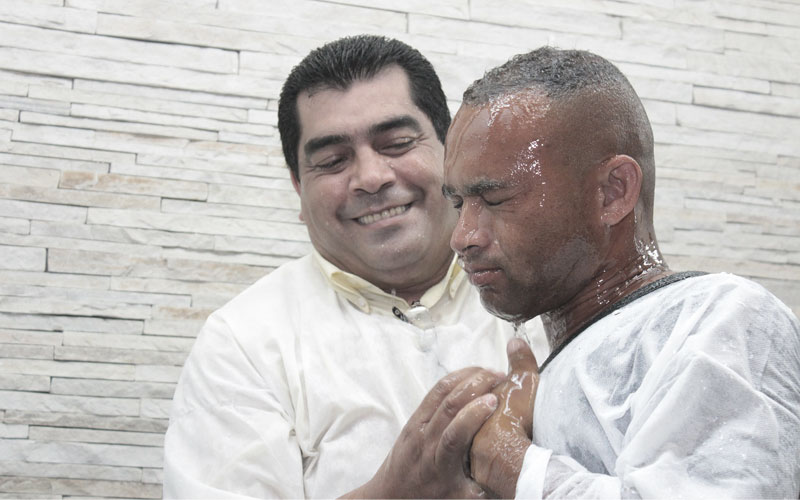
Baptism

After rebuking his audience for their lack of spiritual growth, the Hebrew writer told them they needed to leave the elementary teachings – those things that made up the foundation of their faith – and press on to maturity (Hebrews 6:1). Included in this foundation was the “instruction about washings” or the “doctrine of baptisms” (Hebrews 6:2).
Continue Reading

Redemption & Forgiveness; Sin & Judgment

[This article was written by Robert A. Sochor.]

In Ephesians 1:3-10, salvation is described using very noble words and ideas, especially verse 7 which contains much information concerning the New Testament plan and need of salvation. Redemption through His blood presents the idea to buy back that which would otherwise be lost. It is central to the gospel — one might say it is the gospel. The purpose of the gospel is not to make the world better but to redeem some out of the world. Titus 2:14 shows we are redeemed by Christ to be a special, pure people zealous for good works. Christians are to consider redemption as most precious because of the great price paid for it (1 Peter 1:18,19). The spiritual blessings we have in high places (Ephesians 1:3) we have because of the blood of Christ (Revelation 5:9,10).

Forgiveness of sins is also mentioned in Ephesians 1:7. Forgiveness is defined as giving up resentment against or the desire to punish — to stop being angry with — also, to cancel or remit a debt (Webster). This idea is also central to the New Testament. It must be very special to the Christian (1 John 2:12). It must be central to gospel preaching (Acts 13:38) and based upon the work of Jesus and the terms of the gospel. The idea of pardon also helps describe forgiveness. We might think of a convicted prisoner who has no right by his or her own merit to be free again but is granted a pardon or forgiveness of the crime by one in authority, thus regaining freedom. Christians have forgiveness of sins through blood and by grace which make it quite important in light of Romans 6:23. In the affairs of men, forgiveness of crime or wrongdoing may or may not come with conditions. In the area of eternal salvation, forgiveness has very well defined conditions required in the gospel.

Ephesians 1 uses very eloquent terms to describe what God has done for our salvation. But there are some very common ideas today that undermine the teaching of this chapter and much of the New Testament. If we believe there is no such thing as sin or fail to see our works as transgressions before God, then we will never appreciate passages like Ephesians 1 which speak of redemption and forgiveness of sins. If sin does not exist or is really not so bad, then redemption (or the blood of Christ) has little meaning to us. If sin does not result in eternal loss (Romans 6:23), then why did Jesus die? It would have little or no significance to us. We cheapen the ideas of redemption and forgiveness by dismissing the idea of sin, and passages such as Ephesians 1 could be removed from the Bible and not be missed. It has been said that true understanding of sin and its consequences is the only way to fully understand and appreciate the grace of God, our salvation, and the price that was paid for it.

The same thing could be said for denying the idea of Judgment Day or that anyone could be lost eternally at that time. Some believe God will save all at the last day. The Bible is clear that there will be a day of judgment (Romans 14:10) and that some will be eternally lost that day (Matthew 25:46). If this is not true, then why would we ever need the blood of Christ? We would need redeeming from what and for what?

Our salvation is great and precious. Having a good Bible understanding of sin and eternal loss will help us understand what Christians have been blessed with in heavenly places (Ephesians 1:3-10).