
Ezekiel 18 addresses the justice of God – how He treats individuals, both the righteous and the wicked, and how He will judge us. Let us examine what this chapter teaches us about God and His justice.
Continue Reading
Ezekiel 18 addresses the justice of God – how He treats individuals, both the righteous and the wicked, and how He will judge us. Let us examine what this chapter teaches us about God and His justice.
Continue Reading

God showed the prophet Amos three visions that warned about the coming judgment against Israel (Amos 7:1-9). After the first two visions, Amos protested, pleading for mercy on behalf of Israel. But after the third vision he did not. What was different about the third vision? Answering this question will provide a valuable lesson for us today.
Continue Reading
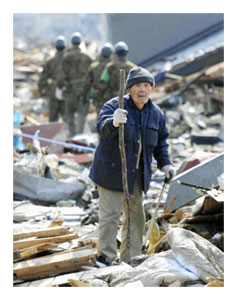 It is truly sad to read news reports and see pictures and videos of the devastating effects of the earthquake and tsunami that occurred in northern Japan. While our hearts go out to the victims and our prayers are for all those affected, it is also important to remember some important lessons that this tragedy teaches us.
Riches are uncertain — Paul told Timothy, “Instruct those who are rich in this present world not to be conceited or to fix their hope on the uncertainty of riches, but on God, who richly supplies us will all things to enjoy” (1 Timothy 6:17). The material possessions we currently have are not guaranteed to remain in the future. While we may use and enjoy the things of this life, we must remember that they are not of lasting significance. Jesus said, “not even when one has an abundance does his life consist of his possessions” (Luke 12:15). Therefore, He says, “Do not store up for yourselves treasures on earth, where moth and rust destroy, and where thieves break in and steal. But store up for yourselves treasures in heaven, where neither moth nor rust destroys, and where thieves do not break in or steal; for where your treasure is, there your heart will be also” (Matthew 6:19-21).
Continue Reading
Many people struggle with the above question. We know that God, by His very nature, is love (1 John 4:8), and that hell is a place of eternal torments (Matthew 25:41, 46). How then could God condemn anyone to such a place? This does not fit with the concept many people have of a loving God. Therefore, many start to doubt the existence of hell or even the existence of God.
The Scriptures teach that God will send certain individuals to eternal punishment in hell. Not only that, but His doing so will not be inconsistent with His nature, but instead will be consistent with the way He is described in the Bible.
Continue Reading

Shortly before the Israelites were to cross the Jordan to conquer the promised land, the sons of Rueben and Gad came to Moses and requested that they be allowed to take possession of the land east of the Jordan rather than the land across the river where the rest of their brethren were going (Numbers 32:1-5). At first Moses objected, accusing these tribes of abandoning and discouraging their brethren as they were about to go to war with the inhabitants of Canaan (Numbers 32:6-7). But the sons of Rueben and Gad assured Moses that they would first build cities for their families and sheepfolds for their livestock, then they would cross over and fight with their brethren, not returning to their homes until the other tribes took possession of the land (Numbers 32:16-19).
Moses agreed to this proposition. If the men would cross the Jordan with their brethren, fight with them, then after their victory return to their homes, they could have the land east of the Jordan as their inheritance (Numbers 32:20-22). But Moses warned them against failing to carry out what they had promised to do: “But if you will not do so, behold, you have sinned against the Lord, and be sure your sin will find you out” (Numbers 32:23).
These men needed to be sure they understood the seriousness of both their words and their actions, and the consequences of their failure. We need to learn these lessons today as well.
Continue Reading
King Saul received instructions from the Lord regarding the destruction of the Amalekites. “Now go and strike Amalek and utterly destroy all that he has, and do not spare him; but put to death both man and woman, child and infant, ox and sheep, camel and donkey” (1 Samuel 15:3).
This is not the only time we read of children being killed in the execution of divine judgment. The skeptic sees this as an opportunity to attack God, the Bible, and the faith of those who believe in God. Why would God kill, or instruct others to kill, infants and children?
Tim Haile has put together a good study on this question. If you have wondered how a just God could allow these children to be killed along with the wicked, or you want to better equip yourself to answer the skeptic on this point, I encourage you to read his material.
You can find the article at the following link: God’s Killing of Children in Old Testament Judgments (PDF)
Man has repeatedly tried to predict the date of the Day of Judgment. Predicted dates have come and gone and been replaced with future dates. These predictions are made by those who twist the Scriptures any way they can to come up with a date that suits them.
Continue Reading










What does “propitiation” mean? How is “justification” connected to salvation? What does “sanctification” look like in our day-to-day lives? The Bible uses some powerful words to describe God’s plan to save mankind. However, these words are not always easy to understand, especially when they are not part of our everyday vocabulary. This book explores key Bible terms that unlock the message of the gospel.
Big Words in the Bible examines five important words – Propitiation, Reconciliation, Sanctification, Justification, and Resurrection – using plain language to see how the Scriptures describe these concepts and how the apostle Paul employs them in his letter to the Romans. This book also contains an appendix with eleven additional articles to explore these topics further.
Whether you are new to the Bible and want to grow in your understanding or want a simple way to explain these core gospel doctrines to others, this book will be helpful. With a focus on the Scriptures, Big Words in the Bible helps break down these fundamental topics to shed light on the life-changing message of the gospel and the salvation found in it.
Available in print and digital format.

This work is licensed under a Creative Commons Attribution-NonCommercial-ShareAlike 3.0 Unported License.
If you have further questions about using any of the material on this site, please contact me.