Lessons from the Limited Commission

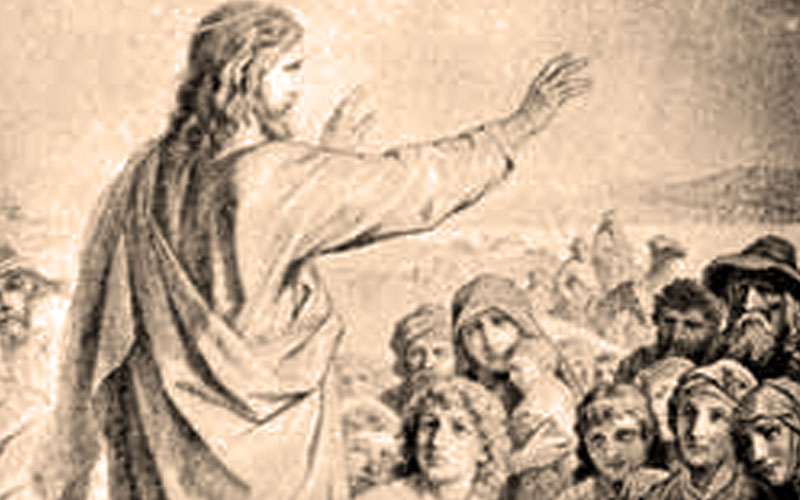
We often remember the “Great Commission” in which Jesus told His apostles, “Go into all the world and preach the gospel to all creation” (Mark 16:15). However, prior to this, Jesus gave His apostles what we may call the “Limited Commission.” They were to “go to the lost sheep of the house of Israel” (Matthew 10:6).

Though we are living in the time since the giving of the Great Commission, there are still important lessons we can learn from the earlier Limited Commission that apply even today.
Continue Reading

Jeremiah’s Commission

Jeremiah

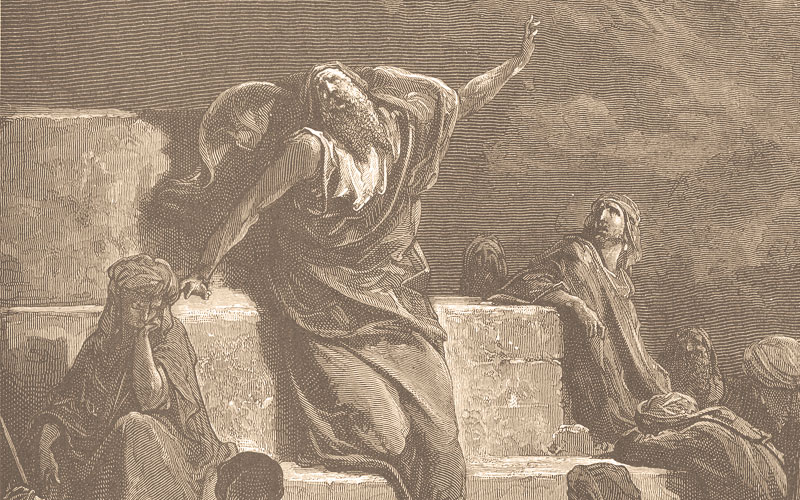
Even before he was conceived, Jeremiah was specifically appointed by God as a prophet (Jeremiah 1:5). We may not be called to do the work of a prophet today (cf. 1 Corinthians 13:8-10), but we can still learn from the instructions which were given to Jeremiah. We are obligated to teach and defend the truth (1 Timothy 3:15; Philippians 1:16-17). Studying Jeremiah’s commission helps us to learn how to do this.

Then the Lord stretched out His hand and touched my mouth, and the Lord said to me, ‘Behold, I have put My words in your mouth. See, I have appointed you this day over the nations and over the kingdoms, to pluck up and to break down, to destroy and to overthrow, to build and to plant’” (Jeremiah 1:9-10).

There were six things that Jeremiah would do in his prophesying – (1) pluck up, (2) break down, (3) destroy, (4) overthrow, (5) build, and (6) plant. These are the same six things we must do in our teaching today.

Before we consider these six things, it is important to note that all of this would be accomplished with the words of God (Jeremiah 1:9). In the same way, we will accomplish these six things by speaking “as the oracles of God” (1 Peter 4:11, NKJV). We must not look to human wisdom, commandments, traditions, or opinions to accomplish our goals in teaching. Instead, we must look exclusively to the word of God.

So let us notice the six things we must do as we teach God’s word.
Continue Reading

What Do the Numbers Tell Us?

Chart

There is often a great deal of emphasis placed upon numbers in a congregation – membership, attendance, converts, etc. This is somewhat natural. We tend to want some way to gauge success or progress in our efforts. Yet numbers rarely tell the whole story and, in many ways, can even be deceiving. Rather than being quick to jump to conclusions based upon numbers, we should look to God’s word to gauge our success in carrying out His will.
Continue Reading

“Raccoon” John Smith: Hard Preaching

During the time when “Raccoon” John Smith (1784-1868) was preaching, the erroneous tenets of Calvinism were widely believed by those around him in the religious world. Smith himself had believed Calvinism early in his life before learning the truth. After learning the truth, he ardently opposed it in his preaching.

His wife Nancy, however, thought that he was “too hard” against Calvinism. In the following excerpt, Smith explained to her why he preached the way he did.
Continue Reading

The Four C’s of Effective Preaching

Speaker

Any preacher who is diligently striving to “do the work of an evangelist” (2 Timothy 4:5) will want to carry out that work as effectively as possible. But how can one effectively preach the gospel of Christ? In this article, I would like to consider four points explaining how this is done. These points are not based upon personal experience, human wisdom, or any sort of formal religious training. Rather, these points are taken directly from the word of God. If one wishes to preach the word of God effectively, he must learn how the Scriptures indicate that this is done.
Continue Reading

Aylette Raines: “I Understood the First I Ever Heard”

Aylette Raines (1798-1881) was sprinkled in the Episcopal church when he was four years old, but by the time he was a young adult, had become a Universalist. When he had the opportunity to hear Walter Scott, a preacher of the gospel, he went to hear him so that he might challenge Scott to a debate. In the excerpt below, Raines recalls his encounter with Scott and explains why a debate never happened.
Continue Reading

“These Were More Noble-Minded”

Paul preaching in Thessalonica

Paul was in Thessalonica for just three weeks when he had to quickly leave the city under the cover of darkness because of the uproar that was caused by his preaching (Acts 17:1-10). When he left, he went to Berea. Undeterred by his experience in Thessalonica, he preached in this new city as well. Luke noted the significant reaction of the Bereans:

Now these were more noble-minded than those in Thessalonica, for they received the word with great eagerness, examining the Scriptures daily to see whether these things were so” (Acts 17:11).

Luke compared the Thessalonians and the Bereans in their reaction to the gospel. The Bereans were “more noble-minded” in that they “received the word with great eagerness.” This does not mean that everyone in Thessalonica rejected the gospel – some were persuaded (Acts 17:4). This also does not mean that everyone in Berea accepted the gospel – the Jews of Thessalonica were able to come to Berea and turn “the crowds” against Paul (Acts 17:13). But there is an important difference between the first recipients of the gospel in each city – those in the synagogues (Acts 17:2, 10). Notice what Luke recorded about Paul’s custom in preaching.
Continue Reading