Recently I’ve preached a few lessons about things that threaten unity within a local church. The outlines have been posted on my other site – DIY Sermon Outlines. Below is a list with links to the various lessons in that series.
Continue Reading
October 21, 2011
Dealing with Threats to Unity within a Local Church
October 12, 2011
The Seed of the Sower
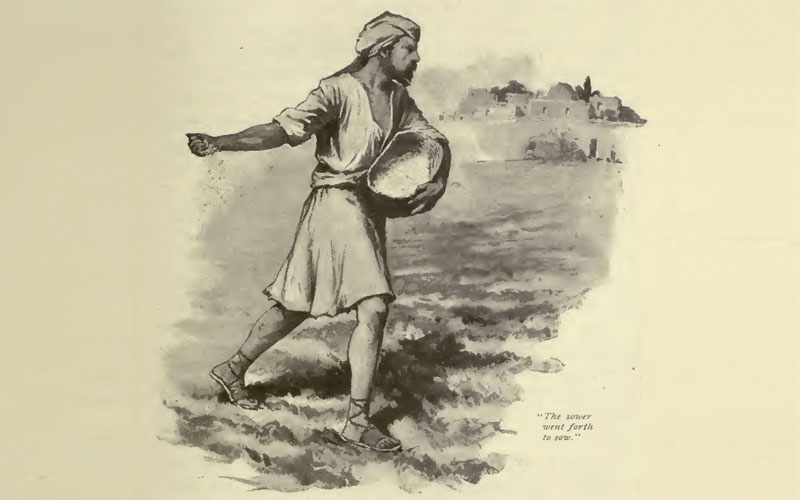
The parable of the sower is one of the more familiar parables spoken by Jesus. In it, He taught an important lesson about the type of message that is required in order to produce fruit.
Continue Reading
October 6, 2011
How God Is Able to Establish You

As Paul concluded his epistle to the Romans, he praised God for His ability to establish them (Romans 16:25-27). This means He was able to make them strong, complete, and equipped to follow Him and to face the trials that exist in this life. Is God able to establish us today? If so, how?
Earlier in this letter, Paul expressed a desire to come to them in Rome: “For I long to see you so that I may impart some spiritual gift to you, that you may be established” (Romans 1:11). What were these spiritual gifts that Paul would impart to them in order to establish them? These miraculous gifts of the Spirit are enumerated in the first letter to Corinth and included such gifts as knowledge, prophecy, and the ability to speak in tongues (1 Corinthians 12:7-11). Do we need to have some miraculous spiritual gift in order to be established today? If so, we are in trouble because Paul later said that such miraculous spiritual gifts would be “done away” and replaced with the completed revelation in the word of God (1 Corinthians 13:8-10). This is what we need in order to be established today – the word of God. In our text, Paul described the word in several different ways, showing how it is able to establish us.
Continue Reading
September 28, 2011
Preaching and Writing

While I was in high school, I made the decision that when I grew up I wanted to be a gospel preacher. So at that point, I began writing religious articles. I did not care for writing in school and was never a gifted writer, so I needed to start practicing and improving my skills. I saw writing as an inherent part of the work of a preacher, as this would provide another avenue through which to spread the gospel message. So since I decided I was going to preach, I decided I also needed to write.
Nearly fifteen years later, it appears to me that preachers in general do not do as much writing as I thought they would. Dedicating time regularly to writing seems to be the exception rather than the rule. Maybe this has always been the case and my youthful naiveté led me to wrongly assume that writing was common for preachers. Perhaps more preachers are writing than the relative few of which I am aware. Or it could be that writing by gospel preachers has decreased in the last decade or so. Regardless of which one is closest to reality, I want to deal with some reasons why writing is a valuable endeavor for preachers and should not be quickly dismissed.
Continue Reading
September 7, 2011
Advice to Young Preachers

Some might wonder how it is that someone like myself – a thirty year old with no “full-time” preaching experience – would be so bold as to hand out advice to young preachers (many of whom would be my peers). I am not so arrogant as to think that I have wisdom that compares with a man who has been preaching the gospel for decades. But I do have the Scriptures – the inspired word of God (2 Timothy 3:16). Therefore, when I teach the things that come from God (cf. 1 Peter 4:11), I can do so as Titus was told to teach – “with all authority” (Titus 2:15). So let us briefly look at some of the Bible instructions on preaching that young (and old) preachers need to always remember.
Continue Reading
August 4, 2011
Who Are You Who Judge Your Neighbor?
We live in a time when tolerance is a chief virtue – not tolerance in the way the Bible defines it, but tolerance for almost any sort of sin or error that may be practiced or promoted by man. As a result, our society is most intolerant of what could be seen as one person judging another. After all, what business do we have judging anyone else?
This is a good question to consider. We certainly must not judge when it is not our place to do so. James wrote, “There is only one Lawgiver and Judge, the One who is able to save and to destroy; but who are you who judge your neighbor?” (James 4:12). Paul wrote, “Now accept one who is weak in faith, but not for the purpose of passing judgment on his opinions” (Romans 14:1). A little bit later he asked: “But you, why do you judge your brother: Or you again, why do you regard your brother with contempt? For we will all stand before the judgment seat of God” (Romans 14:10). One of the most quoted statements by Jesus was spoken in His Sermon on the Mount: “Do not judge so that you will not be judged” (Matthew 7:1).
Do these passages teach that all judgments we might make are wrong? Conversely, is it possible to be wrongly accused of judging others?
Continue Reading
June 4, 2011
Reporting Back to Antioch
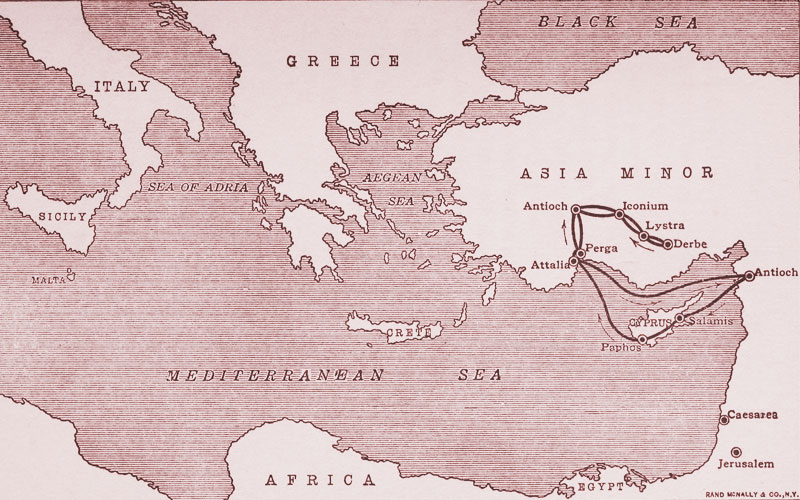
Following the preaching trip that took them through such places as Iconium, Lystra, and Derbe, Paul and Barnabas returned to Antioch. Luke wrote, “When they had arrived and gathered the church together, they began to report all things that God had done with them and how He had opened a door of faith to the Gentiles” (Acts 14:27).
It is important to notice what happened here, particularly today as churches may support preachers who work in other locations. The church in Antioch “sent” Paul and Barnabas on this trip to preach the gospel in various places (Acts 13:3). That sending does not imply a command for them to go – that was given by the Holy Spirit (Acts 13:2, 4). Instead, the implication is that the church supported (financially) these men in their work.
When Paul and Barnabas returned to Antioch, they did not just meet with the elders of the church or with a few other individuals. The account of their work did not take place during a common meal or other casual setting. Rather, they “gathered the church together.” This shows us that it is perfectly acceptable for a congregation to invite a preacher to come and give a report on the work that they helped to support. More than this, we can be reminded of the benefits of such reports.
Continue Reading