Faith on Man’s Terms

The Scriptures are clear in describing faith as essential. The Hebrew writer said, “And without faith it is impossible to please Him” (Hebrews 11:6). Yet too many have a conditional faith. In other words, even though the Bible tells us that faith is based upon the word of God (Romans 10:17), this is not enough for some people. They will not believe unless they see, receive, or otherwise experience something beyond the revealed will of God.

This is nothing new. Even during the first century, there were those who would only have faith on their terms, rather than have faith based upon what God had chosen to reveal to them. In this article we will notice a few of these conditions that men have placed upon their faith. At the end, we will also see what genuine faith looks like.
Continue Reading

Jesus’ Resurrection: Just an Optical Illusion?

The resurrection of Christ is fundamental to our faith. Paul lists it with the death and burial of Christ as being “of first importance” in the gospel (1 Corinthians 15:3-4). We are “born again to a living hope through the resurrection of Jesus Christ from the dead” (1 Peter 1:3). If the resurrection of Christ did not happen, Paul tells the brethren in Corinth, “Your faith is worthless; you are still in your sins” (1 Corinthians 15:17).

Since the time of Jesus’ resurrection, His opponents have denied that this event happened (Matthew 28:11-13). Opponents of Christ and His truth continue to deny the resurrection today. A new theory about the resurrection has been proposed by Thomas de Wesselow, an art historian. His theory revolves around the Shroud of Turin – the alleged burial cloth that was used to wrap the body of Jesus after His death. He argues that the image on the Shroud “fooled the Apostles” by producing an “optical illusion” that made them believe they were seeing their risen Lord.
Continue Reading

Some Thoughts on Easter

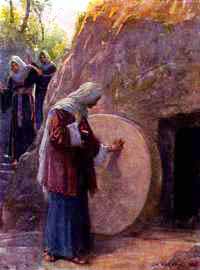
Garden Tomb

As the religious world prepares for the Easter holiday this Sunday, let us be reminded of what the Bible has to say on the topic.

Is Easter in the Bible? Yes and no, depending on what is meant by the question. Is the word Easter in the Bible. Yes, if you are reading the King James Version. When Herod killed James and saw that it pleased the Jews, he intended to do the same to Peter. Luke recorded, “And when he had apprehended him, he put him in prison, and delivered him to four quarternions of soldiers to keep him; intending after Easter to bring him forth to the people” (Acts 12:4).

However, if you read from a different translation, such as the New American Standard Bible, a different word is used instead of Easter: “…intending after the Passover to bring him out before the people.” Which is the correct translation? The Greek word used here is pascha (Passover). It refers to the feast of Unleavened Bread that was instituted for the Jews under the Old Law (cf. Exodus 12:1-27). Easter does not belong in Acts 12:4.
Continue Reading

The Fourfold Foundation of the Gospel

Cross

For I delivered to you as of first importance what I also received, that Christ died for our sins according to the Scriptures, and that He was buried, and that He was raised on the third day according to the Scriptures, and that He appeared to Cephas, then to the twelve. After that He appeared to more than five hundred brethren at one time, most of whom remain until now, but some have fallen asleep; then He appeared to James, then to all the apostles; and last of all, as to one untimely born, He appeared to me also” (1 Corinthians 15:3-8).

As Paul wrote to the brethren in Corinth, he reminded them of the fundamental truths in the gospel upon which everything else was built. In the verses above, the apostle mentioned four facts that are “of first importance” to God’s saving message.
Continue Reading

Of First Importance

For I delivered to you as of first importance what I also received, that Christ died for our sins according to the Scriptures, and that He was buried, and that He was raised on the third day according to the Scriptures” (1 Corinthians 15:3-4).

Paul told the Corinthians that he had and was presently preaching the gospel to them (1 Corinthians 15:1). The reason why it was important is because the gospel brings salvation (1 Corinthians 15:2). It is “the power of God for salvation” (Romans 1:16). In the preaching of the gospel, that which is “of first importance” is the death, burial, and resurrection of Christ.
Continue Reading