Water Separates

Water

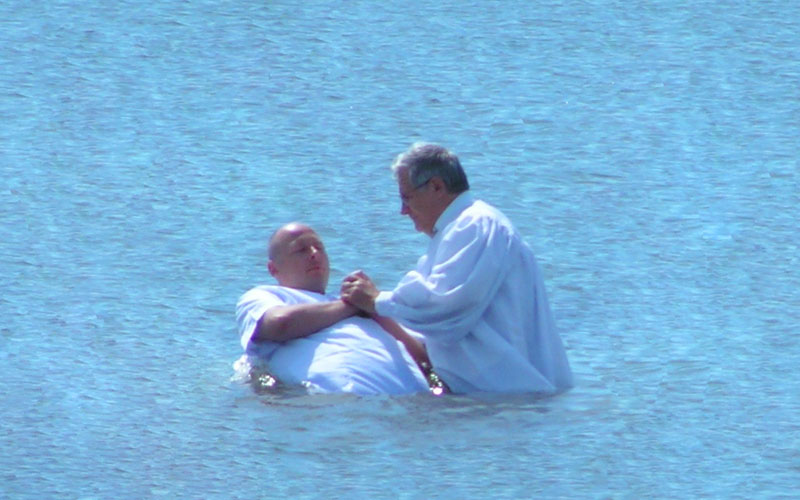
There are a variety of views in the religious world about water baptism. Some believe it is unnecessary. Some call it a good work. Others describe it as an outward sign of an inward grace. The Scriptures teach that baptism plays a significant part in our personal salvation. Notice what Peter wrote:

For Christ also died for sins once for all, the just for the unjust, so that He might bring us to God, having been put to death in the flesh, but made alive in the spirit; in which also He went and made proclamation to the spirits now in prison, who once were disobedient, when the patience of God kept waiting in the days of Noah, during the construction of the ark, in which a few, that is, eight persons, were brought safely through the water. Corresponding to that, baptism now saves you—not the removal of dirt from the flesh, but an appeal to God for a good conscience—through the resurrection of Jesus Christ” (1 Peter 3:18-21).

Peter reminded his readers of the flood in Noah’s day and stated that it parallels baptism. In the time of the flood, there were two groups of people – those who were saved and those who were lost. The ones who were lost were those outside of the ark. The ones who were saved were those in the ark who “were brought safely through the water.” The water made a clear distinction between these two groups.
Continue Reading
The Demons Also Believe

Ice Devil

The Scriptures plainly teach that we are saved by faith (John 8:24; Romans 5:1). But what kind of faith saves us? Is it simply a belief in Christ as the Savior? Is it an obedient faith? Sadly, the religious world is divided over the nature of faith, even though the Scriptures give us a clear answer regarding the type of faith that saves us.
Continue Reading

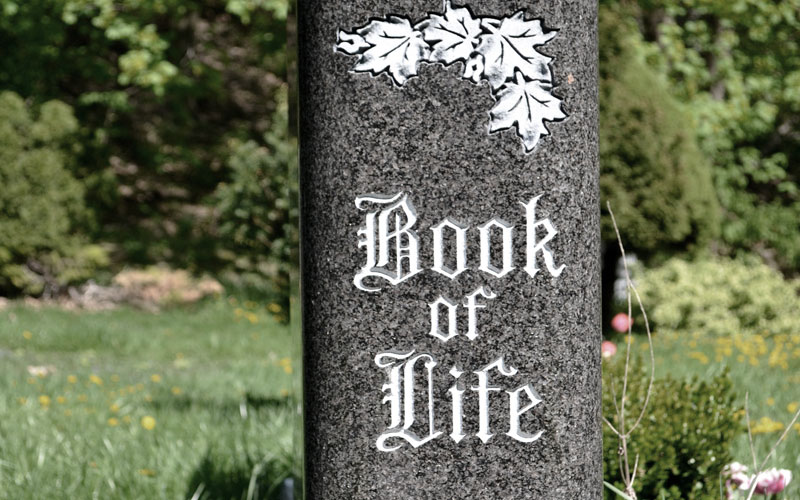
The Book of Life

Book of Life

The book of life is one of the books that will be opened at the day of judgment (Revelation 20:12). What is this book? How do we have our name added to it? How important is it that our name is found there? Let us notice a few things the Scriptures teach about this book.
Continue Reading

The Value of the Old Testament

Bible reading

At the first of the year, I started a Bible reading plan that would take me through the Bible in one year. There are several different reading plans people use to read through the Bible. Some sort the books by chronological order. Others arrange the schedule so that one reads a portion of both the Old and New Testaments each day. The plan I followed this year went through the books of the Bible in the order they appear. I have been able to keep up with the schedule (though there were times I was playing catch-up) and am currently up to date with the readings.

On October 1, I finished the book of Malachi. That means it took just over nine months to finish the Old Testament.

This served as a simple reminder that we cannot ignore the Old Testament Scriptures. Yes, we are under a new law (Hebrews 8:8-10) and the old law was nailed to the cross (Colossians 2:14). But that does not mean the Old Testament is worthless to us today.
Continue Reading

Who Will Be Lost? Who Will Be Saved?

Thinking young man

Anyone who has even a mild interest in spiritual things wants to go to heaven. Do you just want to go, or are you really going? How can we know if we are going to heaven or not?

Many times when one tries to explain who is and who is not going to heaven, charges are made that such a one is judging others. It is of prime importance that we understand who it is that is the Judge, for there is only one (James 4:12). Paul said, “We must all appear before the judgment seat of Christ” (2 Corinthians 5:10).

It does not matter what you or I think. What matters is what He thinks. Judgment will be made according to His word (John 12:48). So what does the word of God say? First of all, it says that many will be lost while only a few will be saved (Matthew 7:13-14). If we want to be among the saved, we ought to find out what His word says about who will be saved and who will be lost.
Continue Reading

“Christ Did Not Send Me to Baptize”

Baptism

There is a sharp divide in the religious world over the subject of baptism. Some, including myself, teach that baptism is necessary for salvation. Many others teach that one can be saved before or without water baptism.

Paul made an interesting statement in his first letter to the church at Corinth. Considered independently from the immediate context and the rest of the New Testament, it could easily be used to argue that baptism is not necessary for salvation. Notice what he told the brethren:

For Christ did not send me to baptize, but to preach the gospel, not in cleverness of speech, so that the cross of Christ would not be made void” (1 Corinthians 1:17).

Paul said he was not sent to baptize. From that, are we to conclude that baptism is not a prerequisite to salvation? Before we jump to that conclusion, let us take a closer look at what the Scriptures teach.
Continue Reading

Having a Proper Sense of Self-Worth

Woman at sunset

We must guard ourselves against the sin of arrogance. The wise man warned, “Pride goes before destruction, and a haughty spirit before stumbling” (Proverbs 16:18). Paul admonished the saints in Rome, “Everyone among you [is] not to think more highly of himself than he ought to think” (Romans 12:3). James said, “God is opposed to the proud, but gives grace to the humble” (James 4:6).

While it is necessary that we keep from thinking too much of ourselves, we must also keep from thinking too little about ourselves. There is a balance. Thinking too little of ourselves can also lead to sin. If we think that our lives do not matter, we may be reckless in our actions and transgress God’s law. If we think that no one pays attention to us and we will, therefore, not be accountable to others, it becomes easier to flirt with sin. If our self-esteem is dependent upon what others think of us, we will act in such a way as to find approval from others, even if it means committing sin.

Therefore, we must have an appropriate sense of self-worth. Thinking too much of ourselves leads to sin. Thinking too little of ourselves also leads to sin. We need to find the proper balance.
Continue Reading