What Is Truth?

Truth, newspaper

What is truth?” This was the question Pilate asked Jesus after hearing the Lord’s claim that He came to testify to the truth (John 18:36-37). When we think about truth, we must understand two things: (1) it is unchanging and (2) it is the same message for all. The word of God is truth (John 17:17). His word does not change (1 Peter 1:25) and is to be preached to all people everywhere (Mark 16:15).

Many have the idea that there can be many truths – you may have your own truth, and I may have mine. This is not what the Bible teaches. The same message of truth is for all. The differences come from our perception of the truth. These perceptions can be very different, despite a common message.

In the minds of man, truth can have various characteristics. Let us consider the conflicting characteristics of truth depending on the perspective of the hearer.
Continue Reading

All Spiritual Blessings in Christ

Ephesians 1:3

Paul began his letter to the Ephesians by offering praise to God: “Blessed be the God and Father of our Lord Jesus Christ” (Ephesians 1:3). There are many reasons why God is worthy of all praise and honor; but in this passage, Paul directed our attention to the spiritual blessings we have from Him. We give glory to God because he has “blessed us with every spiritual blessing in the heavenly places in Christ” (Ephesians 1:3).

As Paul continued, he listed some of the spiritual blessings available to us:
Continue Reading

The Catholic Church’s Search for Aliens

Last week the Associated Press reported that the Vatican is looking for signs of alien life. They have called in thirty scientists from several countries to study “whether sentient life forms exist on other worlds.” If extraterrestrial life is possible, there is also the question about “its implications for the Catholic Church.”

The subject of aliens is an interesting topic to many people. But what, if any, bearing does it have on our faith or service to God. Regardless of whether extraterrestrial life is possible, or even if intelligent life forms do exist on other planets, there are some truths that we must remember. These will not change, no matter what is discovered by science (or the Catholic Church).
Continue Reading

A Call for Praise to the Lord

Psalm 100 is a call for all men to praise the Lord. It also reminds us of the reasons we are to praise Him and what our attitude should be in our praise.

Shout joyfully to the Lord, all the earth.

Serve the Lord with gladness; come before Him with joyful singing.

Know that the Lord Himself is God; it is He who has made us, and not we ourselves; we are His people and the sheep of His pasture.

Enter His gates with thanksgiving and His courts with praise. Give thanks to Him, bless His name.

For the Lord is good; His lovingkindness is everlasting and His faithfulness to all generations.

There are four points in this psalm that relate to our praise to God.
Continue Reading

Keywords in the Prophecy of the Coming Kingdom

Matterhorn mountain

Isaiah prophesied of a kingdom that was to come “in the last days” – the age that was ushered in following the coming of Christ into the world (cf. Hebrews 1:2). There are several keywords in this prophecy that we must understand if we are to appreciate what the passage teaches.

Now it will come about that in the last days the mountain of the house of the Lord will be established as the chief of the mountains, and will be raised above the hills; and all nations will stream to it.

And many peoples will come and say, ‘Come, let us go up to the mountain of the Lord, to the house of the God of Jacob; that He may teach us concerning His ways and that we may walk in His paths.’ For the law will go forth from Zion and the word of the Lord from Jerusalem.

And He will judge between the nations, and will render decisions for many peoples; and they will hammer their swords into plowshares and their spears into pruning hooks. Nation will not lift up sword against nation, and never again will they learn war” (Isaiah 2:2-4).

Let us briefly consider each of these key terms:
Continue Reading

The Fourfold Foundation of the Gospel

Cross

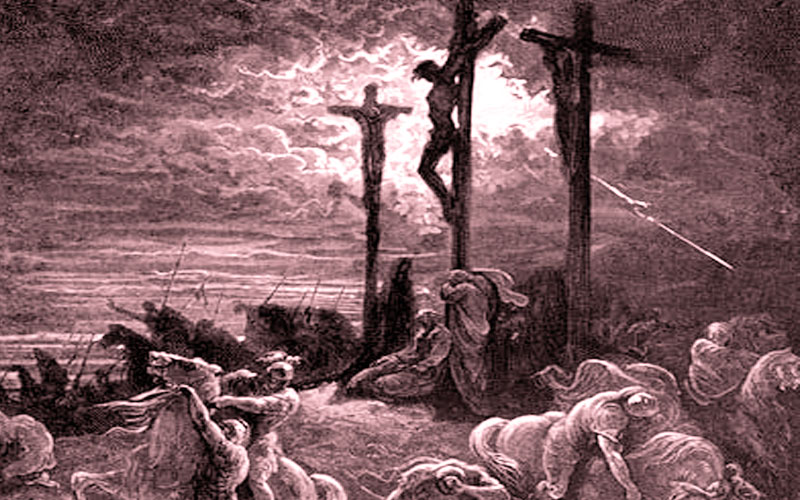
For I delivered to you as of first importance what I also received, that Christ died for our sins according to the Scriptures, and that He was buried, and that He was raised on the third day according to the Scriptures, and that He appeared to Cephas, then to the twelve. After that He appeared to more than five hundred brethren at one time, most of whom remain until now, but some have fallen asleep; then He appeared to James, then to all the apostles; and last of all, as to one untimely born, He appeared to me also” (1 Corinthians 15:3-8).

As Paul wrote to the brethren in Corinth, he reminded them of the fundamental truths in the gospel upon which everything else was built. In the verses above, the apostle mentioned four facts that are “of first importance” to God’s saving message.
Continue Reading

Noah Found Favor in the Eyes of the Lord

Rainbow

In Genesis 3, we read about sin being introduced into the world. Just three chapters later, the sins of man had progressed and compounded to such a point that “the wickedness of man was great on the earth, and that every intent of the thoughts of his heart was only evil continually” (Genesis 6:5). It is because of this great wickedness that God decided to destroy mankind (Genesis 6:6-7).

In the next chapter, God sent a flood which destroyed nearly all of mankind (Genesis 7:23). But Noah and his household were spared. “Noah found favor in the eyes of the Lord” (Genesis 6:8). We read a few things about Noah before, during, and after the events of the flood that show how he was different from the others who perished and why he found favor with God and was saved.
Continue Reading