Hold Fast the Pattern

Blueprint

Hold fast the pattern of sound words” (2 Timothy 1:13, NKJV). This was Paul’s instruction to a young evangelist. Like most other instructions we read in the New Testament, it is just as applicable to us today as it was to Timothy in the first century. But not all of these instructions are emphasized much today. It is not common to hear a denominational preacher talk about the New Testament pattern. There are some in the Lord’s church who do not like to talk about it much either.

In fact, if you emphasize the pattern, some will label you as a legalist or a Pharisee. But we know we must follow the pattern because that is what Paul told Timothy to do. So let us see what the Bible says about holding fast the pattern.
Continue Reading

Shortcuts to Bible Study

Priests in Rome

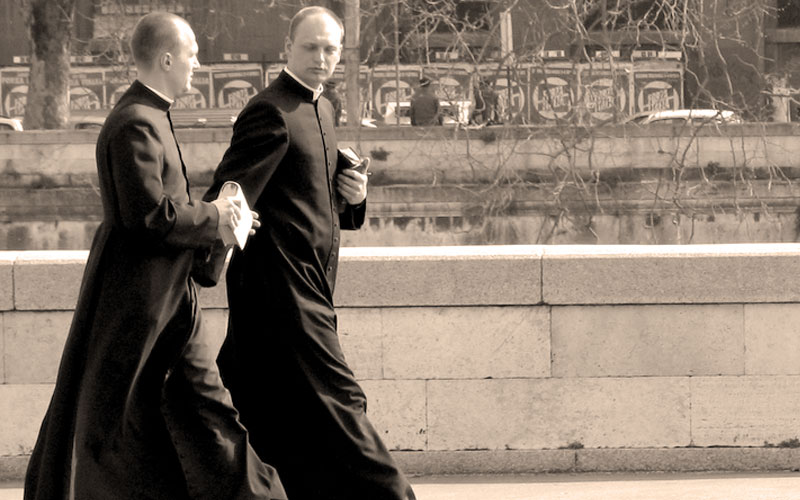
A few months ago I was sent an article that was written by a Catholic. The beginning of the article talked about the great burden it is to study the Bible. After all, the author reasoned, we are all just so busy. There is just not the time for us to study the Bible on our own. He then talked about the great blessing we have in the Catholic Church. He argued that we really do not have to study, we can just listen to what the Church tells us. And what a comfort to know that we do not have to bother with taking the time ourselves to study God’s word.

This is an example of a great problem in religion – many do not want to study. They come up with different excuses – they are busy, they do not understand, etc. So instead of studying the Bible, they look for shortcuts – ways to get around having to study much themselves. I want us to consider some of these “shortcuts” and notice what the Bible has to say about them.
Continue Reading

The Ancient Paths

Path in the Woods

When it comes to religion, many are like the ones that Paul encountered in Athens. They “spend their time in nothing other than telling or hearing something new” (Acts 17:21). While it may seem interesting or exciting to follow after the next new thing, the pursuit of these new things keeps us from remaining on the path that leads to heaven. We are warned about being “carried about by every wind of doctrine” (Ephesians 4:14). Instead of following every new thing that comes along, we must stay on the right path.

The Lord, through Jeremiah the prophet, instructed the people of Jerusalem about the path they ought to follow: “Stand by in the ways and see and ask for the ancient paths, where the good way is, and walk in it; and you will find rest for your souls” (Jeremiah 6:16). The “good way” was found in the “ancient paths,” not in the new paths of modern religion and culture. The “ancient paths” are the paths we must seek out today.
Continue Reading

Explaining and Giving Evidence

Paul preaching in Thessalonica

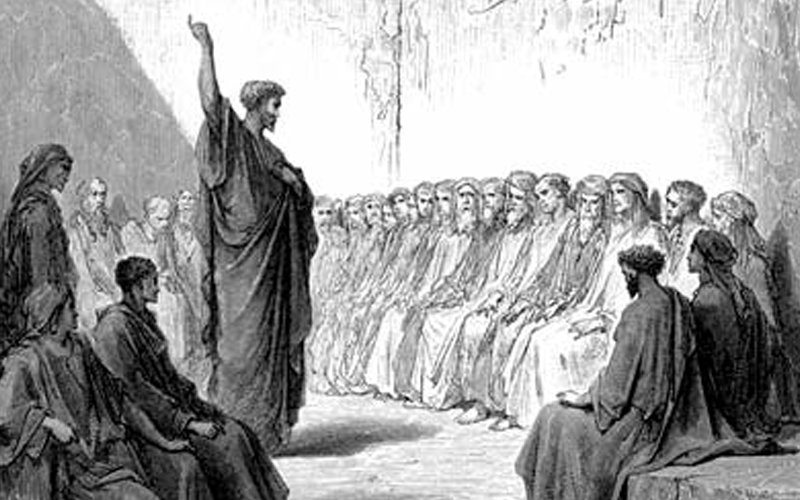
And according to Paul’s custom, he went to them, and for three Sabbaths reasoned with them from the Scriptures, explaining and giving evidence that the Christ had to suffer and rise again from the dead, and saying, ‘This Jesus whom I am proclaiming to you is the Christ’” (Acts 17:2-3).

These verses describe Paul’s teaching in the synagogue in Thessalonica. He came with the message that Jesus was the Messiah who had been prophesied of in the Old Testament.

Notice how Paul taught this message. He did not simply state his premise that Jesus was the Christ and, therefore, had to suffer and rise again. He explained and gave evidence. His explanations and evidence were from the Scriptures.
Continue Reading

Who Is Qualified to Preach the Gospel?

Preaching

It is a commendable thing for one to desire to preach the gospel. Yet not everyone should do it. James wrote, “Let not many of you become teachers, my brethren, knowing that as such we will incur a stricter judgment” (James 3:1). Preaching the gospel is a serious matter.

How would one become qualified to preach the gospel? Many denominations require that their preachers (or pastors/ministers) complete some sort of training at a college or seminary. Some of our brethren believe a preacher should attend a certain college or complete some type of preacher training program or that these somehow make him more able to teach. But if we really want to know what to expect of one who desires to preach, we need not look any farther than the word of God. The New Testament provides a description of one who is qualified (fit) to preach the gospel.
Continue Reading

Some Thoughts from 2 Timothy

In February we’re going to start studying 1 & 2 Timothy and Titus in the Sunday morning Bible class I teach. Tonight I’ve been working on the study guides. When I write a study guide, I divide them up a lesson per chapter. At the top of the page in each lesson I list a key verse in the chapter that states one of the main points.

After I finished 2 Timothy, I noticed a pattern in the verses I had chosen. 2 Timothy 1:13, 2:15, 3:16, and 4:2.
Continue Reading

His Name is John

Luke records that an angel appeared to Zacharias, a priest serving in the temple. The angel told Zacharias, “Your wife Elizabeth will bear you a son, and you will give him the name John” (Luke 1:13). The angel went on to tell Zacharias that this child would grow up and be the forerunner of the Messiah as prophesied by Malachi (Luke 1:17; Malachi 4:5-6). Zacharias did not immediately believe the angel so he was struck with silence until the time the child was born (Luke 1:20).
Continue Reading