What Is Truth?

Truth, newspaper

What is truth?” This was the question Pilate asked Jesus after hearing the Lord’s claim that He came to testify to the truth (John 18:36-37). When we think about truth, we must understand two things: (1) it is unchanging and (2) it is the same message for all. The word of God is truth (John 17:17). His word does not change (1 Peter 1:25) and is to be preached to all people everywhere (Mark 16:15).

Many have the idea that there can be many truths – you may have your own truth, and I may have mine. This is not what the Bible teaches. The same message of truth is for all. The differences come from our perception of the truth. These perceptions can be very different, despite a common message.

In the minds of man, truth can have various characteristics. Let us consider the conflicting characteristics of truth depending on the perspective of the hearer.
Continue Reading
What Judas Brought to the Garden

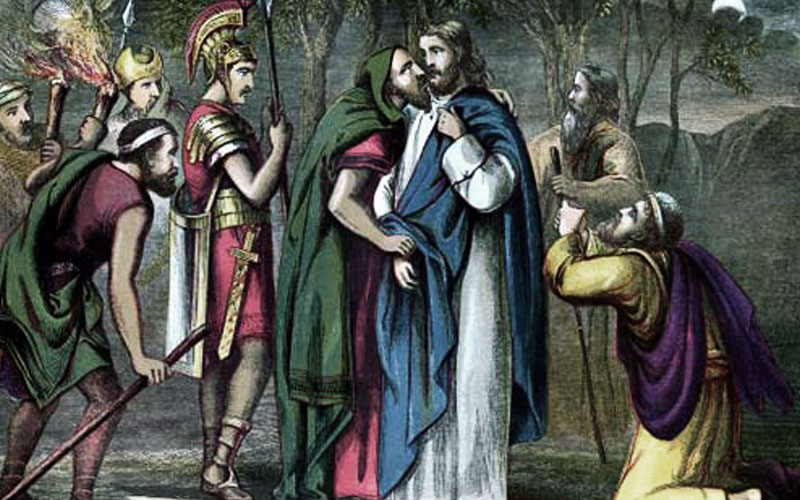
Judas Betrays Jesus

Judas is one of the most well-known villains in the Bible. Most people recognize him as being the one to betray Jesus. His decision to betray the Lord is what might be expected by one of his character. Jesus called him the “son of perdition” (John 17:12). He was identified as a thief (John 12:4-6). After betraying Jesus, instead of repenting and making things right, “he went away and hanged himself” (Matthew 27:4-5). Peter also pointed out that all of this was foreknown by God and revealed in prophecy (Acts 1:16-20).

Shortly before being betrayed, Jesus “went forth with His disciples over the ravine of the Kidron, where there was a garden, in which He entered with His disciples” (John 18:1). It was here in the garden where Judas would betray the Lord. He knew the place to go because “Jesus had often met there with His disciples” (John 18:2).

So Judas went to the garden to betray Jesus. But notice what he brought with him. “Judas then, having received the Roman cohort and officers from the chief priests and the Pharisees, came there with lanterns and torches and weapons” (John 18:3). It is interesting to see what Judas brought to the garden, particularly in light of what Jesus brought to the world.
Continue Reading

All Spiritual Blessings in Christ

Ephesians 1:3

Paul began his letter to the Ephesians by offering praise to God: “Blessed be the God and Father of our Lord Jesus Christ” (Ephesians 1:3). There are many reasons why God is worthy of all praise and honor; but in this passage, Paul directed our attention to the spiritual blessings we have from Him. We give glory to God because he has “blessed us with every spiritual blessing in the heavenly places in Christ” (Ephesians 1:3).

As Paul continued, he listed some of the spiritual blessings available to us:
Continue Reading

The Catholic Church’s Search for Aliens

Last week the Associated Press reported that the Vatican is looking for signs of alien life. They have called in thirty scientists from several countries to study “whether sentient life forms exist on other worlds.” If extraterrestrial life is possible, there is also the question about “its implications for the Catholic Church.”

The subject of aliens is an interesting topic to many people. But what, if any, bearing does it have on our faith or service to God. Regardless of whether extraterrestrial life is possible, or even if intelligent life forms do exist on other planets, there are some truths that we must remember. These will not change, no matter what is discovered by science (or the Catholic Church).
Continue Reading

Contrasting the Righteous and the Wicked: A Brief Examination of Psalm 1

Psalms

In the first psalm, we read of a sharp contrast between the righteous and the wicked. As we strive to be righteous and avoid wickedness, let us briefly consider the words of the psalmist.
Continue Reading

Everything Pertaining to Life and Godliness

Hand on Bible

Peter wrote that God has “granted to us everything pertaining to life and godliness” (2 Peter 1:3). We can be assured by knowing that there is nothing that we need that God has not provided or will not provide for us. In order to make it to heaven, we simply need to take advantage of what God has given. Peter mentioned three things we need to receive our reward.
Continue Reading

Cannibalism & Discipleship: Which is More Difficult to Accept?

Jesus Teaching

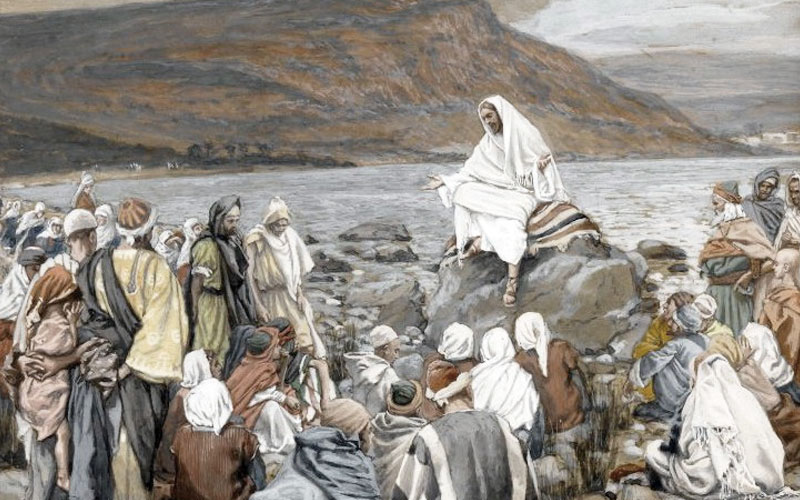
Jesus taught the multitudes, “I am the bread of life. Your fathers ate the manna in the wilderness, and they died. This is the bread which comes down out of heaven, so that one may eat of it and not die. I am the living bread that came down out of heaven; if anyone eats of this bread, he will live forever; and the bread also which I will give for the life of the world is My flesh” (John 6:48-51).

Jesus’ words perplexed the people who were listening to Him. They wondered, “How can this man give us His flesh to eat?” (John 6:52). They were thinking in terms of eating His physical flesh and blood body. In the following verses, Jesus continued on this point: “Unless you eat the flesh of the Son of Man and drink His blood, you have no life in yourselves. He who eats My flesh and drinks My blood has eternal life… For My flesh is true food and My blood is true drink. He who eats My flesh and drinks My blood abides in Me, and I in him. …he who eats Me, he also will live because of Me” (John 6:53-57).
Continue Reading