“Admonish The Young Women… To Be… Homemakers”

[This article was written by Bryan Matthew Dockens.]

Given the rise in popularity of stay-at-home-dads and women with full-time jobs outside the home, it is appropriate to consider the validity of such an arrangement.

The word of God affirms the duty of women to fulfill the role of homemaker. Paul instructed “older women” to “admonish the young women… to be… homemakers (Titus 2:3-5).

Elsewhere, the apostle made clear the responsibility of young women to “manage the house” (1 Timothy 5:14). In no wise is this a slight against women. This term is translated from a Greek word which is derived from two other words meaning “house” and “master”. The one who manages the house occupies a position of leadership worthy of respect.

A woman’s primary role is domestic in nature. This is not to the total exclusion of all else, for the “virtuous wife” extolled by King Lemuel was quite active beyond the walls of her house (Proverbs 31:10-31). A woman is not necessarily prohibited additional employment, but she would need to quit such if it interfered with her function at home.

Men are nowhere in scripture commanded to manage the house or be homemakers. They have other work to do. God told man, apart from woman, “In toil you shall eat” and “In the sweat of your face you shall eat” (Genesis 3:17, 19).

Men must be out working, while women stay home to manage the house. It’s that simple.
Reasoned Preaching

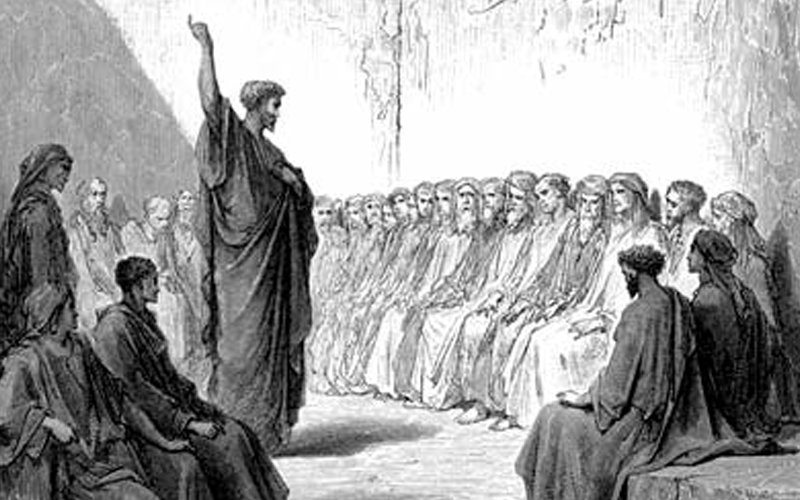
Paul preaching in Thessalonica

In Paul’s preaching, he appealed to reason. We see this example in his two visits to Ephesus. During his first brief visit, he “entered the synagogue and reasoned with the Jews” (Acts 18:19). When he returned to Ephesus, after being forced to leave the synagogue, he was “reasoning daily in the school of Tyrannus” (Acts 19:9).

This style of preaching was not reserved for the people of Ephesus because of their particular background or circumstances. Instead, this was the kind of preaching Paul did everywhere he went. When he went to Thessalonica, Luke records: “And according to Paul’s custom, he went to them, and for three Sabbaths reasoned with them from the Scriptures, explaining and giving evidence that the Christ had to suffer and rise again from the dead…” (Acts 17:2-3).

Paul’s preaching was very different from the preaching done by many in the religious world today. Notice what Paul did not do:
Continue Reading

By Faith Moses Left Egypt

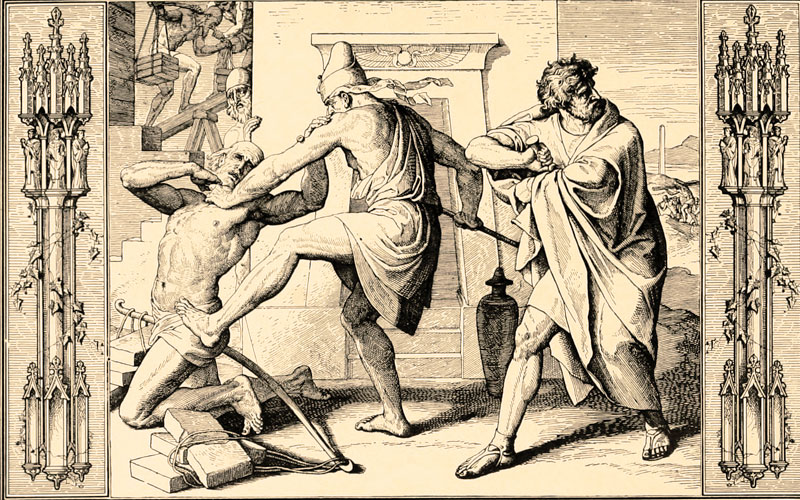
Moses Kills the Egyptian

Moses is one of the great characters in the Bible. His example of faith is pointed out to us in Hebrews 11 – the chapter of faith. The Hebrew writer mentioned a few things that Moses did to please God – he “refused to be called the son of Pharaoh’s daughter,” “kept the Passover,” and “passed through the Red Sea” (Hebrews 11:24, 28, 29). These are plainly understood from the history given in the book of Exodus.

However, one of the events mentioned has more questions surrounding it: “By faith he left Egypt, not fearing the wrath of the king; for he endured as seeing Him who is unseen” (Hebrews 11:27). What event was the Hebrew writer referring to when he wrote this? Was he talking about the exodus when Moses led the people out of the land of Egypt? Or was he talking about Moses’ departure from Egypt to the land of Midian after killing the Egyptian he saw mistreating one of his Hebrew brethren (Exodus 2:11-15)?
Continue Reading

New Bible

Bible

When I was in college I bought a New Testament that would fit in my back pocket. I wanted to have a Bible with me wherever I was in case an opportunity came up where it would be handy to have one. I have carried this New Testament in my back pocket for the last nine years.

Naturally, after years of regular use, this Bible slowly began to wear out. Recently it reached the point where pages were falling out. It was time to replace it. After searching the internet and receiving suggestions from others, I found an acceptable replacement. After receiving it, one of the first things I did was tear out a couple of pages.
Continue Reading

Book Review: Silenced Cries, A Study of Abortion

Silenced Cries, A Study of Abortion by Aaron ErhardtAbortion is one of the defining moral and political issues of our time. In his new book, Silenced Cries, A Study of Abortion, Aaron Erhardt provides some valuable material on the subject and presents it in a way that is easy to understand.



The book deals with every aspect of this issue. Aaron addresses the doctors and the abortion clinics, their tactics and procedures. He talks about the consequences, not just for the aborted child, but for the mother and the rest of the family. He responds to some of the common arguments in favor of abortion. In the book he also mentions the twisted irony that some of the ones who disregard the lives of unborn children are often the same ones who militantly defend the “rights” of animals and even plants.
Continue Reading

Waiting for a Sign

Man by the water

There are times in our lives when we have difficult decisions to make. In considering major decisions such as choosing a spouse, deciding where to live, what course to pursue in college, what job to take, and so on, we wonder what choice is best and are often anxious about our decision because of the major impact it will have on our life and even the lives of others.

For Christians that believe in a loving and powerful God, it is natural to want to seek guidance from Him when we have to make decisions like these. But what sort of guidance are we seeking? And are we truly seeking His guidance or are we merely attributing things to Him and then making ourselves believe that the Lord led us to make a certain decision?

It is not uncommon to hear people talk about receiving signs from God. These “signs” come in many different forms – weather events, phone calls, scheduling conflicts, job promotions, being passed over for a promotion, or even being laid off, etc. The list is virtually endless. People take events like these as if they are signs from God and, therefore, the reason to make one decision over another. Does the Bible have anything to say about this?
Continue Reading

Living Together Before Marriage Does Not Make a Stronger Marriage

As morality in our country has declined, naturally we have seen a rise in immorality. One visible example of this is the number of couples who live together before marriage. As time goes on, more and more people are either indifferent to the practice or are a promoter of it.

One of the arguments that is commonly used to justify the practice is that it can make the couple’s eventual marriage even stronger. During the time of cohabitation, the couple can get to know one another better, learn how they handle a marriage-type relationship together, and can get a better idea of whether or not they are compatible. If they live together first and it goes well, they can be confident of their relationship going into marriage. If it does not go well, they get to find that out before marriage.
Continue Reading