Plain Bible Teaching Podcast (Season 13)

Plain Bible Teaching Podcast

We recently wrapped up Season 13 of the Plain Bible Teaching Podcast. The theme of this season was social issues. You can listen to the audio from all of the episodes on this page. You can also click on the link for each episode to see the show notes and download the audio files if you’d like.

LISTENER SURVEY: If you have just a couple of minutes, please follow the link below to fill out the Plain Bible Teaching Podcast listener survey. I want to improve the podcast and make it even better and more helpful for YOU going forward. I need your feedback to be able to do that. So if you’re a regular listener, occasional listener, or have not yet found the time to listen, I want to hear from you.

Listener Survey
Continue Reading

Regular Christians (Part 5): Aquila and Priscilla

Regular Christians

Aquila and Priscilla were ones who provided encouragement to Paul by supporting him in his work of preaching. He sent greetings to them at the end of his letter to the saints in Rome.

Greet Prisca and Aquila, my fellow workers in Christ Jesus, who for my life risked their own necks, to whom not only do I give thanks, but also all the churches of the Gentiles” (Romans 16:3-4).

Continue Reading

How to Silence False Teachers

Man with duct tape over mouth

When Paul wrote to Titus about the qualifications for elders, one of the requirements for these men was that they have an ability to deal with false teachers.

Holding fast the faithful word which is in accordance with the teaching, so that he will be able both to exhort in sound doctrine and to refute those who contradict. For there are many rebellious men, empty talkers and deceivers, especially those of the circumcision, who must be silenced because they are upsetting whole families, teaching things they should not teach for the sake of sordid gain” (Titus 1:9-11).

Paul said these false teachers “must be silenced.” But how would this be done? No one expects the elders of a local church to kidnap a false teacher, put duct tape over his mouth, tie him up, and then lock him in a closet to prevent him from spreading his error. Since they cannot use physical force to silence false teachers, how are they to do it?Continue Reading

Regular Christians (Part 4): Barnabas

Regular Christians

Barnabas was one who was such an encouragement to others, the apostles changed his name to reflect this. We can read about him throughout the book of Acts, but when we first learn of him he is introduced to us as Joseph.

Now Joseph, a Levite of Cyprian birth, who was also called Barnabas by the apostles (which translated means Son of Encouragement), and who owned a tract of land, sold it and brought the money and laid it at the apostles’ feet” (Acts 4:36-37).

Continue Reading

How to Pray to God

Prayer

Prayer is a simple and common practice. Children are taught to pray when they are young. Prayers are regularly offered in worship services conducted by local congregations. But sometimes when a practice is simple and common, it is easy to not give much thought to it. Perhaps we are just “going through the motions” and are failing to focus on this important discipline.

In this brief article, we are going to consider how we, as Christians, are to pray to God. This may not be anything new, but it is helpful for us to be reminded of these things from time to time.Continue Reading

Regular Christians (Part 3): Onesiphorus

Regular Christians

Onesiphorus was one who took advantage of opportunities to do good. We can read about him in Paul’s second letter to Timothy.

The Lord grant mercy to the house of Onesiphorus, for he often refreshed me and was not ashamed of my chains; but when he was in Rome, he eagerly searched for me and found me—the Lord grant to him to find mercy from the Lord on that day—and you know very well what services he rendered at Ephesus” (2 Timothy 1:16-18).

Continue Reading

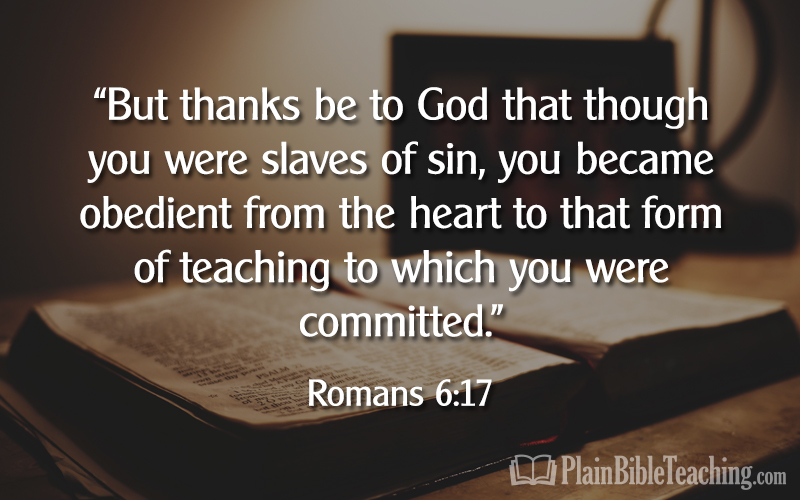
Obedient to That Form of Teaching

Romans 6:17

Romans 6 is a critical chapter in the New Testament. It discusses the difference between a Christian and a non-Christian. It concisely explains why this difference exists and what happened in the life of a Christian to bring about this difference. This chapter can be summarized in the following two verses:

But thanks be to God that though you were slaves of sin, you became obedient from the heart to that form of teaching to which you were committed, and having been freed from sin, you became slaves of righteousness” (Romans 6:17-18).

Paul was writing to Christians in Rome. Previously, they were “slaves of sin.” But at this time, they were “slaves of righteousness.” How did this change occur? They “became obedient from the heart to that form of teaching to which [they] were committed.

To better understand what Paul was discussing, let us do a brief overview of this chapter.Continue Reading