
Paul instructed the young preacher Timothy to “do the work of an evangelist” (2 Timothy 4:5). The charge that the apostle gave to him (2 Timothy 4:1-5) shows what the work of an evangelist is and why it is such an important work.
Continue Reading
Paul instructed the young preacher Timothy to “do the work of an evangelist” (2 Timothy 4:5). The charge that the apostle gave to him (2 Timothy 4:1-5) shows what the work of an evangelist is and why it is such an important work.
Continue Reading

Sin separates man from God (Isaiah 59:2). Jesus came to bring back peace between man and God (Ephesians 2:13-16). To do this, He needed to do something to remedy the problem of sin. Peter wrote, “Christ also died for sins once for all” (1 Peter 3:18). Jesus’ death on the cross was God’s solution for sin. But how did this fix the problem? Some teach that our sins were placed upon Christ and then, in essence, “nailed to the cross.” Is this what happened? It is a familiar concept. But is it a Biblical idea?
One passage used to justify the idea that Jesus took on our sins and carried them to the cross is 2 Corinthians 5:21. “He made Him who knew no sin to be sin on our behalf, so that we might become the righteousness of God in Him.” What does it mean that Jesus was made “to be sin on our behalf”? Isolating this verse from its context and ignoring related passages, there are three possible interpretations:
Continue Reading
Recently I heard someone describe some religious services he had attended. He told me of the bizarre and chaotic assemblies in those churches in which the churchgoers seemed almost out of control. Those caught up in this behavior would attribute their actions to being filled with the Holy Spirit. But are these outbursts the result of the Spirit’s influence, or are they an overexcited, emotional release on the part of these people?
Paul wrote to the Christians in Ephesus and said, “And do not get drunk with wine, for that is dissipation, but be filled with the Spirit” (Ephesians 5:18). The contrast is made between being filled with the Spirit and being intoxicated. Both being drunk with wine and being filled with the Spirit will affect ones behavior. So how does being filled with the Spirit affect us? Does it result in spontaneous, uncontrollable action? Let us notice the context.
Continue Reading
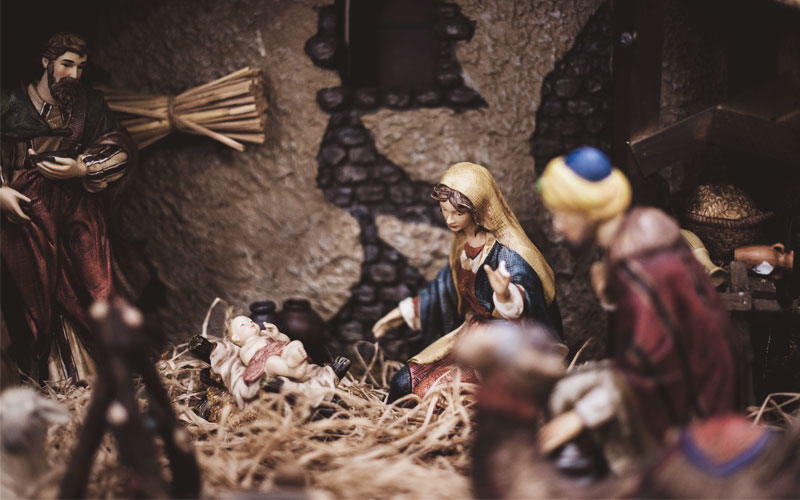
“Jesus is the reason for the season.” We often here this phrase around this time of year. The reason people use this phrase is to remind others of the religious significance of the season. The season implied here is the “Christmas” season. Many in the denominational world believe that Jesus Christ was born on December 25th. Some will admit we do not know for certain what day Jesus was born, but use that day to celebrate or commemorate his birth anyway. In either case, the plea is made for people to not get caught up in all the material things that surround the holiday, but instead to remember to celebrate the birth of Jesus. But what is the real reason for the season? We will notice a couple of reasons for the religious significance placed upon this time of year, specifically December 25th.
Continue Reading
[Article written by Matt Nevins. Originally published in his email newsletter “The Lamp.”]
Recently I attended a National Society of Collegiate Scholars meeting, and we were designing club T-shirts. We broke into groups to come up with a good design that everyone would like. One of the guys in my group came up with the idea to use a Mastercard theme T-shirt. The shirt would list different items that have a cost associated with that item and conclude with something that was priceless. This item is something that is “of inestimable value,” as Webster defines priceless. The theme is to show that we can purchase and attain different items with a medium of exchange, but there are items that we cannot put a price tag on. This idea got me thinking about different things that are priceless.
Continue Reading
[This article was written by Tim Haile.]
Though this fact is ignored by some and denied by others, the Bible is the word of God. Being such, it is Truth (John 17:17). Those who are honest cannot deny the indisputable evidence in favor of the Bible’s claim of divine authorship. The Bible is the only book known to mankind that was written by forty different men while having only one author: The Bible claims to be authored by God. Proof of this single authorship is seen in the fact that the Bible really contains only one purpose and plan, and is the development of one scheme of redemption. We are redeemed by the blood of Christ (Revelation 5:9), but the Lamb of God is also identified as the “Lion of the tribe of Judah” and the “Root of David” (Revelation 5:5). Thus, traces of the scheme of redemption can be found throughout the Bible. In fact, Revelation 13:8 identifies Jesus as “the Lamb slain from the foundation of the world.”
Continue Reading
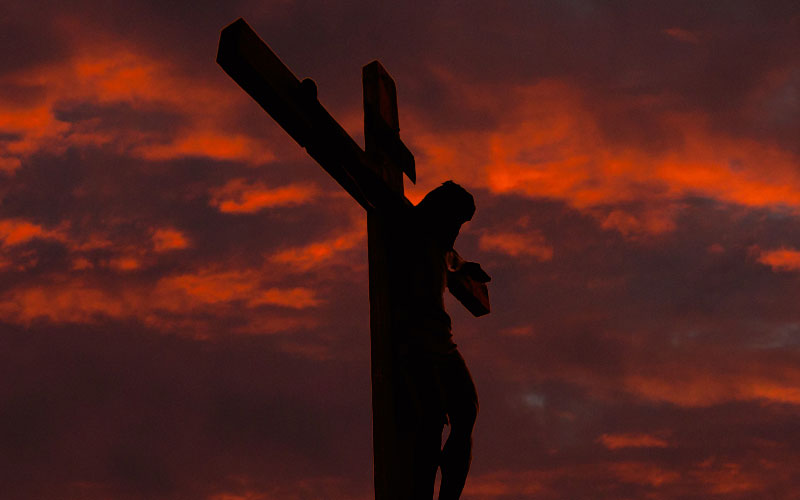
“My God, My God, why have You forsaken me?” (Matthew 27:46). Jesus uttered these words as He hung on the cross. But what do these words mean? Some believe Jesus asked this question because the Father had actually forsaken Him. They say the Father “turned His back” on Christ. This idea is so common, you might expect to see those actual words used in the text. They are not. The Bible does not say the Father turned His back on His Son. But was Jesus in fact “forsaken” by the Father? Or do these words have another meaning?
Continue Reading










What does “propitiation” mean? How is “justification” connected to salvation? What does “sanctification” look like in our day-to-day lives? The Bible uses some powerful words to describe God’s plan to save mankind. However, these words are not always easy to understand, especially when they are not part of our everyday vocabulary. This book explores key Bible terms that unlock the message of the gospel.
Big Words in the Bible examines five important words – Propitiation, Reconciliation, Sanctification, Justification, and Resurrection – using plain language to see how the Scriptures describe these concepts and how the apostle Paul employs them in his letter to the Romans. This book also contains an appendix with eleven additional articles to explore these topics further.
Whether you are new to the Bible and want to grow in your understanding or want a simple way to explain these core gospel doctrines to others, this book will be helpful. With a focus on the Scriptures, Big Words in the Bible helps break down these fundamental topics to shed light on the life-changing message of the gospel and the salvation found in it.
Available in print and digital format.

This work is licensed under a Creative Commons Attribution-NonCommercial-ShareAlike 3.0 Unported License.
If you have further questions about using any of the material on this site, please contact me.