The Ever Expanding Civil Government: A Biblical Perspective

Supreme Court

Christians sometimes shy away from discussing the role of government – particularly in sermons, Bible classes, and religious articles. I believe this is because many are afraid of crossing the line between Bible teaching and political debate. But the Bible has much to say on this topic and it would be foolish to ignore it, particularly at this time in our society.

The role and expansion of government is a hot topic in our country today. The government has been expanding and broadening its role for years and has quickened its pace of late. As Christians, what should we make of this? Should this cause us to be concerned, or should we look favorably upon this? The word of God helps answer these questions for us. As disciples of Christ, our attitude toward and expectations of civil government must be Biblically correct.
Continue Reading

How to Keep Doing Good

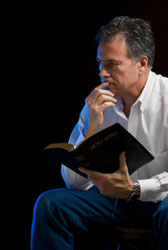
Young man thinking

James wrote, “Therefore, to one who knows the right thing to do and does not do it, to him it is sin” (James 4:17). It is obviously important that we know what God expects of us. But sometimes we know what is right yet, for whatever reason, we do not do it. James plainly said that this is sin. Whether it is due to weakness, forgetfulness, or willful rebellion, we are too often guilty of doing things we ought not to do.

What are we to do about this? Should we give up and surrender to the devil? No! We are to “resist the devil” (James 4:7). Should we be content in sin? Absolutely not! “How shall we who died to sin still live in it?” (Romans 6:2). We are to work to “lay aside every…sin which so easily entangles us” (Hebrews 12:1), no matter how large or small, common or rare.

With the devil and his servants trying to discourage us and make us fall, how do we keep the faith and continue to do what is right?
Continue Reading

Cannibalism & Discipleship: Which is More Difficult to Accept?

Jesus Teaching

Jesus taught the multitudes, “I am the bread of life. Your fathers ate the manna in the wilderness, and they died. This is the bread which comes down out of heaven, so that one may eat of it and not die. I am the living bread that came down out of heaven; if anyone eats of this bread, he will live forever; and the bread also which I will give for the life of the world is My flesh” (John 6:48-51).

Jesus’ words perplexed the people who were listening to Him. They wondered, “How can this man give us His flesh to eat?” (John 6:52). They were thinking in terms of eating His physical flesh and blood body. In the following verses, Jesus continued on this point: “Unless you eat the flesh of the Son of Man and drink His blood, you have no life in yourselves. He who eats My flesh and drinks My blood has eternal life… For My flesh is true food and My blood is true drink. He who eats My flesh and drinks My blood abides in Me, and I in him. …he who eats Me, he also will live because of Me” (John 6:53-57).
Continue Reading

Rejoice in the Lord Always

Rejoice

Writing from prison, Paul told the brethren in Philippi, “Rejoice in the Lord always; again I will say, rejoice!” (Philippians 4:4). This instruction was so important that Paul repeated it. He also gave a similar command to the church in Thessalonica when he wrote, “Rejoice always” (1 Thessalonians 5:16).

Whenever we see a command like this, we ought to take note of it. We do not have the option to either rejoice or not rejoice depending on our circumstances. We are to “rejoice always.” The reason why this command must be given is because it is sometimes difficult or unnatural to rejoice in certain circumstances. Our lives here are filled with trials. Job lamented, “Man, who is born of woman, is short-lived and full of turmoil” (Job 14:1). The wise man noted the difficult nature of our existence here: “Because all his days his task is painful and grievous; even at night his mind does not rest” (Ecclesiastes 2:23). It is sometimes difficult to rejoice. But as Christians we must do so.
Continue Reading

The Fields Are White for Harvest

Wheat

Do you not say, ‘There are yet four months, and then comes the harvest’? Behold, I say to you, lift up your eyes and look on the fields, that they are white for harvest” (John 4:35).

Jesus said these words to His disciples as they were in Samaria. He had just spoken to a Samaritan woman at the well outside the city. She returned and told the men of the city about Jesus and they were now coming out to see Him. He said the fields were white for harvest, meaning there was success to be had in preaching the gospel in that place.

As we are still working to preach the gospel today, let us consider Jesus’ statement and the circumstances surrounding it.
Continue Reading

“Admonish The Young Women… To Be… Homemakers”

[This article was written by Bryan Matthew Dockens.]

Given the rise in popularity of stay-at-home-dads and women with full-time jobs outside the home, it is appropriate to consider the validity of such an arrangement.

The word of God affirms the duty of women to fulfill the role of homemaker. Paul instructed “older women” to “admonish the young women… to be… homemakers (Titus 2:3-5).

Elsewhere, the apostle made clear the responsibility of young women to “manage the house” (1 Timothy 5:14). In no wise is this a slight against women. This term is translated from a Greek word which is derived from two other words meaning “house” and “master”. The one who manages the house occupies a position of leadership worthy of respect.

A woman’s primary role is domestic in nature. This is not to the total exclusion of all else, for the “virtuous wife” extolled by King Lemuel was quite active beyond the walls of her house (Proverbs 31:10-31). A woman is not necessarily prohibited additional employment, but she would need to quit such if it interfered with her function at home.

Men are nowhere in scripture commanded to manage the house or be homemakers. They have other work to do. God told man, apart from woman, “In toil you shall eat” and “In the sweat of your face you shall eat” (Genesis 3:17, 19).

Men must be out working, while women stay home to manage the house. It’s that simple.

Reasoned Preaching

Paul preaching in Thessalonica

In Paul’s preaching, he appealed to reason. We see this example in his two visits to Ephesus. During his first brief visit, he “entered the synagogue and reasoned with the Jews” (Acts 18:19). When he returned to Ephesus, after being forced to leave the synagogue, he was “reasoning daily in the school of Tyrannus” (Acts 19:9).

This style of preaching was not reserved for the people of Ephesus because of their particular background or circumstances. Instead, this was the kind of preaching Paul did everywhere he went. When he went to Thessalonica, Luke records: “And according to Paul’s custom, he went to them, and for three Sabbaths reasoned with them from the Scriptures, explaining and giving evidence that the Christ had to suffer and rise again from the dead…” (Acts 17:2-3).

Paul’s preaching was very different from the preaching done by many in the religious world today. Notice what Paul did not do:
Continue Reading