
Ezekiel 18 addresses the justice of God – how He treats individuals, both the righteous and the wicked, and how He will judge us. Let us examine what this chapter teaches us about God and His justice.
Continue Reading
Ezekiel 18 addresses the justice of God – how He treats individuals, both the righteous and the wicked, and how He will judge us. Let us examine what this chapter teaches us about God and His justice.
Continue Reading

One of the most significant events of the Restoration Movement was the introduction of a melodeon in the assembly of the church in Midway, Kentucky. According to L.L. Pinkerton, the preacher at Midway, this was the first time an instrument had been successfully introduced among those of the Restoration Movement. He made this claim in 1860.
The reason why this was significant was because of the plea voiced by the preachers of the Restoration – speak where the Bible speaks and be silent where it is silent. Every religious practice would have to pass the test of Scripture. If one could not demonstrate that a practice was according to the New Testament pattern (2 Timothy 1:13), that practice was to be rejected because everything must be done by the authority of Christ (Colossians 3:17). Therefore, instrumental music in worship was widely rejected in the Restoration Movement. It did not fit the pattern revealed in the New Testament which, therefore, made it unauthorized.
So how did the melodeon find its way into the worship of the church in Midway? It certainly did not happen overnight. If we can learn the lessons from this event, then we will hopefully be prepared to guard ourselves against potential apostasies today.
Continue Reading
The notion that a Christian cannot fall from grace is held by many people in the religious world. But this “once saved, always saved” doctrine is simply not true. The Bible is filled with warnings about falling away and examples of God’s people who have.
Tim Haile has put together a thorough study on this topic, examining several passages to demonstrate that a Christian can indeed fall away and be lost and that we must therefore be diligent to remain faithful to God. Below is an excerpt of his study:
Continue Reading
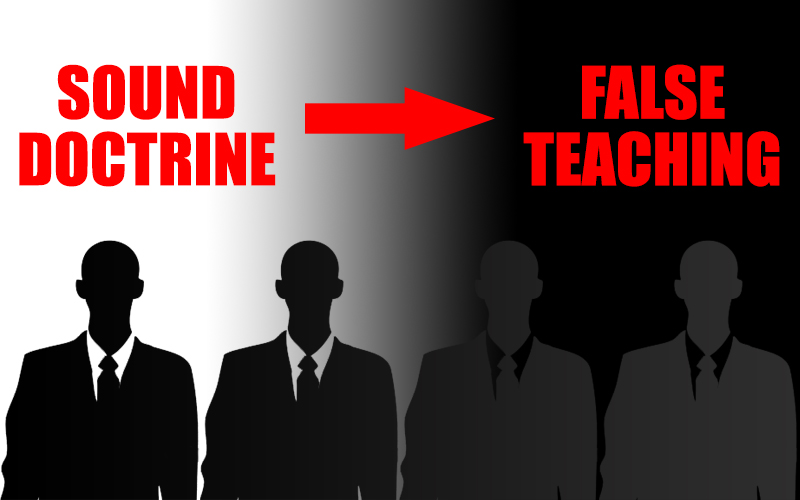
Paul gave the young evangelist Timothy this charge: “Preach the word; be ready in season and out of season; reprove, rebuke, exhort, with great patience and instruction” (2 Timothy 4:2). Why was it so important for Timothy to do this? Paul continued: “For the time will come when they will not endure sound doctrine; but wanting to have their ears tickled, they will accumulate for themselves teachers in accordance to their own desires, and will turn away their ears from the truth and will turn aside to myths” (2 Timothy 4:3-4).
Apostasy was coming. At some point, those who were once receptive to the pure, unadulterated gospel would want something different. How does such a change happen? It certainly does not happen overnight. There is a progression that takes place that leads Christians away from sound doctrine and into false teaching.
Continue Reading

James concluded his epistle by emphasizing the importance of turning a fallen brother away from sin and back to Christ.
“My brethren, if any among you strays from the truth and one turns him back, let him know that he who turns a sinner from the error of his way will save his soul from death and will cover a multitude of sins” (James 5:19-20).
There are a few reminders for us in these verses.
Continue Reading

In Jeremiah 8, the prophet condemned the people of Jerusalem for their sins. The condemnation was not for an occasional misstep, but for the persistent practice of sin and their stubborn refusal to repudiate it: “Why then has this people, Jerusalem, turned away in apostasy? They hold fast to deceit, they refuse to return” (Jeremiah 8:5).
The deceit to which they held fast consisted of the lies of the scribes (Jeremiah 8:8) and of the priests who would say “‘Peace, peace,’ but there is no peace” (Jeremiah 8:11). They had become so accustomed to their sin that they were no longer “ashamed of the abomination they had done…and they did not know how to blush” (Jeremiah 8:12). They had replaced the Lord with “graven images” and “foreign idols” (Jeremiah 8:19).
After outlining this miserable state of the people, the prophet said, “Harvest is past, summer is ended, and we are not saved” (Jeremiah 8:20).
Continue Reading
Paul told the brethren in Galatia of the time when he came to Antioch and had to rebuke his fellow apostle Peter or Cephas (Galatians 2:11-14). The reason why Paul rebuked him was because of his hypocrisy. Peter knew that God accepted the Gentiles (Acts 10:34-35; 11:17-18). He also knew that God accepted them without them adopting certain aspects of the Law of Moses like circumcision (Acts 15:5-11). Yet when certain Jews arrived, he withdrew and refused to associate with his Gentile brethren.
Peter’s sin is usually what we emphasize in these verses, and rightly so. But Paul, by the inspiration of the Holy Spirit, believed it was also good to single out Barnabas as one of the ones who went along with Peter. Paul said, “Even Barnabas was carried away by their hypocrisy” (Galatians 2:13), indicating that Barnabas’ fault was significant. What lessons can we learn from Barnabas’ sin here in Antioch?
Continue Reading










What does “propitiation” mean? How is “justification” connected to salvation? What does “sanctification” look like in our day-to-day lives? The Bible uses some powerful words to describe God’s plan to save mankind. However, these words are not always easy to understand, especially when they are not part of our everyday vocabulary. This book explores key Bible terms that unlock the message of the gospel.
Big Words in the Bible examines five important words – Propitiation, Reconciliation, Sanctification, Justification, and Resurrection – using plain language to see how the Scriptures describe these concepts and how the apostle Paul employs them in his letter to the Romans. This book also contains an appendix with eleven additional articles to explore these topics further.
Whether you are new to the Bible and want to grow in your understanding or want a simple way to explain these core gospel doctrines to others, this book will be helpful. With a focus on the Scriptures, Big Words in the Bible helps break down these fundamental topics to shed light on the life-changing message of the gospel and the salvation found in it.
Available in print and digital format.

This work is licensed under a Creative Commons Attribution-NonCommercial-ShareAlike 3.0 Unported License.
If you have further questions about using any of the material on this site, please contact me.