An Institution of Higher Education (Season 5, Episode 4)

Subscribe: iTunes | Stitcher | RSS
An Institution of Higher Education (Season 5, Episode 4)

In our society, a great amount of emphasis is placed upon obtaining a college education in order to prepare for secular employment. For many careers, this is helpful. For some, it is essential. Therefore, many people pursue a secular education in an institution of higher learning in order to best prepare themselves to find what they consider to be good jobs.

However, there is a type of education that is far more important than the education that prepares one for employment. This higher education is not for secular pursuits, but spiritual. It prepares us not for the work force (at least not directly), but for our service to God. Its purpose is not to help us obtain a high-paying job with good benefits, but to help us obtain eternal life.

Strangely, some act as though an institution devoted to secular education is also the preferred institution for their spiritual education. But God has created His own institution of higher education – the church. It has everything we need for the pursuit of a higher (i.e. from God) education. Let us notice what the Bible says about this institution of higher education.

Article: An Institution of Higher Education

If you found this episode to be useful, please share it with others. Also, if you enjoyed the podcast, please leave a rating on iTunes or Stitcher. This also helps others hear about the podcast. Thanks.

Church Membership (Season 5, Episode 3)

Subscribe: iTunes | Stitcher | RSS

Church Membership (Season 5, Episode 3)

The term “church membership” is not used in the New Testament. However, it is certainly a Scriptural concept. Paul clearly taught the concept of church membership in his letter to Corinth (1 Corinthians 12:14-30). In this episode, let us consider the topic of church membership. As we do, we will ask three questions:

  1. What is church membership?
  2. How do we become members?
  3. What are members to do?

Article: Church Membership

If you found this episode to be useful, please share it with others. Also, if you enjoyed the podcast, please leave a rating on iTunes or Stitcher. This also helps others hear about the podcast. Thanks.
Christ’s Plan for His Church

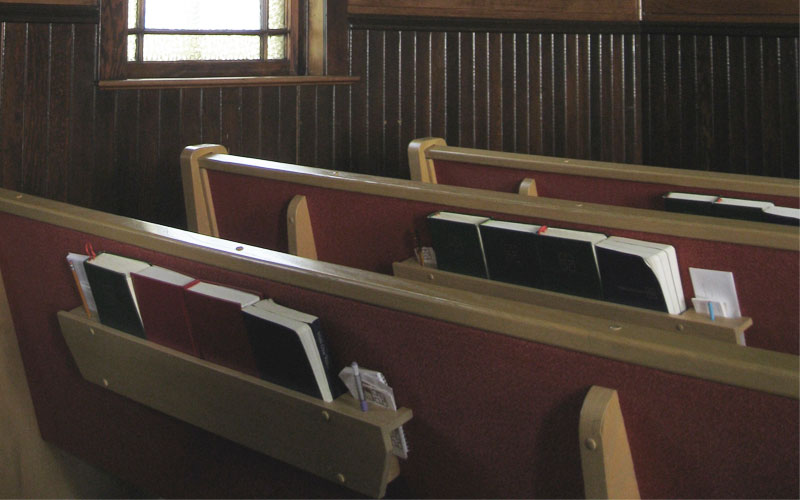
Pews

In writing to the brethren in Ephesus, Paul explained that “the manifold wisdom of God might now be made known through the church” (Ephesians 3:10). But when did the Lord decide that He would do this?

Some believe that Jesus “failed” to establish His kingdom when He came to earth so He established the church in its place until He returns a second time and will then set up His kingdom. However, the church was not established as an afterthought. It was not a backup plan. In fact, Jesus indicated that the church and the kingdom were the same, as He used the terms interchangeably (Matthew 16:18-19). Paul said that the Lord’s plan to make known God’s wisdom through the church was “in accordance with the eternal purpose which He carried out in Christ Jesus our Lord” (Ephesians 3:11).

Elsewhere in this letter, Paul described the church as the body and the bride of Christ (Ephesians 1:22-23; 5:23-24). This means that the church belongs to Him and is directed by Him. So what is Christ’s plan for His church? Let us consider a few points.
Continue Reading

The All Sufficiency of the Church (Season 5, Episode 2)

Subscribe: iTunes | Stitcher | RSS

The All Sufficiency of the Church (Season 5, Episode 2)

When we speak of the church being “all sufficient,” what do we mean? The claim that the church is all sufficient means that the church is fully capable of doing all the work God gave it to do. It does not need the aid of institutions to carry out this work. Christians do not need to look to other institutions or organizations to do the work that can be done through the church. The New Testament teaches that the local church is all sufficient, fully capable of doing the work God gave for it to do.

Article: The All Sufficiency of the Church

If you found this episode to be useful, please share it with others. Also, if you enjoyed the podcast, please leave a rating on iTunes or Stitcher. This also helps others hear about the podcast. Thanks.
Is One Church As Good As Another? (Season 5, Episode 1)

Subscribe: iTunes | Stitcher | RSS

Is One Church As Good As Another? (Season 5, Episode 1)

As we talk with people in the world, particularly those who are religious, one idea with which we are often confronted is that one church is as good as another. Many people believe this. This can make it difficult in trying to lead someone to the truth. This concept that one church is as good as another must be eliminated if we want to have any success in leading souls to Christ. So it is good for us to consider the idea so we might be better prepared to handle various situations.

Article: Is One Church As Good As Another?

If you found this episode to be useful, please share it with others. Also, if you enjoyed the podcast, please leave a rating on iTunes or Stitcher. This also helps others hear about the podcast. Thanks.

Cities of Refuge (Sermon #5)

Subscribe: iTunes | Stitcher | RSS

Cities of Refuge (Sermon #5)

We’re in between season 4 and season 5 which will start on January 24th. During the break we’re posting audio sermons each week instead of the regular episodes. The sermon for this week was preached on October 2, 2016 at the Eastside church of Christ in Morgantown, KY.

If you found this episode to be useful, please share it with others. Also, if you enjoyed the podcast, please leave a rating on iTunes or Stitcher. This also helps others hear about the podcast. Thanks.
How Could the Whole World Have Been Taught?

Globes

In his letter to the church in Colossae, Paul said, “The gospel…was proclaimed in all creation under heaven” (Colossians 1:23). When Jesus gave His apostles the Great Commission, He told them, “Go into all the world and preach the gospel to all creation” (Mark 16:15). Paul indicated that by the time he wrote to the Colossians, this had been done. How is that possible? Let us consider the record in the book of Acts.
Continue Reading