Church Membership

Church Attendance Board

The term “church membership” is not used in the New Testament. However, it is certainly a Scriptural concept. Paul clearly taught the concept of church membership in his letter to Corinth (1 Corinthians 12:14-30). Notice the following verses in particular:

For the body is not one member, but many” (1 Corinthians 12:14).

But now there are many members, but one body” (1 Corinthians 12:20).

Now you are Christ’s body, and individually members of it” (1 Corinthians 12:27).

In this article, let us consider the topic of church membership. As we do, we will ask three questions: (1) What is church membership? (2) How do we become members? (3) What are members to do?
Continue Reading

Who Is Affected By Sin?

Pollution

Many people choose to ignore sin. Sadly, even some Christians do this. They ignore the sins of others because they see the sins as being between them and God and so they are of no concern. They often ignore their own sin believing that God’s grace will cover them. Yet sin cannot be ignored.

The earth is also polluted by its inhabitants, for they transgressed laws, violated statutes, broke the everlasting covenant” (Isaiah 24:5).

In the verse above, sin is described as pollution. This analogy is used because sin affects more than just the one who committed the sin. So in this article, I want us to consider this question: Who is affected by sin?
Continue Reading

Why Were They Called “churches of Christ”?

Church of Christ

Greet one another with a holy kiss. All the churches of Christ greet you” (Romans 16:16).

Paul referred to the congregations with which he was associated as “churches of Christ.” Many brethren, in an effort to follow the New Testament pattern, have also used this to identify local churches. However, some brethren have quit using this designation, choosing instead to identify themselves as “The Church in ___” or merely placing a sign in front of their building that says, “Christians Meet Here.” Of course, many more in the denominational world use other names to identify their churches (Baptist, Methodist, Catholic, etc.).

Our desire must be to please Christ and serve Him faithfully. So let us consider this question: Why were those local churches in the first century called “churches of Christ” and what bearing does this have on us today?
Continue Reading

Why Being Non-Denominational Is Not Good Enough

Church steeple

In the past, more emphasis was placed upon one’s denominational affiliation. But for many today, this is less important. This shift in mindset has given rise to the number of “non-denominational” churches we see in the religious world.

For years, faithful brethren have rightly condemned denominationalism. So is the trend toward non-denominationalism a good thing? Maybe not. Why not? Simply being non-denominational is not good enough.

The church in Sardis was a dead church, though they had a reputation that they were alive. Jesus said to them, “I know your deeds, that you have a name that you are alive, but you are dead” (Revelation 3:1). This shows us that a church can seem to be good in the eyes of men, but in the eyes of the Lord, their status is completely different. In the eyes of many, “non-denominational” churches look appealing. But like the church in Sardis, many of these churches simply do not measure up to the Lord’s standard.
Continue Reading

The Future of the Church

Pews

This phrase is often used to refer to children growing up in the church. All parents – and everyone else involved – want to see these children grow up to be Christians. But even if they do, they are only part of the future of the church. In this article, I want us to consider the future of the church – in particular, as it relates to each local congregation – and notice what we can do in the present to help the future church.
Continue Reading

Qualities of Good Leaders

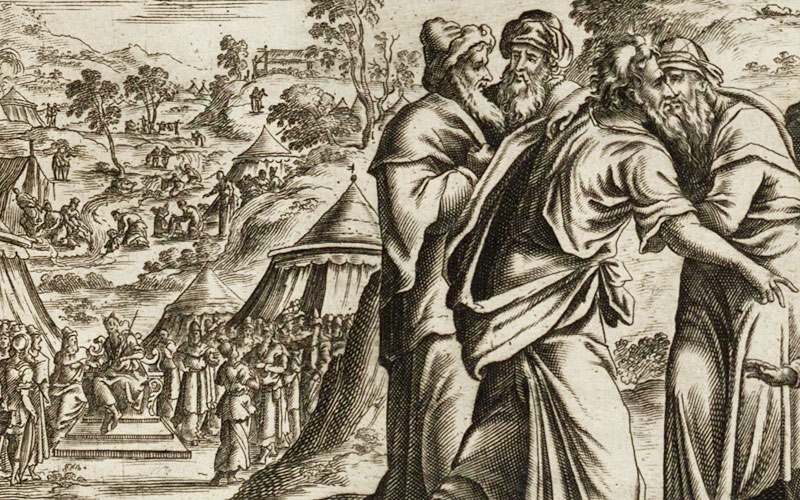
Moses and Jethro

When Jethro came to visit Moses, he observed how his son-in-law judged the people “from the morning until the evening” with no one to assist him in this enormous task (Exodus 18:13-14). He warned Moses that this arrangement was not good: “You will surely wear out, both yourself and these people who are with you, for the task is too heavy for you; you cannot do it alone” (Exodus 18:18). So Jethro advised Moses to appoint leaders over the people who could help act as judges. But he did not tell Moses to select just anyone – they had to possess certain qualities in order to be good leaders.

Furthermore, you shall select out of all the people able men who fear God, men of truth, those who hate dishonest gain; and you shall place these over them as leaders of thousands, of hundreds, of fifties and of tens” (Exodus 18:21).

Continue Reading

The Problem with Denominations

Church building

Simon Peter answered, ‘You are the Christ, the Son of the living God.’ And Jesus said to him, ‘Blessed are you, Simon Barjona, because flesh and blood did not reveal this to you, but My Father who is in heaven. I also say to you that you are Peter, and upon this rock I will build My church; and the gates of Hades will not overpower it’” (Matthew 16:16-18).

In the first century, there were no denominations – only the Lord’s church (Matthew 16:18). Paul said there is just “one body” (Ephesians 4:4), and that body is the church (Ephesians 1:22-23).

But today, unlike the first century, there are thousands of denominations. Is this a problem? Many will say “no.” They have been taught to “join the church of your choice” because “one church is as good as another.” But the Scriptures teach that this is a problem. Why? In this article we will notice four reasons why denominationalism is a problem.
Continue Reading