The Good Shepherd

Throughout the gospel of John, Jesus described Himself in various ways. One term He used is the good shepherd (John 10:11). In the context surrounding this claim, Jesus showed us what His work as a shepherd entails, how He can be called the good shepherd, and why no one else is more qualified than He is to do this work.

So what makes Jesus the good shepherd?
Continue Reading

Did Jesus Bend the Rules for the Woman Caught in Adultery?

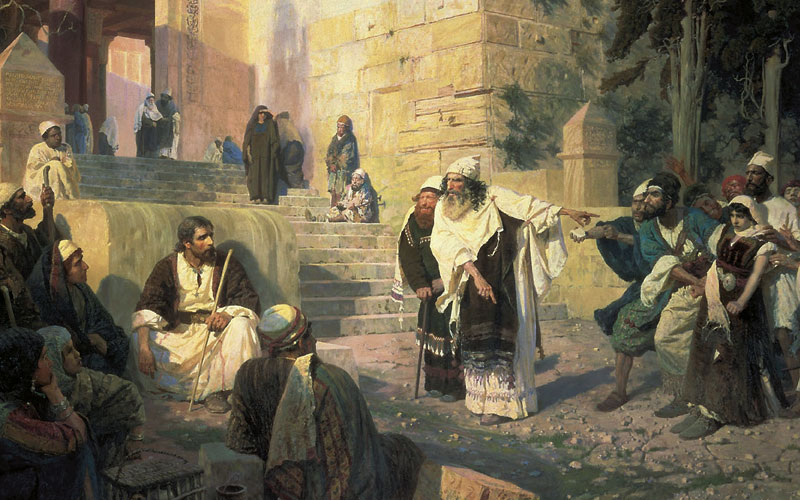
Jesus and the Woman Taken in Adultery

On one occasion when Jesus was in the temple, the scribes and Pharisees brought a woman before Him who had allegedly been caught in the act of adultery. It is an interesting account, and some have tried to use it to argue that we should not try to strictly follow God’s word. But as we examine the passage, we can see that Jesus teaches just the opposite – we must be careful and diligent to follow what God’s word teaches.

The scribes and Pharisees brought this woman before Jesus, claiming that she was “caught in adultery, in the very act” (John 8:4). Then they tested Jesus: “Now in the Law Moses commanded us to stone such women; what then do you say?” (John 8:5). They were trying to find some reason to accuse Him, presumably either to take Him before the Roman rulers or to turn the people against Him. In either case, Jesus initially ignored their question.

When they pressed Him, He responded, “He who is without sin among you, let him be the first to throw a stone at her” (John 8:7). Then, one by one, each of them left until there was no one left but Jesus and this woman. He asked her, “‘Woman, where are they? Did no one condemn you?’ She said, ‘No one, Lord,’ And Jesus said, ‘I do not condemn you, either. Go. From now on sin no more’” (John 8:10-11).
Continue Reading

Cannibalism & Discipleship: Which is More Difficult to Accept?

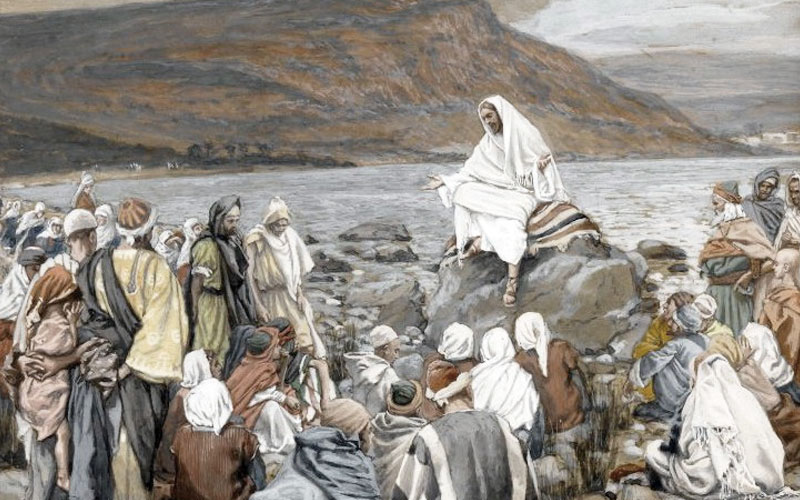
Jesus Teaching

Jesus taught the multitudes, “I am the bread of life. Your fathers ate the manna in the wilderness, and they died. This is the bread which comes down out of heaven, so that one may eat of it and not die. I am the living bread that came down out of heaven; if anyone eats of this bread, he will live forever; and the bread also which I will give for the life of the world is My flesh” (John 6:48-51).

Jesus’ words perplexed the people who were listening to Him. They wondered, “How can this man give us His flesh to eat?” (John 6:52). They were thinking in terms of eating His physical flesh and blood body. In the following verses, Jesus continued on this point: “Unless you eat the flesh of the Son of Man and drink His blood, you have no life in yourselves. He who eats My flesh and drinks My blood has eternal life… For My flesh is true food and My blood is true drink. He who eats My flesh and drinks My blood abides in Me, and I in him. …he who eats Me, he also will live because of Me” (John 6:53-57).
Continue Reading

“Behold, the Lamb of God”

Cross

John’s mission was to prepare the way for Christ (Isaiah 40:3; Malachi 3:1). On a day when he saw Jesus coming to the place he was preaching and baptizing, John announced, “Behold, the Lamb of God who takes away the sin of the world!” (John 1:29).

There is a lot in John’s statement. Much of it may not have been understood at first. This is to be expected with prophecies. But as time went on and different things happened (Jesus’ life, death, resurrection, the establishment of His church, etc.), those who heard him could go back to declarations like this one and see more clearly the clues that were given and confirm the fact that God was behind all of this.
Continue Reading

The Three Things Jesus Accomplished in His Death

Cross

Toward the end of a lengthy discussion of Jesus’ work as our high priest, the Hebrew writer provided a summary in his explanation of Psalm 40:6-8. In this explanation, he spoke of the three things Jesus came to the earth to accomplish.
Continue Reading

Book Review: The Man of Galilee

man-of-galileeIn The Man of Galilee, Atticus Haygood sets out to show the reader that Jesus is the Son of God. He directs his writing toward the skeptic, and presents arguments that can be used to show the deity of Christ to someone before they believe that the Bible is the word of God.



Haygood addresses the claims that Jesus was an invention of the gospel writers and that Jesus was just a man. He makes his case by considering who the gospel writers were, and Jesus’ words, plans, worldview, and life to show that Jesus could be none other than the Christ, the Son of God. Overall, the material in the book was rather good.

However, there were a couple issues I had with the book. The first is the lack of Scripture citations. Granted, the author wrote this for the benefit of those who would not even acknowledge the Bible as God’s word. But even when one quotes a regular piece of literature or reference material, a citation is given. There is little to none of this in this book. So one who wants to verify that the quotations do in fact come from the Bible, or wishes to study them further, needs to have a concordance to find the verses Haygood cites.
Continue Reading

What Must One Believe to Be Saved?

Standing by a Mountain Lake

He who has believed and has been baptized shall be saved; but he who has disbelieved shall be condemned” (Mark 16:16).

Brethren have debated the meaning of this verse with those in denominations for years. The disagreement is over baptism. Brethren teach that Jesus’ words indicate that one must be baptized (in addition to believing) to be saved. Those in denominations teach that since baptism is not mentioned in the second clause, then one must only believe to be saved.

It is clear that belief is essential for salvation. If one does not believe, he will be condemned. But what exactly is it that one must believe to be saved? I would suggest that once we find the answer to this in the Bible, it will also settle the debate on baptism. So what does the Bible teach that one must believe to be saved?
Continue Reading