Start with the Right Foundation

Stone Wall

The Unitarian Universalist church is an interesting denomination. While it does share roots, historically, with Protestant churches, it is not really a “Christian” denomination. Perhaps it is more accurate to say that “Christianity” is only a part of its identity. This group welcomes and accepts various forms of Christianity, Judaism, Islam, Buddhism, and even atheism. They simply ignore the things that most obviously divide these groups and focus on personal “spiritual” growth.

There is one of these churches that I pass on my way to and from work everyday. On their sign by the road, they have a message board they change once a week or so. They use this to provide concise messages to the public, reflecting their liberal religious (and even political) views. These messages sometimes say things that other churches/Christians do or believe, but will not admit. The most recent message is an example of this:
Continue Reading

Jesus on the Glorification of Mary

Mary and Jesus

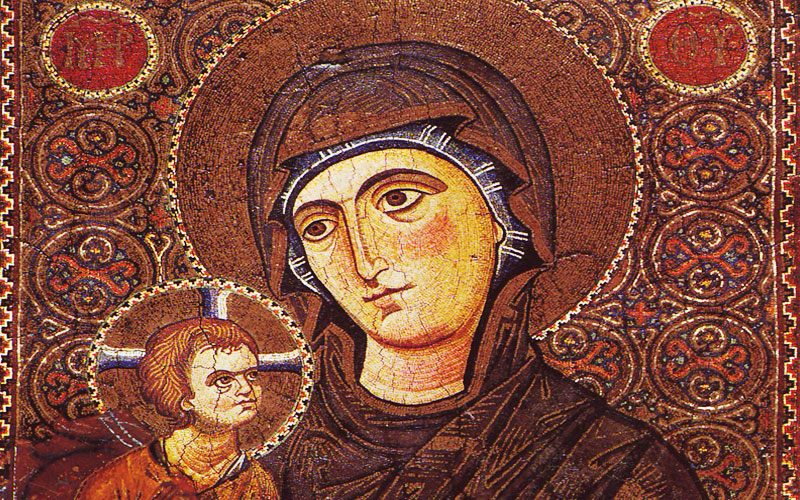
Many people in the religious world – particularly among the Catholic Church – exalt Mary, the earthly mother of Jesus, to a higher position than where she is placed in the Bible.

It is true that Mary does hold a special place in God’s scheme of redemption. The same is true for people like Abraham, David, or any of the others mentioned in the genealogy of Christ (Matthew 1:1-17; Luke 3:23-38). But some have taken their perception of Mary too far and it has led them to deify her and make her an object of worship and a recipient of prayers.
Continue Reading

“My God, My God, Why Have You Forsaken Me?”

Was Jesus actually forsaken on the cross? Did the Father turn His back on the Son? Maybe believe the answer to these questions is “yes” based on their interpretation of Matthew 27:46. When we look at the context, however, we see that Jesus was not separated from the Father while on the cross.

Tim Haile has pointed out several problems with the idea that Jesus was actually forsaken on the cross in a recent article posted on the website of the Parkway church of Christ. I encourage you to click on the link below and read that article.

“My God, My God, Why Have You Forsaken Me?” (by Tim Haile)

Some time ago, I also wrote an article with the same title. If you are interested you may refer to that article as well – “My God, My God, Why Have You Forsaken Me?”

Twelve Legions of Angels

Arrest of Jesus

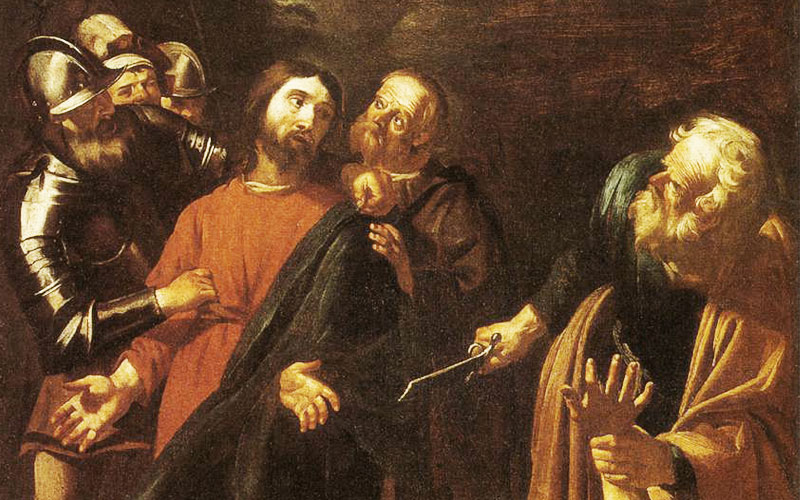
When Peter tried to defend Jesus from the mob that came to arrest Him, Jesus responded, “Put your sword back into its place; for all those who take up the sword shall perish by the sword. Or do you think that I cannot appeal to My Father, and He will at once put at my disposal more than twelve legions of angels?” (Matthew 26:52-53).

How big of a force did Jesus have at His disposal? Depending on which source you reference, a legion was made up of between 4,000 and 6,000+ men. Let us pick a number in the middle (5,000) as a point of reference. Jesus could have called twelve of these angelic companies of 5,000 to come to His aid.

We sometimes sing a song about how Jesus could have called 10,000 angels. Actually, according to the figures above, He could have called around 60,000 angels. How powerful would such a force be?
Continue Reading

Unity of the Spirit

Ephesians 4:4-6

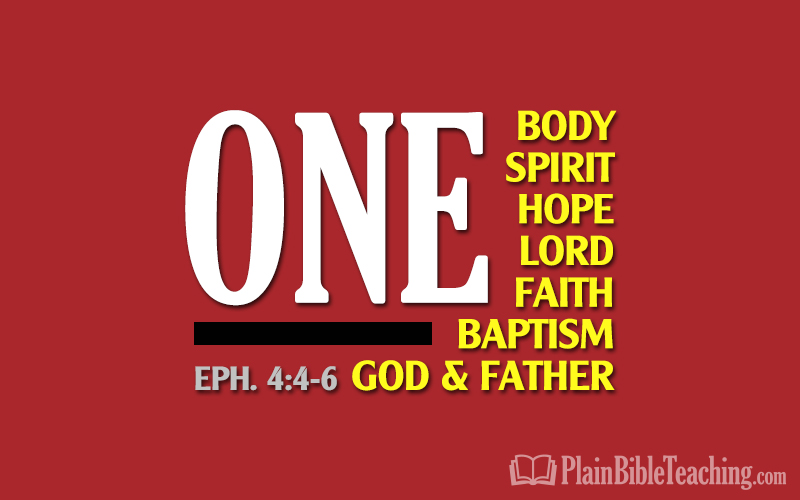
Paul instructed the church in Ephesus to be “diligent to preserve the unity of the Spirit in the bond of peace” (Ephesians 4:3). He then went on to explain the reason for unity and the basis of it.

Our unity must be based upon the following:
Continue Reading

Jesus – The Great Debater

Jesus Debating

One aspect about Jesus that is often ignored is His ability to debate. There is a reason for this. To say that religious debates are not popular in our time is an understatement. Yet the ability to debate is a valuable skill for those who would endeavor to teach the gospel to others. Jesus was so effective that Luke recorded four occasions in just one chapter (Luke 20) in which Jesus silenced His opponents. He did so by presenting arguments that could not be combated.

Paul described the work of spreading the gospel as “destroying speculation and every lofty thing raised up against the knowledge of God, and we are taking every thought captive to the obedience of Christ” (2 Corinthians 10:5). We are not to try to force anyone or trick anyone into obeying the gospel. We persuade people by dismantling the arguments used against the truth.

When Jesus silenced His opponents four times in Luke 20, He was able to do so without turning the common people against Him (Luke 19:48; 21:38). We must develop our abilities to confound our opponents while also persuading the people. In order to help us do this, let us notice how Jesus silenced His opponents.
Continue Reading

The Deity of Christ in Hebrews 1

Hebrews

Jesus is the Son of God (Matthew 3:17). While He was on the earth “all the fullness of Deity [dwelt] in bodily form” (Colossians 2:9). Yet there are some who reject the Deity of Christ, claiming that He surrendered His Deity when He came to earth.

The Hebrew writer appealed to his audience to not go back to the Old Law. He made several points about why the new way with Christ was better than the old way. He began the book by talking about Christ. In the first chapter alone, there are several statements that show us that Jesus is God:
Continue Reading