How Jesus Became Like Us

Jesus Knocking

Jesus came to earth in order to save man from sin (Matthew 1:21; Luke 19:10). This was God’s plan from the beginning (Ephesians 3:11) and was put in motion shortly after sin entered the world (Genesis 3:15). In order to save us, Jesus first had to be made like us.

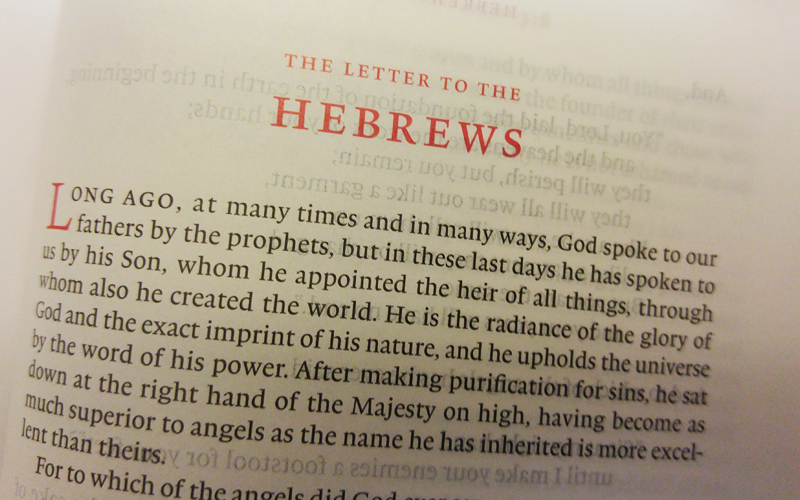
Therefore, He had to be made like His brethren in all things, so that He might be a merciful and faithful high priest in things pertaining to God, to make propitiation for the sins of the people” (Hebrews 2:17).

How was Jesus made like us? Completely? Or was there some sense in which He already like us?
Continue Reading

The Lord’s Prayer in the Garden

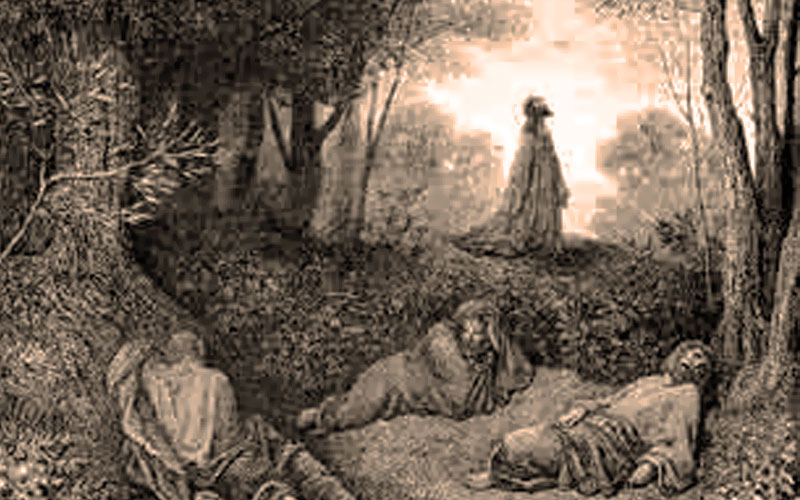
Jesus in the Garden

Shortly before His arrest, trials, beatings, and crucifixion, Jesus spent time in the Garden of Gethsemane praying to the Father. Some interpret this prayer in such a way as to try and show that Jesus was praying that He might escape death. They say that this was a moment of weakness for Jesus and describe Him as being in dread of the cross. They depict Jesus (perhaps unwittingly) as if He were some miserable coward. Can such an interpretation be correct?

Notice Matthew’s account of the Lord’s prayer:

Then Jesus came with them to a place called Gethsemane, and said to His disciples, ‘Sit here while I go over there to pray.’ And He took with Him Peter and the two sons of Zebedee, and began to be grieved and distressed. Then He said to them, ‘My soul is deeply grieved, to the point of death; remain here and keep watch with Me.’ And He went a little beyond them, and fell on His face and prayed, saying, ‘My Father, if it is possible, let this cup pass from Me; yet not as I will, but as You will.’ […] He went away again a second time and prayed, saying, ‘My Father, if this cannot pass away unless I drink it, Your will be done” (Matthew 26:36-39, 42).

After reading of His prayer, let us seek to answer this question: Did Jesus wish to avoid the cross?
Continue Reading

The Anti-Christ

Periodically, different ones will make the claim that the end of the world is near. They point to various “signs” that indicate that the time is upon us. These signs are ripped from the book of Revelation and other places in the Bible with no regard to the context or the purpose of the book. The reality is that “the day of the Lord will come like a thief” (2 Peter 3:10), not with signs so we will expect it. But this certainly does not keep people from creating these fanciful theories.

One of the supposed signs of the end is the coming of the “anti-christ.” This entity is often linked with the beasts of Revelation 13. Many believe the anti-christ will be some political leader. Some have even suggested certain leaders in this country as the anti-christ. But I can tell you with certainty that none of these are the anti-christ.
Continue Reading

The Eternal Gospel

Crosses

We generally divide Biblical history into three dispensations: the Patriarchal age, Mosaic age, and the Gospel age. When people speak of “dispensations,” they are simply referring to the method by which God revealed His will to man. First He revealed His will to the heads of families (Patriarchal age). Then He gave the nation of Israel the Law of Moses (Mosaic age). Finally, the gospel of Christ was revealed (Gospel age). We live in this third and final dispensation.

While these are perfectly acceptable distinctions, we need to recognize that the gospel is different from the other messages that have been delivered. In the book of Revelation, this final message is described as “an eternal gospel” (Revelation 14:6). When we talk about the three dispensations, we ought to recognize that the gospel had its beginning before either of the first two.

The term gospel simply means “good news.” The “good news” is the message of Christ and His salvation. As we can see from the Scriptures, this good news began long before we read of it in the New Testament.
Continue Reading

The Way, the Truth, and the Life

Jesus said, “I am the way, and the truth, and the life; no one comes to the Father but through Me” (John 14:6). This simple, concise statement reveals some important truths.
Continue Reading

“Hail, Rabbi!”

Judas is one of the most infamous characters in the Bible. Most people with at least a limited knowledge of the Bible know Judas as the one who betrayed Jesus.

How could Judas betray Jesus? After all, Judas was one of the twelve disciples. He had been with Jesus throughout His public ministry. Why would he betray Him?

We may have a clue given in the account of the betrayal about one of the reasons Judas could have betrayed Jesus. Notice Matthew’s account:
Continue Reading

No One Is Good Except God Alone

Jesus and the Rich Young Ruler

Luke recorded the occasion when a rich young ruler came to Jesus with a question: “Good Teacher, what shall I do to inherit eternal life?” (Luke 18:18).

When we talk about this passage, we often begin with Jesus instructing this man to keep the commandments contained in the Law of Moses (Luke 18:20). The man responded that he had done this from his youth (Luke 18:21). So Jesus told him what else he needed to do to inherit eternal life: “Sell all that you possess and distribute it to the poor…and come, follow Me” (Luke 18:22). This man was unwilling to do this and departed (Luke 18:23).
Continue Reading