Emphasizing Jesus Christ

Crosses

Paul told the saints in Corinth, “For I determined to know nothing among you except Jesus Christ, and Him crucified” (1 Corinthians 2:2). Why did Paul place such an emphasis on teaching Jesus? He explained: “So that your faith would not rest on the wisdom of men, but on the power of God” (1 Corinthians 2:5).

The Corinthians had a problem of following after men. This resulted in division as some were saying, “‘I am of Paul,’ and ‘I of Apollos,’ and ‘I of Cephas,’ and ‘I of Christ’” (1 Corinthians 1:12). Paul later explained that when they claimed loyalty to these men, they were carnally minded and immature (1 Corinthians 3:1-4).

The inspired apostle sought to correct this thinking so that they would focus on following Christ and not men. This is the first problem he addressed in his letter (1 Corinthians 1:10-17). But notice how he subtly made this point before he explicitly stated it.
Continue Reading
The Gospel of the Grace of God

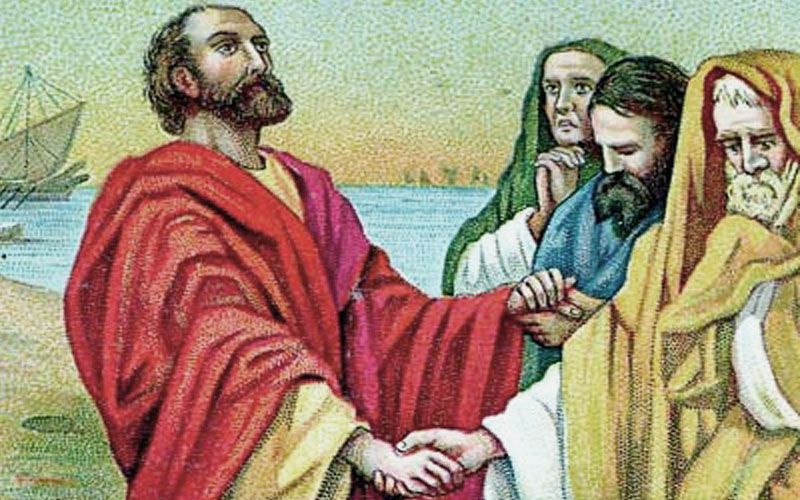
Paul and the Ephesian Elders

On his way to Jerusalem, Paul stopped in Miletus to meet with the elders from the church in Ephesus (Acts 20:17ff). In this farewell address, Paul reminded them that the message he brought to them was “the gospel of the grace of God” (Acts 20:24). This was the message that Paul preached “everywhere in every church” (1 Corinthians 4:17). He preached the gospel to those who were already Christians (Romans 1:15) and to those who had not yet heard of Jesus (Romans 15:20). The gospel is the message that Jesus told His apostles to preach (Mark 16:15) and is the message that we must preach today (Galatians 1:8-9).
Continue Reading

The Establishment of the Kingdom

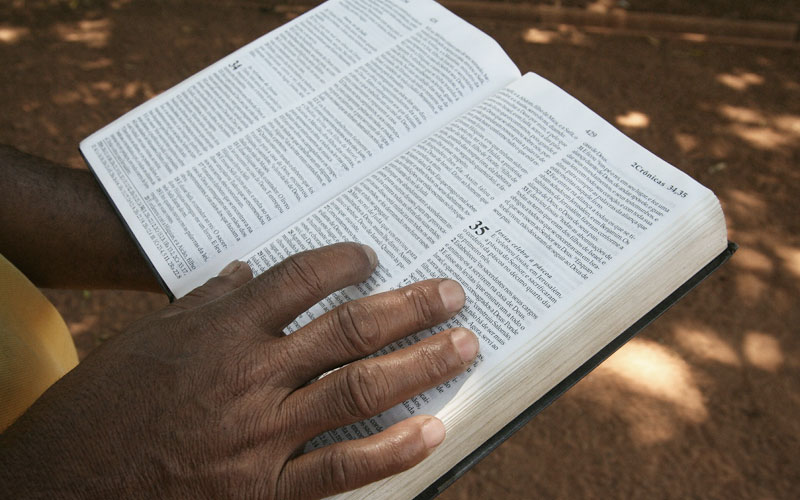
Bible reading

Not everyone agrees about when Jesus established His kingdom. There are three major views on the date of its establishment – (1) the first Pentecost following the ascension of Christ (Acts 2), (2) A.D. 70 at the destruction of Jerusalem, and (3) some future date when Christ returns. Let us notice five key passages that show us when Christ’s kingdom was established.
Continue Reading

Victory in Jesus

Revelation

The book of Revelation is one of the more difficult books in the Bible to understand. Because of the prevalent use of symbolic language and Old Testament references, it requires much study on our part to get a firm grasp on the book. But if we simplify the message of Revelation, we see that it describes a struggle between good and evil – those who are for God and those who are against God.
Continue Reading

Where Did Jesus Go When He Died?

Many, having been influenced by Calvinism, believe that Jesus died in our place as a substitute for us.* This notion is not supported by Scripture. Some who hold to this substitutionary theory of atonement believe Jesus was only separated from the Father while on the cross. Others believe this separation extended past the cross, which would mean that Jesus went to torments, not paradise, when He died. What do the Scriptures say? Where did Jesus go when He died?
Continue Reading

The Priesthood of Christ

The writer of the book of Hebrews repeatedly spoke of things under the law of Christ as being better than those under the Law of Moses. With Christ, we have a better hope (Hebrews 6:19-20; 7:19), better covenant (Hebrews 7:22; 8:6), better promises (Hebrews 8:6), and a better sacrifice (Hebrews 9:23-28). The writer told his audience, “Consider Jesus, the Apostle and High Priest of our confession” (Hebrews 3:1). The role of the high priest was to offer sacrifices for sins (Hebrews 5:1) and be an intercessor between God and man (Hebrews 7:24-25). The nature of Christ’s priesthood is one of the things that is better under the new law. Let us consider the priesthood of Christ.
Continue Reading

Right and Wrong

Many are uncomfortable with the idea that there is an unchanging moral standard. They do not want to think of truth being absolute. They want it to be subjective. They do not like to think of things as being “black and white” but want to believe there is a lot of “gray area.” They think whatever is right should be determined by the individual and be based upon the situation. But the Bible teaches that there is a clear difference between right and wrong. Let us turn our attention to Jesus’ conclusion to the Sermon on the Mount (Matthew 7:13-29) in which He showed five areas where is a distinct difference between right and wrong.
Continue Reading