Since Jesus Was Raised from the Dead, What Are We to Do?

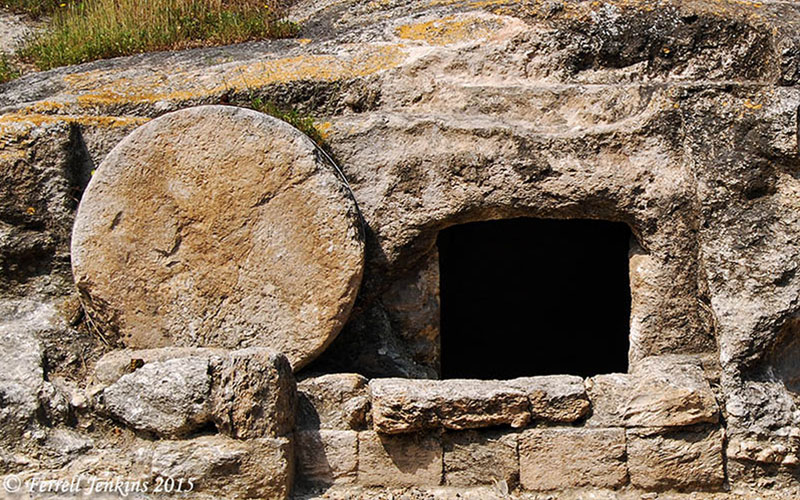
Empty Tomb

Photo by Ferrell Jenkins

Now I make known to you, brethren, the gospel which I preached to you, which also you received, in which also you stand, by which also you are saved, if you hold fast the word which I preached to you, unless you believed in vain. For I delivered to you as of first importance what I also received, that Christ died for our sins according to the Scriptures, and that He was buried, and that He was raised on the third day according to the Scriptures” (1 Corinthians 15:1-4).

The resurrection of Christ is part of the foundation of the gospel. Many remember this event on “Easter,” yet remembering the resurrection should not be limited to a man-made holy day. We should be mindful of this at all times.

Paul explained that through the resurrection of Christ, we have hope: “But now Christ has been raised from the dead, the first fruits of those who are asleep. For since by a man came death, by a man also came the resurrection of the dead. For as in Adam all die, so also in Christ all will be made alive” (1 Corinthians 15:20-22).

How can we realize this hope? We need to recognize that the account of Jesus’ resurrection is not just about what He did, it also includes what we are to do. So let us consider the question: Since Jesus was raised from the dead, what are we to do?Continue Reading

Great Days in History (Part 2): The Day of Jesus’ Birth

Great Days in History

And I will put enmity between you and the woman, and between your seed and her seed; he shall bruise you on the head, and you shall bruise him on the heel” (Genesis 3:15).

But when the fullness of the time came, God sent forth His Son, born of a woman, born under the Law” (Galatians 4:4).

After considering the day of Creation, we will now be moving to the day of Jesus’ birth. This may seem like a big jump from the first day; however, we are not skipping the Old Testament. Instead, the Old Testament is the foundation for this lesson.Continue Reading

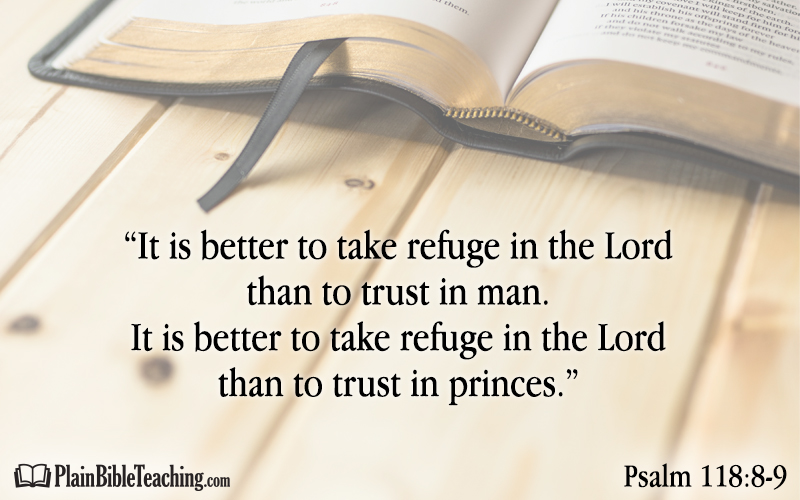
Trust in the Lord, Not in Princes

Psalm 118:8-9

It is better to take refuge in the Lord than to trust in man. It is better to take refuge in the Lord than to trust in princes” (Psalm 118:8-9).

People often have a tendency to put their trust in man. They trust that their civil leaders will always protect them, trust that their preacher will always teach them the truth, trust that their elders will always give them wise counsel, etc. While it is possible for these things to often happen, we cannot assume they will always happen. Furthermore, any good that is provided by those in whom we trust is never perfect. This is why the psalmist wrote, “It is better to take refuge in the Lord than to trust in man” (Psalm 118:8).

Immediately after that, the psalmist repeated the phrase with one change. He emphasized the fact that trusting in God is better than trusting in princes (Psalm 118:9). Because civil leaders may maintain security, provide for the people, rule in a way that pleases the people, or be the only government the people have ever known, many place their trust in these rulers. Yet the psalmist said it was better to trust in God. Why?Continue Reading

“I AM”

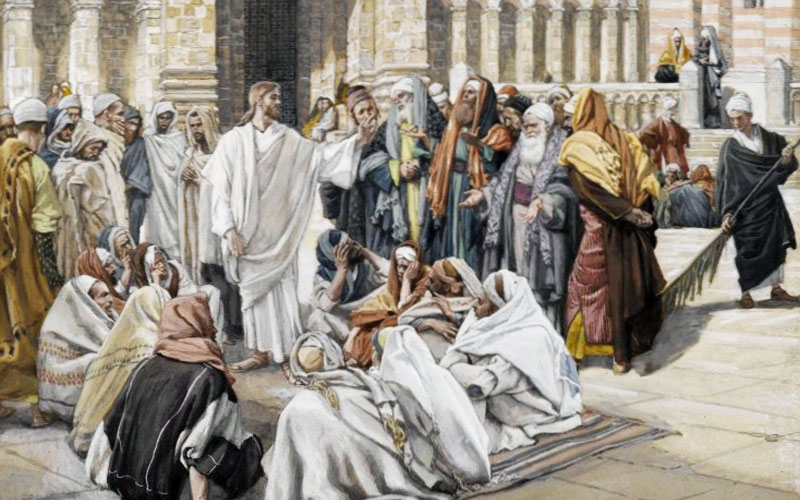
Jesus and the Pharisees

When God appeared to Moses and called him to lead the Israelites out of Egypt, Moses asked the Lord for His name so he could identify Him when he went to the people. God responded, “I AM WHO I AM…Thus you shall say to the sons of Israel, ‘I AM has sent me to you’” (Exodus 3:14).

When Jesus came to earth, He used this same name for Himself: “Truly, truly, I say to you, before Abraham was born, I am” (John 8:58). Even Jesus’ opponents recognized that He was claiming to be God because they “picked up stones to throw at Him” (John 8:59). This was not the first time something like this happened. Earlier the Jews sought “to kill Him” because He was “calling God His own Father, making Himself equal with God” (John 5:18).

By calling Himself “I am,” Jesus declared Himself to be Deity – God in the flesh (cf. Colossians 2:9). Since Jesus was and is God, there are other facts that are also true about Him. These are highlighted in other “I am” statements of Jesus recorded in the gospel of John.Continue Reading

Through Many Tribulations (Part 4): Persecution

Through Many Tribulations

As we continue looking at the apostle Paul, we will see that he did more than just sacrifice his time and effort in laboring for the cause of Christ, along with a degree of material and mental well-being. He also faced persecution for his faith.

He told Timothy, “Remember Jesus Christ, risen from the dead, descendant of David, according to my gospel, for which I suffer hardship even to imprisonment as a criminal; but the word of God is not imprisoned. For this reason I endure all things for the sake of those who are chosen, so that they also may obtain the salvation which is in Christ Jesus and with it eternal glory” (2 Timothy 2:8-10). Not only did Paul suffer as a criminal, but he willingly endured this. Why? He said he did so “for the sake of those who are chosen” (2 Timothy 2:10). He also told Timothy later in this same letter, “I have fought the good fight, I have finished the course, I have kept the faith; in the future there is laid up for me the crown of righteousness, which the Lord, the righteous Judge, will award to me on that day; and not only to me, but also to all who have loved His appearing” (2 Timothy 4:7-8). He endured persecution in order to obtain salvation – for himself and for others. In his second letter to the Corinthians, he described some of the ways he faced persecution.Continue Reading

“If God Is For Us”

Man on a mountain

Paul’s words at the end of Romans 8 were meant to be a source of encouragement for the saints in Rome. They ought to be for us as well.

What then shall we say to these things? If God is for us, who is against us?” (Romans 8:31).

But in all these things we overwhelmingly conquer through Him who loved us” (Romans 8:37).

We must always remember that “God is for us.” Knowing this, we can make it through any challenge that may come against us. Let us take a closer look at the text.Continue Reading

Lord, Come Quickly

Clouds

After receiving the revelation contained in the book of Revelation, John gave a final statement from Jesus: “I am coming quickly” (Revelation 22:20). John then expressed his desire for Jesus to do this: “Amen. Come, Lord Jesus” (Revelation 22:20). He wanted Jesus to come quickly.

Why would John desire Jesus to come quickly? When we think about the return of Christ in which He will judge the world and reward the faithful, why should we desire Jesus to come quickly? Furthermore, what does it say about us if this is not our desire? We will explore these questions in this article.Continue Reading