The Root of the Problem (Part 3): We Fail to See Sin for What It Is

The Root of the Problem: Why We Sin & How We Can Overcome

The world in which we live has a distorted perception of sin. In our society, sin is mocked, disregarded, ignored, and even glorified. But the word of God presents a very different perspective. Sin is likened to darkness (John 3:19-20) and cancer (2 Timothy 2:17). Sin enslaves us (Romans 6:17,20). We are told very plainly that God hates sin (Proverbs 6:16-19).

If we do not appreciate what the Scriptures teach about sin, then it is not likely that we will want to give it up. One of the first steps to overcoming sin is realizing just how bad sin really is. To begin, we need to know what the Bible means when it talks about sin.
Continue Reading


Stop Sinning: Can You? Should You? Will You?

Stop sign

In His word, God has defined certain things as sin – fornication, idolatry, covetousness, strife, drunkenness, murder, lying, and more (1 Corinthians 6:9-10; Galatians 5:19-21; 1 Timothy 1:9-10; Revelation 21:8; et al.). The Scriptures also present a very clear instruction with regard to sin: “Become sober-minded as you ought, and stop sinning” (1 Corinthians 15:34).

It is to be expected that those in the world will ignore this instruction. Yet, sadly, many Christians seem to ignore this as well. They have believed the Calvinist’s lie that our flesh is inherently sinful and that we cannot help but sin. As we will see, the Scriptures present a different reality. Living in the flesh means it is possible for us to sin (1 John 1:10-2:1); but we are called to “be perfect, as [our] heavenly Father is perfect” (Matthew 5:48). With that in mind, let us consider three questions in this article.
Continue Reading

Stagnant in Spirit

Swamp

The following is a portion of the revelation against Jerusalem that was received by the prophet Zephaniah:

It will come about at that time that I will search Jerusalem with lamps, and I will punish the men who are stagnant in spirit, who say in their hearts, ‘The Lord will not do good or evil!’ Moreover, their wealth will become plunder and their houses desolate; yes, they will build houses but not inhabit them, and plant vineyards but not drink their wine’” (Zephaniah 1:12-13).

This prophecy was against those who were “stagnant in spirit” or “settled in complacency” (NKJV). As it was in the days of Zephaniah, complacency is still a threat to God’s people today. Complacency keeps us focused on the here and now rather than fixing our eyes on the goal of heaven. Complacency keeps us from improving our service to God and forsaking our sins. Complacency keeps us from being pleasing to God, thereby setting us up for punishment. So let us consider how these people were “stagnant in spirit” so that we might not be the same.
Continue Reading

Testing God

Moses Strikes the Rock

The Hebrew writer quoted the psalmist’s description of the Israelites testing God in the wilderness (Hebrews 3:7-11; cf. Psalm 95:7-11). Testing God is directly connected to one’s faith. Immediately after mentioning the Israelites testing God, the Hebrew writer warned about the danger of “an evil, unbelieving heart that falls away from the living God” (Hebrews 3:12). He closed the chapter with a statement about the “unbelief” exhibited by those who tested God (Hebrews 3:19).

In this article, we will briefly consider three examples given in Scripture that show how one can be guilty of testing God. After noting these examples, we will also consider the severe consequences of testing God so we might learn not to do this ourselves.
Continue Reading

“Do Not Let Your Heart Envy Sinners”

Bar

Christians are not to be envious of anyone since “envying” is a work of the flesh (Galatians 5:19-21). Yet it is particularly important that we not envy those who live their lives in such a way that is contrary to the will of God. Solomon gave a clear warning: “Do not let your heart envy sinners, but live in the fear of the Lord always” (Proverbs 23:17).

Why did Solomon have to explicitly state that God’s people were not to be envious of those who were not of His people? Sadly it is because it is common for the righteous to envy the unrighteous. Notice the words of the psalmist: “For I was envious of the arrogant as I saw the prosperity of the wicked” (Psalm 73:3).
Continue Reading

The Appreciation of Wisdom: Contrast Between the Righteous and the Wicked — Spiritual Consequences

Notes on Proverbs

While much of Proverbs deals with matters that pertain to activities of this life and our physical well-being, there are also instructions and principles that extend to our spiritual activities and well-being. We will consider these passages here.
Continue Reading

A Message of Life or Death

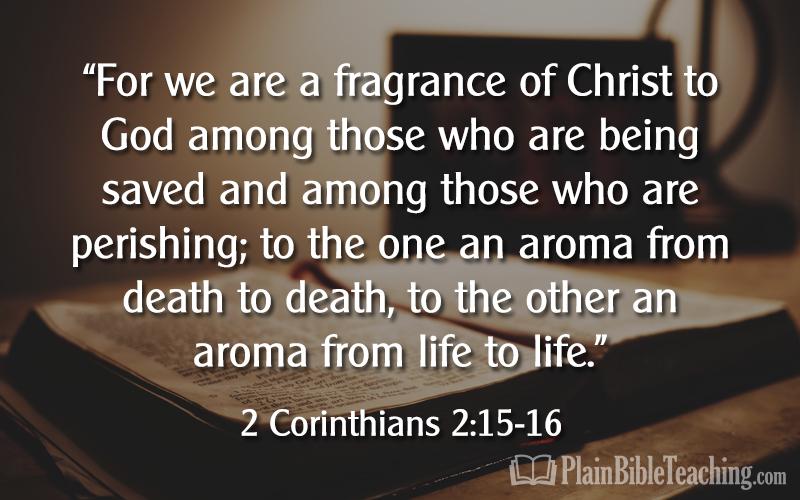
2 Corinthians 2:15-16

Often when people want to emphasize the serious nature of a matter, they describe it as “a matter of life or death.” The gospel is certainly a serious matter as it pertains to our eternal life or death (Romans 6:23). But in another sense, the gospel is a message of either life or death depending on how it is received by the one who hears it. Notice what Paul wrote to the brethren in Corinth:

For we are a fragrance of Christ to God among those who are being saved and among those who are perishing; to the one an aroma from death to death, to the other an aroma from life to life” (2 Corinthians 2:15-16).

For some, the gospel is a message “from life to life.” For others, it is a message “from death to death.” Which one depends on how the hearer perceives it. Let us notice the difference in perspectives.
Continue Reading