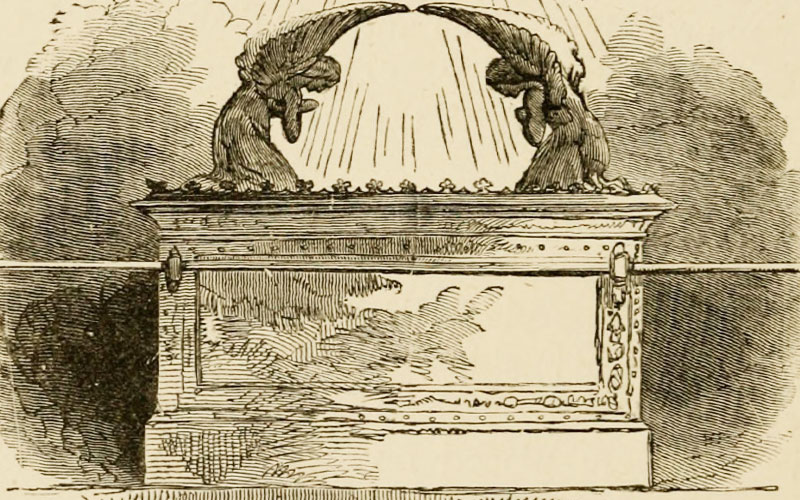
The Death of Eli

Ark of the Covenant

Eli, a man who judged Israel for forty years, died on a day of great conflict between the children of Israel and the Philistines. He did not die in battle, nor was he killed by the sword of his enemy. Instead, he died a sad death upon hearing news of the battle.

The man said to Eli, ‘I am the one who came from the battle line. Indeed, I escaped from the battle line today.’ And he said, ‘How did things go, my son?’ Then the one who brought the news replied, ‘Israel has fled before the Philistines and there has also been a great slaughter among the people, and your two sons also, Hophni and Phinehas, are dead, and the ark of God has been taken.’

When he mentioned the ark of God, Eli fell off the seat backward beside the gate, and his neck was broken and he died, for he was old and heavy. Thus he judged Israel forty years” (1 Samuel 4:16-18).

There were four troubling pieces of news that Eli received before he died.
Continue Reading
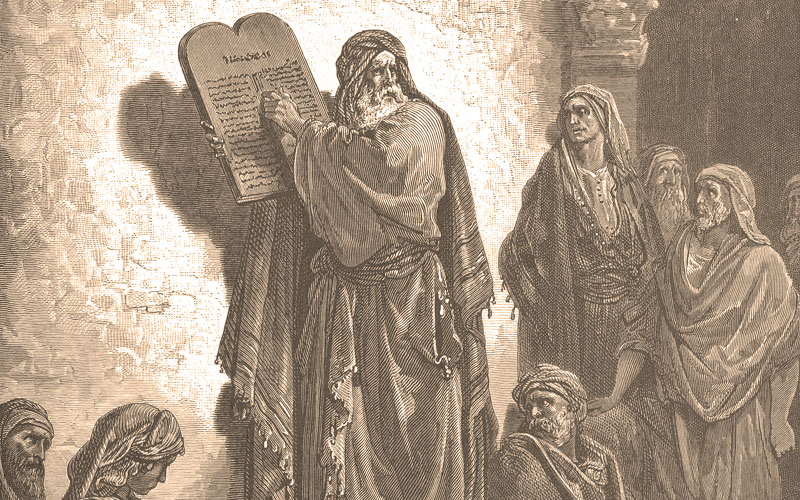
The Hand of God was Upon Ezra

Ezra Reads the Law

Following the Babylonian captivity, the Jews were allowed to return to their homeland and, with the blessing of the king of Persia, rebuild the temple. Ezra, a priest and scribe, was sent back to the land after the temple was completed. During this time God was with him. The Scriptures also explain why He was with Ezra.

For on the first of the first month he began to go up from Babylon; and on the first of the fifth month he came to Jerusalem, because the good hand of his God was upon him. For Ezra had set his heart to study the law of the Lord and to practice it, and to teach His statutes and ordinances in Israel” (Ezra 7:9-10).

This passage contains four reasons why Ezra found favor with God. We would do well to learn from Ezra’s example here. These are the same things we must do today to find favor with God.
Continue Reading

How God Speaks to Us Today

Many today are seeking God’s guidance and direction but are unsure where to look. The Scriptures plainly teach us that God speaks to us today through His Son, Jesus. The Hebrew writer began his letter by affirming this fact:

God, after He spoke long ago to the fathers in the prophets in many portions and in many ways, in these last days has spoken to us in His Son, whom He appointed heir of all things, through whom also He made the world” (Hebrews 1:1-2).

Previously, God spoke to man in different ways, providing bits and pieces of revelation to the fathers during the Patriarchal age, and also through the prophets. But that was in times past. He does not speak to us in the same way today. Now that we are in the “last days,” there is a new spokesman.
Continue Reading

Seeking God

Man at Night

When Paul was in Athens, a city full of idolatry, he found opportunity to teach them about the one true God. He was to them “an Unknown God” (Acts 17:23). God does not want to be unknown to His creation, but has instilled in us the desire to seek after Him. Paul explained this to the Athenians:

He made from one man every nation of mankind to live on all the face of the earth, having determined their appointed times and the boundaries of their habitation, that they would seek God, if perhaps they might grope for Him and find Him, though He is not far from each one of us” (Acts 17:26-27).

God wants us to seek for Him and He is not far off. But does this mean we can seek after God in whatever way we wish, doing what seems good to us and expecting that God will be pleased? There are many who think this way, but it is not what God wants from those who would seek after Him.
Continue Reading

Did Christ Literally Bear Our Sins on the Cross?

Crosses

Jesus died on the cross for our sins. Yet there are two conflicting views as to how these sins were dealt with on the cross. On one hand, you have those who believe that our sins were placed upon Jesus and they were done away with as they were nailed to the cross. On the other hand, there are those who believe that Jesus shed His blood on the cross in order to make forgiveness possible for all those who will meet His conditions of salvation.

The first view, that Jesus literally bore our sins, is rank Calvinism. It is rooted in the idea that man cannot be saved by responding to God’s grace through faithful obedience, but rather that our sins were imputed to Christ and His righteousness has been imputed to us. Sadly, many in the Lord’s church have been influenced by Calvin’s doctrines as they relate to the death of Christ.

I came across an article today by Wayne Jackson of the Christian Courier that addresses this question: Did Christ Literally Bear Our Sins on the Cross? In the article, he shows the Calvinistic roots of the doctrine that our sins were imputed to Christ, and explains what the Scriptures actually teach on the subject. Below is an excerpt from his article:
Continue Reading

“Christ Did Not Send Me to Baptize”

Baptism

There is a sharp divide in the religious world over the subject of baptism. Some, including myself, teach that baptism is necessary for salvation. Many others teach that one can be saved before or without water baptism.

Paul made an interesting statement in his first letter to the church at Corinth. Considered independently from the immediate context and the rest of the New Testament, it could easily be used to argue that baptism is not necessary for salvation. Notice what he told the brethren:

For Christ did not send me to baptize, but to preach the gospel, not in cleverness of speech, so that the cross of Christ would not be made void” (1 Corinthians 1:17).

Paul said he was not sent to baptize. From that, are we to conclude that baptism is not a prerequisite to salvation? Before we jump to that conclusion, let us take a closer look at what the Scriptures teach.
Continue Reading

The Trouble with the Census

Although David was a man after God’s own heart (Acts 13:22), he did make mistakes. The one that usually comes to our mind first was his sin with Bathsheba. But he later committed an offense so severe that the Lord sent a pestilence which killed 70,000 people (2 Samuel 24:15). What was his sin? He took a census of the people.

Satan was the one who influenced David to do this (1 Chronicles 21:1). But what was it about numbering the people that was so wrong. Why was it that David’s counting of the people constituted a victory for Satan?
Continue Reading