Salvation: Past, Present, and Future

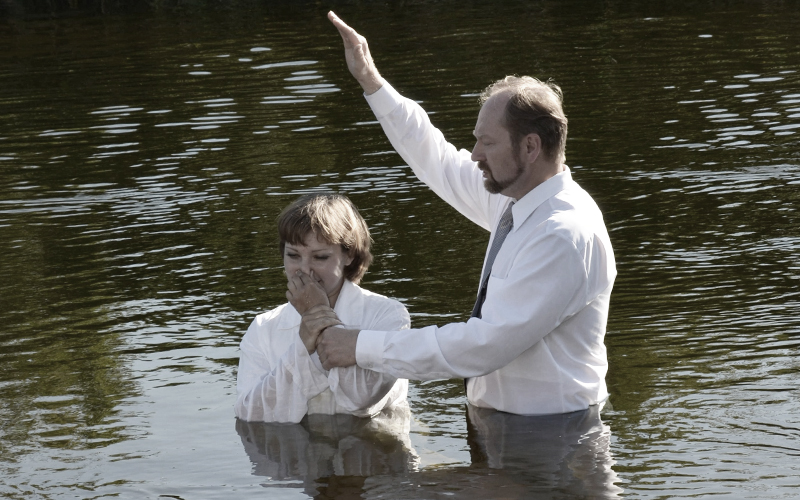
BaptismFor many religious people, when they talk about salvation, they talk about “getting” saved. It is common to hear phrases like these:

  • When did you get saved?
  • I got saved when I was fifteen years old.
  • Several people were getting saved at the revival.

However, despite how frequently we hear phrases like those in conversations with religious people, the Bible never talks about salvation in this way. Instead, the New Testament refers to people being saved.

This is significant because it emphasizes our dependence upon God for our salvation. Salvation is not something we “get” on our own. Instead, we are dependent upon God to save us. Even when there are conditions we must meet (which we will discuss), we are relying upon God to save us. Therefore, the New Testament talks about being saved (passive, something that is done for us) rather than getting saved (active, something we do or obtain for ourselves).

In fact, the New Testament describes aspects of our salvation (being saved) that relate to the past, present, and future. Let us consider a few different passages.Continue Reading

Add to Your Faith (Part 9): The Entrance into the Eternal Kingdom

Add to Your Faith

Over the course of this study, we have been looking at qualities we are to add to our faith – moral excellence, knowledge, self-control, perseverance, godliness, brotherly kindness, and love. Now, we are going to wrap up the series by looking at Peter’s conclusion.

For if these qualities are yours and are increasing, they render you neither useless nor unfruitful in the true knowledge of our Lord Jesus Christ. For he who lacks these qualities is blind or short-sighted, having forgotten his purification from his former sins. Therefore, brethren, be all the more diligent to make certain about His calling and choosing you; for as long as you practice these things, you will never stumble; for in this way the entrance into the eternal kingdom of our Lord and Savior Jesus Christ will be abundantly supplied to you” (2 Peter 1:8-11).

Let us consider four points from the verses above.Continue Reading

Top 5 on Plain Bible Teaching in 2025

Plain Bible Teaching Top 5 in 2025

This year is quickly drawing to a close, and it will be 2026 before we know it. Before we get there, it is time for the annual “Top 5” post on Plain Bible Teaching, where we look back at the most-read articles, most-listened-to podcast episodes, and most-watched videos – not necessarily to see what was most “popular” but what was most helpful.

A couple of things I noticed that I thought were interesting:

  • A book review made it in the Top 5 articles posted this year. I don’t think we’ve had that before.
  • Three of the Top 5 Facebook posts were Restoration History articles.

Continue Reading

Unacceptable Gifts for God

Gift

I hate, I reject your festivals, nor do I delight in your solemn assemblies. Even though you offer up to Me burnt offerings and your grain offerings, I will not accept them; and I will not even look at the peace offerings of your fatlings. Take away from Me the noise of your songs; I will not even listen to the sound of your harps. But let justice roll down like waters and righteousness like an ever-flowing stream” (Amos 5:21-24).

These words from God may sound shocking to many people today. Why would God not accept worship that was being offered to Him?

The rebuke above was directed to the nation of Israel. The reason why God refused to accept their worship was because of their sin: “For I know your transgressions are many and your sins are great…” (Amos 5:12). Offering sacrifices to God did not excuse them of disregarding His law and doing things that were contrary to His will.

Other passages describe various kinds of gifts which were offered to God, but He did not accept them. In this article, we are going to consider some unacceptable gifts we may offer to God, lest we find ourselves guilty of offering something that He would “hate” or “reject.”Continue Reading

Add to Your Faith (Part 8): Add Love

Add to Your Faith

As we reach the end of Peter’s list of qualities we are to add to our faith, we come to one that Paul described in another context as “the greatest of these” (1 Corinthians 13:13) – love. It is fitting for this to be the final trait, though not because it is the least important. As faith is the foundation upon which all of these others are added, love must be the motivation for all that we do in these areas.

Now for this very reason also, applying all diligence, in your faith supply moral excellence, and in your moral excellence, knowledge, and in your knowledge, self-control, and in your self-control, perseverance, and in your perseverance, godliness, and in your godliness, brotherly kindness, and in your brotherly kindness, love. For if these qualities are yours and are increasing, they render you neither useless nor unfruitful in the true knowledge of our Lord Jesus Christ” (2 Peter 1:5-8).

Continue Reading

Fictitious Names

The Heretic DetectorIn the nineteenth century, religious journals were a common and effective way for those who were making the “restoration plea” to spread their message far and wide. Alexander Campbell’s Christian Baptist and Millennial Harbinger were two of the most prominent journals, yet others also received wide circulation, including Barton W. Stone’s Christian Messenger, Benjamin Franklin’s American Christian Review, and the Gospel Advocate, which was started by Tolbert Fanning.

In addition to these, numerous other journals were published across the country, including the curiously named Heretic Detector, edited by Arthur Crihfield (1803-1852) and published in Middleburgh, Ohio. In a letter to the editor, Crihfield received a letter from a man named Corbly Martin, criticizing the practice of writers using “fictitious names” in these journals.

“Dear Brother Detector:—

“Among the innumerable popular evils to be detected, there is one which, although not the least, I opine, has hitherto almost entirely escaped the notice of every ‘detector’ of this detecting age. It is certainly a part of the spirit of ‘all deceivableness of unrighteousness,’ and ought to be speedily detected

“‘Well, what is it?’ say you:—It is simply this: The practice of writing letters, essays, &c. over fictitious names. Is it in accordance with the avowed spirit of this reformation, with the simple and honest, truth loving, and unfeigning genius of the Christian religion, to publish what I would not acknowledge to be the effusion of my own pen, or head, or heart? What I could not patronize with the influence of my own proper name? Or what needed some fictitious name of great renown, of Latinized form, or of magical sound, as a passport to the world, or to the congregation of the faithful?”

“Why do not you Editors require of your contributors that which is just and equal? When you write yourselves, you assume ‘the responsibility:’—as an enterprising merchant you run the risk of ‘loss and gain.’—Why do you burden yourselves and ease your correspondents!” (The Heretic Detector, Volume 1, pp. 271-272).

Continue Reading

Add to Your Faith (Part 7): Add Brotherly Kindness

Add to Your Faith

The first few qualities that Peter said we are to add to our faith relate to behaviors, attitudes, or traits that impact us personally. We are to learn what is right (knowledge), do what is right (moral excellence), refrain from doing what is wrong (self-control), and continue to do these things (perseverance). In the previous lesson, we saw how our attitude toward God affects our behavior (godliness). The next characteristic (brotherly kindness) focuses on how we treat other people.

Now for this very reason also, applying all diligence, in your faith supply moral excellence, and in your moral excellence, knowledge, and in your knowledge, self-control, and in your self-control, perseverance, and in your perseverance, godliness, and in your godliness, brotherly kindness, and in your brotherly kindness, love. For if these qualities are yours and are increasing, they render you neither useless nor unfruitful in the true knowledge of our Lord Jesus Christ” (2 Peter 1:5-8).

Continue Reading