The Fertile Fields of Sin in Sodom

Lot and the Men of Sodom

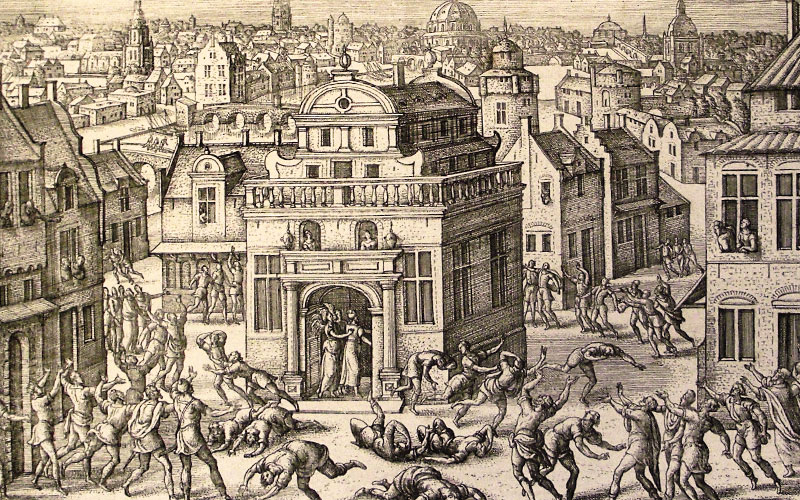
Shortly after receiving the promises from God, Abram (Abraham) journeyed out of Egypt with his nephew Lot (Genesis 13:1). A problem soon arose between Abram’s herdsmen and Lot’s herdsmen because the land was unable to support all of their livestock (Genesis 13:6-7). Abram proposed that they separate in order to resolve the conflict and allowed Lot to choose which direction he would go (Genesis 13:8-9). Notice what the text says about his decision:

Lot lifted up his eyes and saw all the valley of the Jordan, that it was well watered everywhere—this was before the Lord destroyed Sodom and Gomorrah—like the garden of the Lord… So Lot chose for himself all the valley of the Jordan, and Lot journeyed eastward. […] Lot settled in the cities of the valley, and moved his tents as far as Sodom” (Genesis 13:10-12).

While the area around Sodom provided fertile ground for his livestock, Lot ignored a very significant fact about the city: “The men of Sodom were wicked exceedingly and sinners against the Lord” (Genesis 13:13). Just as the ground was fertile to produce vegetation, conditions among the inhabitants of Sodom were fertile to produce the great wickedness in that city.
Continue Reading


What Have You Done?

Cain and Abel

What have you done?” Children often hear this question from their parents. They quickly learn that this question means three things: (1) they did something wrong, (2) they were caught, and (3) there are consequences to follow.

Our heavenly Father asked this question twice in the early chapters of the Bible with the same kind of meaning. The first came after Adam and Eve sinned by eating of the forbidden fruit. He asked Eve, “What is this you have done?” (Genesis 3:13). Following that, Cain sinned when he murdered his brother Abel. When God confronted Cain, He asked, “What have you done?” (Genesis 4:10).

There are lessons for us today from this question.
Continue Reading

A Call for Praise to the Lord

Psalm 100 is a call for all men to praise the Lord. It also reminds us of the reasons we are to praise Him and what our attitude should be in our praise.

Shout joyfully to the Lord, all the earth.

Serve the Lord with gladness; come before Him with joyful singing.

Know that the Lord Himself is God; it is He who has made us, and not we ourselves; we are His people and the sheep of His pasture.

Enter His gates with thanksgiving and His courts with praise. Give thanks to Him, bless His name.

For the Lord is good; His lovingkindness is everlasting and His faithfulness to all generations.

There are four points in this psalm that relate to our praise to God.
Continue Reading

Keywords in the Prophecy of the Coming Kingdom

Matterhorn mountain

Isaiah prophesied of a kingdom that was to come “in the last days” – the age that was ushered in following the coming of Christ into the world (cf. Hebrews 1:2). There are several keywords in this prophecy that we must understand if we are to appreciate what the passage teaches.

Now it will come about that in the last days the mountain of the house of the Lord will be established as the chief of the mountains, and will be raised above the hills; and all nations will stream to it.

And many peoples will come and say, ‘Come, let us go up to the mountain of the Lord, to the house of the God of Jacob; that He may teach us concerning His ways and that we may walk in His paths.’ For the law will go forth from Zion and the word of the Lord from Jerusalem.

And He will judge between the nations, and will render decisions for many peoples; and they will hammer their swords into plowshares and their spears into pruning hooks. Nation will not lift up sword against nation, and never again will they learn war” (Isaiah 2:2-4).

Let us briefly consider each of these key terms:
Continue Reading

Halloween

[This article was written by Bryan Matthew Dockens.]

Halloween originated as “All Hallows’ Eve,” the night prior to “All Hallows’ Day,” that is “All Saints’ Day” on which Catholics honor their pantheon of so-called “saints.” Neither Halloween nor All Saints Day has any basis in scripture. Each is the invention of the Catholic Church, amounting to the traditions of men, rather than the commandments of God (Matthew 15:1-9).

The Pope designated the first of November All Saints’ Day to co-opt the existing Celtic festival of Samhain (pronounced “sow-en”). Meaning “Summer’s End,” Samhain was a harvest festival, but more than that, it was also a festival of the dead. As summer turned to winter, the holiday represented a time of transition when spirits from beyond the grave could pass through. Deceased ancestors were honored while harmful spirits were warded off by frightening disguises.
Continue Reading

Audio Sermons from Bill Reeves

The Parkway church of Christ hosted a Gospel Meeting October 18-21 and invited Bill Reeves to come preach. Brother Reeves has spent many years preaching the gospel and there are a number of valuable lessons and reminders in his sermons. The audio files are  posted on the church’s website. I also have them listed here:

These links are to the MP3 audio files. You can either click on a link to listen to the sermon, or right-click to save the file to your computer.

If you visit Parkway’s website, you can find the audio files for various other sermons and radio programs, articles, and more.

Contrasting the Righteous and the Wicked: A Brief Examination of Psalm 1

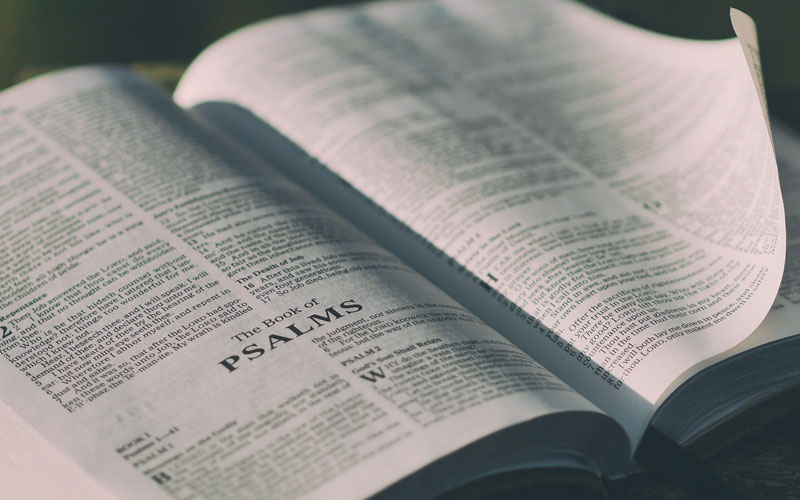
Psalms

In the first psalm, we read of a sharp contrast between the righteous and the wicked. As we strive to be righteous and avoid wickedness, let us briefly consider the words of the psalmist.
Continue Reading