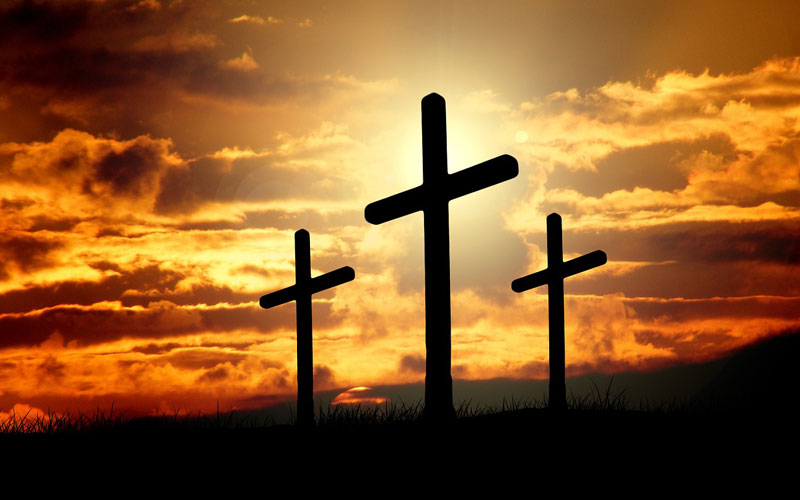
Whose Place Did Jesus Take on the Cross?

Crosses

Jesus’ death on the cross is part of the foundation of our faith. Yet for an event so important and familiar, many have misconceptions about it. One common misconception is the idea that Jesus died in our place or in our stead. We sometimes hear the terminology that calls this sacrifice the vicarious death of Christ. Vicarious simply means a substitute. This is the idea that many have – Jesus died in our place as a substitute for us.

Let us notice a common illustration that is used to emphasize the presumed vicarious nature of Christ’s sacrifice. [I say this is a common illustration because I have personally heard it, or something very close to it, used on multiple occasions by gospel preachers from the pulpit.] The illustration goes something like this: You are a defendant in a court of law and, being found guilty, are sentenced to pay some outrageous fine that you could never be able to pay. Since you cannot pay, you are going to be sent to prison. Then someone you do not know steps forward and agrees to pay the debt for you. He takes your place. It is as if he was the one who committed the offense because the punishment for your offense fell on him. Your debt is transferred to and paid by him. As a result, you are free.

The parable described above is used to depict Jesus as one who willingly took our place and acted as a substitute for us. The punishment we were due for our sin, He endured. We are thus free from the penalty for sin. This is a heart-warming metaphor. But as we shall see, it is not Biblical.
Continue Reading

A Push for Higher Education

[Article written by Matt Nevins. Originally published in his email newsletter “The Lamp.”]

It is interesting to note the emphasis this country places on education and to see how many who desire to remain ignorant. Televised commercials have relayed the message for younger individuals to stay in school and earn a GED. Other commercials have aired by various universities to convince individuals that their campus is the best place to engage in higher learning to advance for a comfortable life. It is indeed good for people to have an interest in having knowledge to acquire a skill to be productive in society and provide for self or family. Sadly there are Christians who place a greater emphasis on pursuing a secular education rather than higher education in the word of God. The most enriching knowledge is the knowledge found in Christ that is able to save and perfect our lives.
Continue Reading

Proper Practice of the Lord’s Supper

Christians are commanded to partake of the Lord’s Supper. Paul gave instructions regarding the practice when he wrote to the church in Corinth (1 Corinthians 11:20-34). He relayed to them the command he had “received from the Lord” (1 Corinthians 11:23). The command from Christ was to “do this in remembrance of Me” (1 Corinthians 11:24). As the Christians in Corinth were commanded to partake of the Lord’s Supper, we are to partake as well.
Continue Reading

Doing the Will of God

Man at Sunset

Not everyone who says to Me, ‘Lord, Lord,’ will enter the kingdom of heaven, but he who does the will of My Father who is in heaven will enter. Many will say to Me on that day, ‘Lord, Lord, did we not prophesy in Your name, and in Your name cast out demons, and in Your name perform many miracles?’ And then I will declare to them, ‘I never knew you; depart from Me, you who practice lawlessness’” (Matthew 7:21-23).

In the Sermon on the Mount (Matthew 5-7), Jesus described the character of one who would be a citizen of His kingdom. The kingdom is open to all; but sadly, not all will choose to enter. Who is it that will enter the kingdom? Jesus said, “He who does the will of My Father who is in heaven will enter.” Do we want to be a part of God’s kingdom? If so, we need to do the will of God.
Continue Reading

Institutionalism

As we look at the work God has given to the church, we find a great amount of work to do. Jesus told His disciples, “The harvest is plentiful, but the workers are few” (Matthew 9:37). This means that there is plenty for all of us to be doing. Each local congregation has much work to do. There will never come a time as long as the earth stands when the Lord’s church has done all the work it can do.

Some look at the overwhelming amount of work to be done and try to devise a better way to do the works of evangelism, edification, and benevolence. One method men have created is what has been referred to as institutionalism. That is, they form organizations separate from the church to do the work of the church. However, when we read the New Testament, we find no organization other than the church that God has approved to do these works. This is not to say that we, as individuals, cannot perform these works. Individuals can spread the gospel (Acts 8:4), edify other Christians (Hebrews 3:13), and help those in need (Galatians 6:10). In fact, we are to do these things. But the only organization or collective we find in Scripture authorized to do these works is the church. We simply find no authority for Christians to form human organizations to do the work God gave the church to do.
Continue Reading

The All Sufficiency of the Church

Country Church

When we speak of the church being “all sufficient,” what do we mean? The claim that the church is all sufficient means that the church is fully capable of doing all the work God gave it to do. It does not need the aid of institutions to carry out this work. Christians do not need to look to other institutions or organizations to do the work that can be done through the church.

The Bible speaks of the church in two different ways – the universal church and the local church. Which way are we using the term “church” when we say the church is all sufficient? Is the universal church all sufficient? Of course. The universal church is composed of all the believers who have been baptized into the body of Christ (Mark 16:16; Acts 2:47; 1 Corinthians 12:13; Galatians 3:27). But what about the local church? To say the church is all sufficient universally, but not locally, could lead one to accept the “sponsoring church arrangement.” But the New Testament teaches that the local church is all sufficient, fully capable of doing the work God gave for it to do.
Continue Reading

Marks of Devotion

[Article written by Matt Nevins. Originally published in his email newsletter “The Lamp.”]

Dedication and devotion to a person, idea, or object can be admired in many facets of our lives. Most importantly is the individual’s devotion to God. Reflecting upon this idea has led me to observe people around me. Those who are devoted to God display different attributes from those who are not devoted. The differences in attributes cause God’s children to be viewed as strange. This is no new thing; Peter said “they think it strange that you do not run with them in the same flood of dissipation, speaking evil of you” (1 Pet. 4:4). People in the world see the marks of the different things Christians are doing. These marks are simply indicators of our devotion to God. Individuals will either display these marks with great joy, attempt to hide the marks, or in many cases refuse to bear such markings.
Continue Reading