Many Other Things

Bible Reading

In the gospel of John, we read of many things that Jesus said and did. We also learn much about His character, origin, and mission. At the end of the book, we also have the acknowledgment that the gospel does not contain a complete record of Jesus’ life here on the earth.

And there are also many other things which Jesus did, which if they were written in detail, I suppose that even the world itself would not contain the books that would be written” (John 21:25).

After learning all the things that John’s gospel tells us about Jesus, this verse telling us that there is much more that was not written down is also instructive for us. There are a few lessons here which we can learn.
Continue Reading

Taking Stock

Meditation

As another year is quickly drawing to a close, we often use this time to take stock of our lives. We look back at where we have been and evaluate where we are now. We also tend to look forward to the new year and what might lie ahead, thinking about what we ought to do in order to get to where we want to be.

It is certainly a good exercise for us to consider where we are in contrast to where we have been and where we are going. While we are doing this, let us not forget our spiritual lives. It would be good for us to be taking stock of where we have been, where we are, and where we are headed.
Continue Reading

Submit to God, Resist the Devil

Submit therefore to God. Resist the devil and he will flee from you” (James 4:7).

The two words James used to admonish Christians in their walk – submit and resist – both involve action. This should not be surprising. Earlier in the letter he commended an active faith while condemning a passive faith.

Regarding the active faith, James wrote, “Show me your faith without the works, and I will show you my faith by my works” (James 2:18). Further on he said, “You see that a man is justified by works and not by faith alone” (James 2:24).
Continue Reading

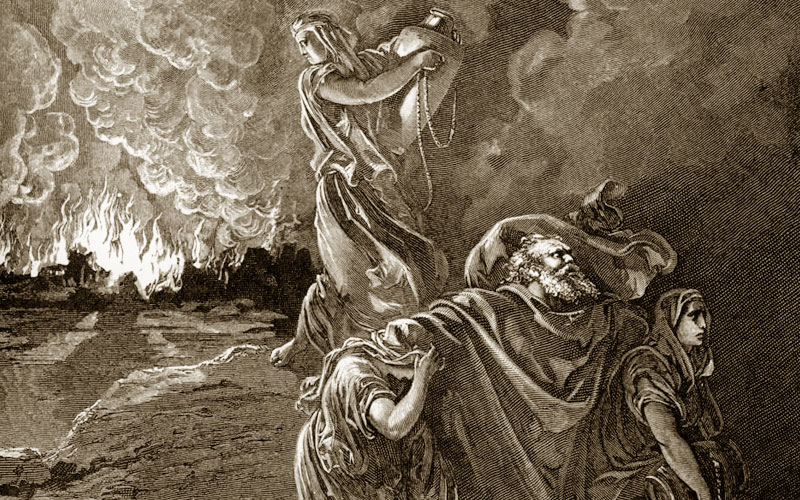
How Much Does God Hate Sin?

Flight of Lot

Sin is not taken very seriously by many in our society. People ignore it, make excuses for it, and joke about it. This casual attitude is in stark contrast with the way God views sin.

There are three examples from the book of Genesis that clearly demonstrate to us just how much God hates sin. We will briefly look at each of these examples as well as how they compare with God’s view of sin under the gospel age.
Continue Reading

Harvest Is Past

Countryside

In Jeremiah 8, the prophet condemned the people of Jerusalem for their sins. The condemnation was not for an occasional misstep, but for the persistent practice of sin and their stubborn refusal to repudiate it: “Why then has this people, Jerusalem, turned away in apostasy? They hold fast to deceit, they refuse to return” (Jeremiah 8:5).

The deceit to which they held fast consisted of the lies of the scribes (Jeremiah 8:8) and of the priests who would say “‘Peace, peace,’ but there is no peace” (Jeremiah 8:11). They had become so accustomed to their sin that they were no longer “ashamed of the abomination they had done…and they did not know how to blush” (Jeremiah 8:12). They had replaced the Lord with “graven images” and “foreign idols” (Jeremiah 8:19).

After outlining this miserable state of the people, the prophet said, “Harvest is past, summer is ended, and we are not saved” (Jeremiah 8:20).
Continue Reading

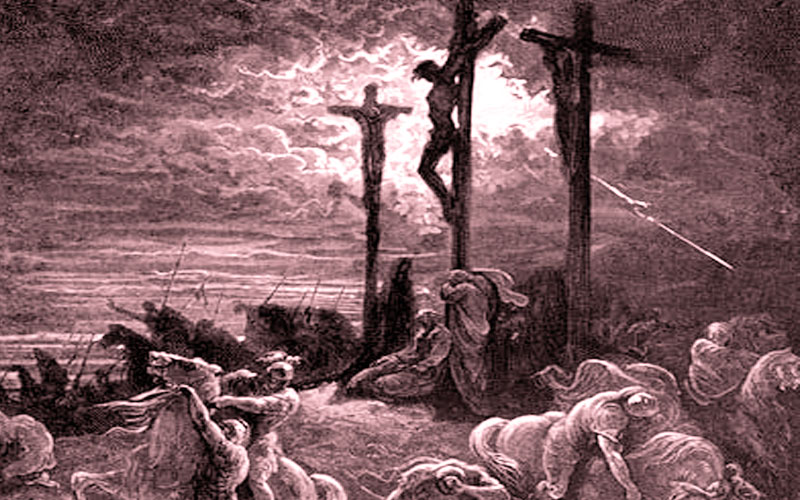
What Was Said About Jesus on the Cross

Crucifixion of Christ

Jesus’ death on the cross is the central event of the Bible. It is the sacrifice that made forgiveness, redemption, and salvation possible for all mankind. Jesus foretold of His death (Matthew 16:21). The Scriptures prophesied of this event (Psalm 22; Isaiah 53; et al.). Sufficient evidence has been provided to produce belief.

In addition to all the divinely given evidence, the gospel writers also recorded comments from some uninspired men as they spoke about Jesus and His crucifixion. It is interesting to see what others understood about Him, even some without the benefit of Old Testament teaching.
Continue Reading

What Is Truth?

Truth, newspaper

What is truth?” This was the question Pilate asked Jesus after hearing the Lord’s claim that He came to testify to the truth (John 18:36-37). When we think about truth, we must understand two things: (1) it is unchanging and (2) it is the same message for all. The word of God is truth (John 17:17). His word does not change (1 Peter 1:25) and is to be preached to all people everywhere (Mark 16:15).

Many have the idea that there can be many truths – you may have your own truth, and I may have mine. This is not what the Bible teaches. The same message of truth is for all. The differences come from our perception of the truth. These perceptions can be very different, despite a common message.

In the minds of man, truth can have various characteristics. Let us consider the conflicting characteristics of truth depending on the perspective of the hearer.
Continue Reading