Balm of Gilead

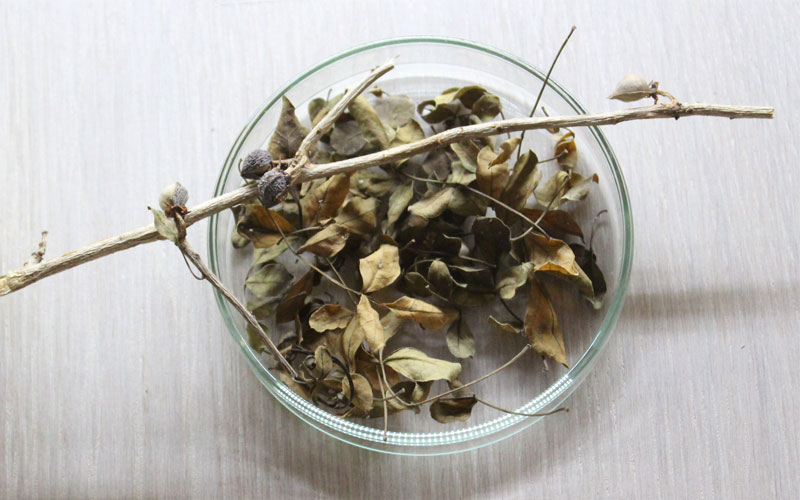
By Deror_avi - Own work, CC BY-SA 3.0, https://commons.wikimedia.org/w/index.php?curid=36512852

We sometimes sing the song, “Did You Think to Pray?” In one of the verses, it mentions the “Balm of Gilead.” This may be an unfamiliar term to us. What exactly is the Balm of Gilead? In order to have a better understanding and appreciation for the words we are singing, let us notice what the Bible says about it.
Continue Reading
What Judas Brought to the Garden

Judas Betrays Jesus

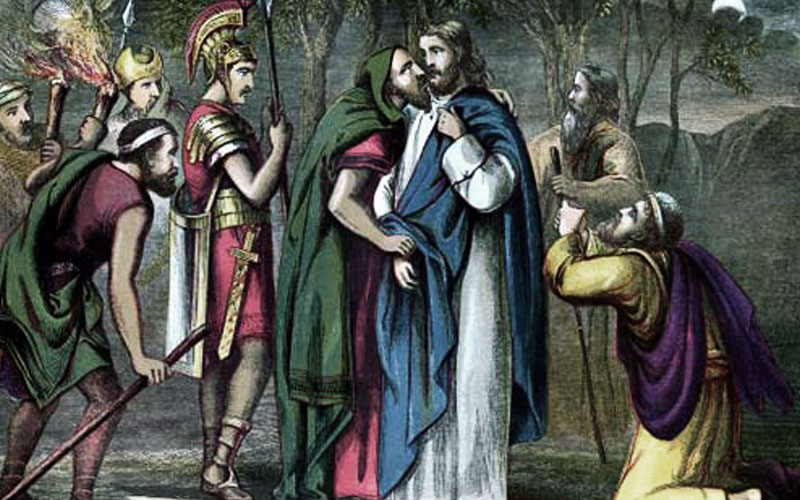
Judas is one of the most well-known villains in the Bible. Most people recognize him as being the one to betray Jesus. His decision to betray the Lord is what might be expected by one of his character. Jesus called him the “son of perdition” (John 17:12). He was identified as a thief (John 12:4-6). After betraying Jesus, instead of repenting and making things right, “he went away and hanged himself” (Matthew 27:4-5). Peter also pointed out that all of this was foreknown by God and revealed in prophecy (Acts 1:16-20).

Shortly before being betrayed, Jesus “went forth with His disciples over the ravine of the Kidron, where there was a garden, in which He entered with His disciples” (John 18:1). It was here in the garden where Judas would betray the Lord. He knew the place to go because “Jesus had often met there with His disciples” (John 18:2).

So Judas went to the garden to betray Jesus. But notice what he brought with him. “Judas then, having received the Roman cohort and officers from the chief priests and the Pharisees, came there with lanterns and torches and weapons” (John 18:3). It is interesting to see what Judas brought to the garden, particularly in light of what Jesus brought to the world.
Continue Reading

Know Well the Condition of Your Flocks

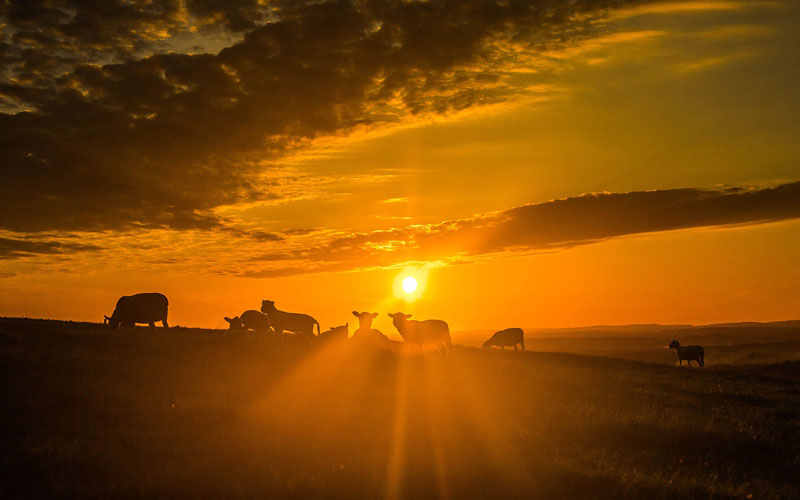
Sheep at sunset

Our country is in the midst of a recession. The economic outlook for the future is uncertain. Unemployment continues to rise. The national debt is ballooning at an astronomical rate. Naturally, people are worried about their financial situation, both for the present and the future.

Despite all of this, we have the responsibility to provide for ourselves (2 Thessalonians 3:10), our families (1 Timothy 5:8), and be able to help those in need (Ephesians 4:28). Paul told us of the importance of working hard so as to not be a burden to anyone (1 Thessalonians 2:9; 2 Thessalonians 3:8). But how can we do this if the economy collapses?

Christians ought to first consult the Bible to see what instructions are contained there that would relate to this economic crisis. The proverb writer has a very important reminder for us that we should notice, particularly with the current progression we are seeing in this country.
Continue Reading

All Spiritual Blessings in Christ

Ephesians 1:3

Paul began his letter to the Ephesians by offering praise to God: “Blessed be the God and Father of our Lord Jesus Christ” (Ephesians 1:3). There are many reasons why God is worthy of all praise and honor; but in this passage, Paul directed our attention to the spiritual blessings we have from Him. We give glory to God because he has “blessed us with every spiritual blessing in the heavenly places in Christ” (Ephesians 1:3).

As Paul continued, he listed some of the spiritual blessings available to us:
Continue Reading

The Fertile Fields of Sin in Sodom

Lot and the Men of Sodom

Shortly after receiving the promises from God, Abram (Abraham) journeyed out of Egypt with his nephew Lot (Genesis 13:1). A problem soon arose between Abram’s herdsmen and Lot’s herdsmen because the land was unable to support all of their livestock (Genesis 13:6-7). Abram proposed that they separate in order to resolve the conflict and allowed Lot to choose which direction he would go (Genesis 13:8-9). Notice what the text says about his decision:

Lot lifted up his eyes and saw all the valley of the Jordan, that it was well watered everywhere—this was before the Lord destroyed Sodom and Gomorrah—like the garden of the Lord… So Lot chose for himself all the valley of the Jordan, and Lot journeyed eastward. […] Lot settled in the cities of the valley, and moved his tents as far as Sodom” (Genesis 13:10-12).

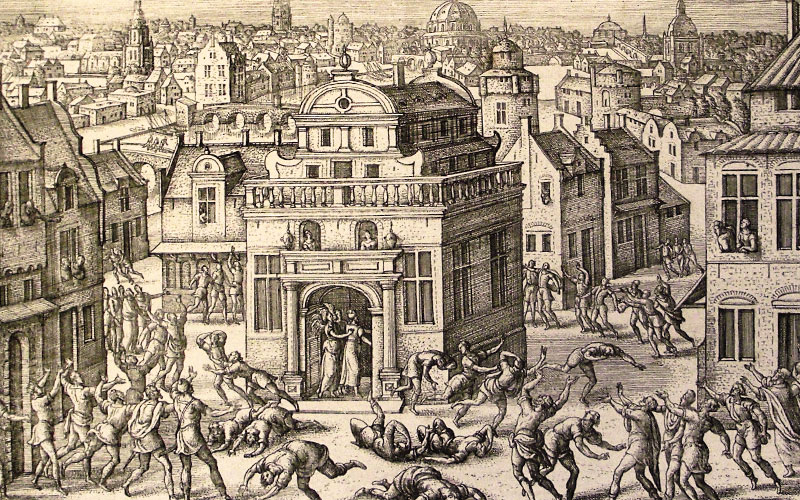
While the area around Sodom provided fertile ground for his livestock, Lot ignored a very significant fact about the city: “The men of Sodom were wicked exceedingly and sinners against the Lord” (Genesis 13:13). Just as the ground was fertile to produce vegetation, conditions among the inhabitants of Sodom were fertile to produce the great wickedness in that city.
Continue Reading

What Have You Done?

Cain and Abel

What have you done?” Children often hear this question from their parents. They quickly learn that this question means three things: (1) they did something wrong, (2) they were caught, and (3) there are consequences to follow.

Our heavenly Father asked this question twice in the early chapters of the Bible with the same kind of meaning. The first came after Adam and Eve sinned by eating of the forbidden fruit. He asked Eve, “What is this you have done?” (Genesis 3:13). Following that, Cain sinned when he murdered his brother Abel. When God confronted Cain, He asked, “What have you done?” (Genesis 4:10).

There are lessons for us today from this question.
Continue Reading

A Call for Praise to the Lord

Psalm 100 is a call for all men to praise the Lord. It also reminds us of the reasons we are to praise Him and what our attitude should be in our praise.

Shout joyfully to the Lord, all the earth.

Serve the Lord with gladness; come before Him with joyful singing.

Know that the Lord Himself is God; it is He who has made us, and not we ourselves; we are His people and the sheep of His pasture.

Enter His gates with thanksgiving and His courts with praise. Give thanks to Him, bless His name.

For the Lord is good; His lovingkindness is everlasting and His faithfulness to all generations.

There are four points in this psalm that relate to our praise to God.
Continue Reading