How People Approach the Judgment

Clouds

And inasmuch as it is appointed for men to die once and after this comes judgment” (Hebrews 9:27).

Death is a reality for everyone. This fact is generally understood. However, many people do not recognize the reality or the seriousness of the other event mentioned by the Hebrew writer – judgment. Paul wrote, “For we must all appear before the judgment seat of Christ, so that each one may be recompensed for his deeds in the body, according to what he has done, whether good or bad” (2 Corinthians 5:10). Even though we will all face this judgment, not everyone approaches this appointment in the same way. Let us briefly consider five ways in which people approach the judgment.
Continue Reading

What Would Jesus Do?

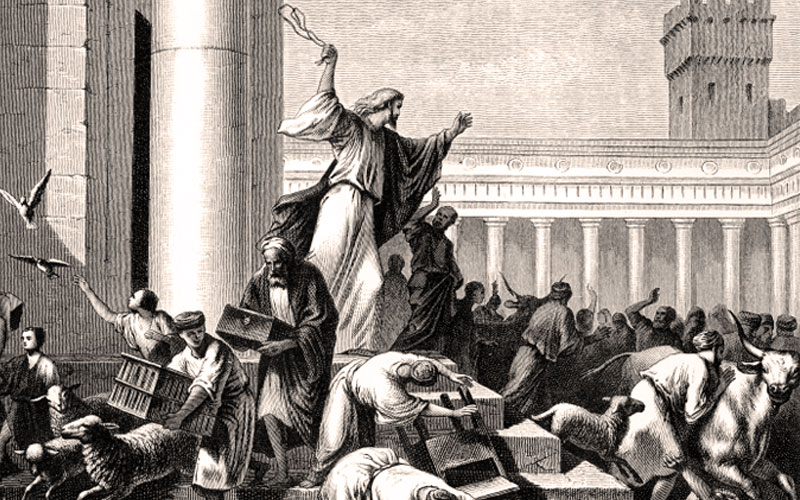
Jesus and the moneychangers

What would Jesus do? This is a question that many religious people ask themselves when they attempt to decide if a particular decision or activity is right. Their intentions might be good – trying to focus on Jesus and please Him. However, this question is the wrong question!

Why is this the wrong question? It is too subjective. It turns our responsibility into nothing more than what we think Jesus would do in a given situation. Instead of asking a subjective question like this (What would Jesus do?), let us consider some other questions to ask – questions for which we can find objective and definitive answers from the Scriptures.
Continue Reading

Traditionalism and Illiteracy

Matthew recorded a discussion that Jesus had with the Pharisees and scribes on the subject of traditions. The Pharisees and scribes questioned Jesus about His disciples breaking “the tradition of the elders” by not washing hands before eating bread (Matthew 15:1-2). Jesus responded by questioning them about another tradition in which they neglected to care for their parents in need, but justified themselves by claiming to have given the money that would have helped them to God (Matthew 15:4-5). Jesus said that keeping their tradition caused them to “transgress the commandment of God” (Matthew 15:3). They had “invalidated the word of God for the sake of [their] tradition” (Matthew 15:6).

The Pharisees and scribes were blinded by traditionalism. While there was nothing wrong with their tradition to wash hands before eating bread, their tradition blinded them to the fact that no sin was committed by one not washing his hands. The other tradition that Jesus cited led to a direct violation of God’s law. Yet their tradition blinded them to their sin of failing to honor their father and mother.

Jesus connected their traditionalism with the prophecy of Isaiah:

You hypocrites, rightly did Isaiah prophesy of you: ‘This people honors Me with their lips, but their heart is far away from Me. But in vain do they worship Me, teaching as doctrines the precepts of men’” (Matthew 15:7-9).

If we look at the context of Isaiah’s prophecy, we can see that Jesus likened their traditionalism to illiteracy.
Continue Reading

Righteous Lot

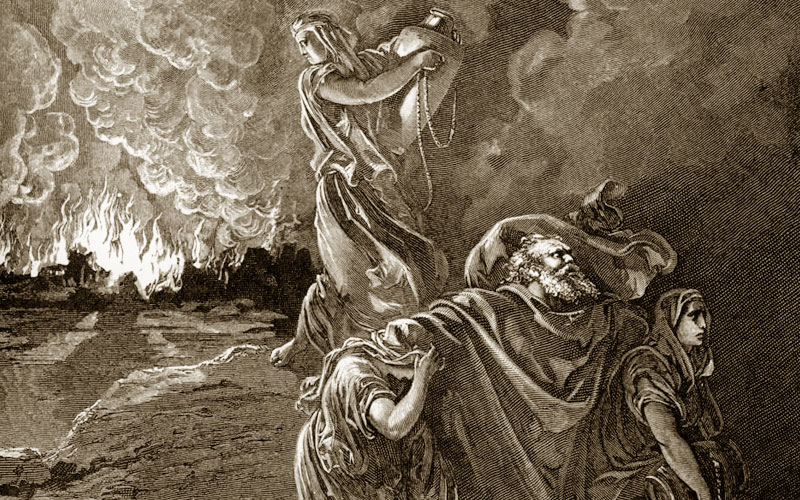
Flight of Lot

And if He condemned the cities of Sodom and Gomorrah to destruction by reducing them to ashes, having made them an example to those who would live ungodly lives thereafter; and if He rescued righteous Lot, oppressed by the sensual conduct of unprincipled men (for by what he saw and heard that righteous man, while living among them, felt his righteous soul tormented day after day by their lawless deeds), then the Lord knows how to rescue the godly from temptation, and to keep the unrighteous under punishment for the day of judgment” (2 Peter 2:6-9).

The inspired apostle Peter described Lot as being “righteous.” Yet this righteous man was not without his faults – he pitched his tent toward Sodom (Genesis 13:12), lived in Sodom (Genesis 14:12), and had to be taken by the hand to flee the city before it was destroyed (Genesis 19:16). In Lot we see one who was righteous; yet he too often focused on the wrong thing, tolerated too much, and compromised with the world.

There are some important lessons we can learn from Lot’s example – both good and bad. We will consider these lessons here.

Continue Reading

The Most Frightening Verse in the Bible

Scared of the Bible

The Bible teaches that our fundamental purpose in life is to “fear God and keep His commandments” (Ecclesiastes 12:13). This fear of God, coupled with obedience, is necessary for one to be accepted by Him. Peter told the household of Cornelius, “I most certainly understand now that God is not one to show partiality, but in every nation the man who fears Him and does what is right is welcome to Him” (Acts 10:34-35).

Besides just telling us that we need to fear God, the Bible provides us with enough information for us to appreciate the fact that “it is a terrifying thing to fall into the hands of the living God” (Hebrews 10:31). Notice just a few examples:
Continue Reading

When Will the Lord Return?

ClockThe “end times” are an intriguing topic to many people. They wonder what will happen and speculate about when the end will be. Throughout the years, some have even tried to predict the date of Christ’s return; yet every one of these dates has come and gone. This is not a sign that the end of the world will not happen, just that there are false prophets who erroneously claim to know the “secret things” of God (Deuteronomy 29:29).



The Scriptures do not provide us with a date for the Lord’s return, nor are we given signs to look for that will signal that the end is approaching. However, the New Testament certainly provides a description for when the Lord will return. So in this article, we will use the Bible to answer this question: When will the Lord return?
Continue Reading

The Problem with Denominations

Church building

Simon Peter answered, ‘You are the Christ, the Son of the living God.’ And Jesus said to him, ‘Blessed are you, Simon Barjona, because flesh and blood did not reveal this to you, but My Father who is in heaven. I also say to you that you are Peter, and upon this rock I will build My church; and the gates of Hades will not overpower it’” (Matthew 16:16-18).

In the first century, there were no denominations – only the Lord’s church (Matthew 16:18). Paul said there is just “one body” (Ephesians 4:4), and that body is the church (Ephesians 1:22-23).

But today, unlike the first century, there are thousands of denominations. Is this a problem? Many will say “no.” They have been taught to “join the church of your choice” because “one church is as good as another.” But the Scriptures teach that this is a problem. Why? In this article we will notice four reasons why denominationalism is a problem.
Continue Reading