To the Law and to the Testimony!

Holding Out the Bible

When one scans the religious landscape, particularly the segment of religious people who claim to be Christians, it does not take long to see a broad range of doctrines, beliefs, and practices. How is it that people that claim to follow Christ can believe and teach things that are not only different from each other, but completely contradictory to one another? The answer lies in how we use God’s divine standard.

The standard that God has given us is His word. It contains the truth (Psalm 119:160; John 17:17). His word is the standard that will judge us in the last day (John 12:48). Therefore, if we want to please the Lord, we must follow His word (John 14:15; Psalm 119:11).

To the law and to the testimony!” (Isaiah 8:20). These words must be our attitude. Do the things we believe, teach, and practice harmonize with the word of God? When a question arises, our first response must be to consult God’s word.
Continue Reading

Some Thoughts on Persecution

Persecution

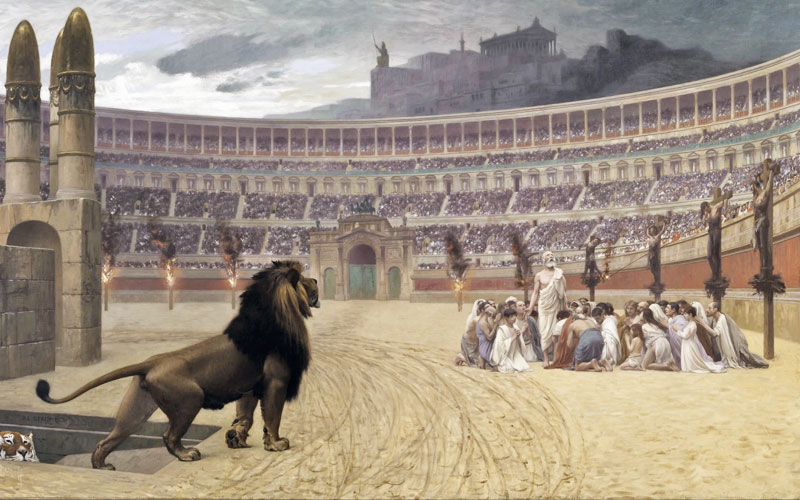
The Bible plainly affirms that all Christians will face persecution. “Indeed, all who desire to live godly in Christ Jesus will be persecuted” (2 Timothy 3:12). Of course, we may not all face the same degree of persecution. Some will be persecuted severely while others, in comparison, will face only minor persecution. Jesus indicated to Peter that he would have to die for His faith even though John might not (John 21:18-22). Today, there is relatively little physical persecution against Christians in this country, but there are brethren around the world in much more difficult situations. This should not surprise us. We will all be persecuted, but not with equal severity.

Even though a degree of persecution is inevitable, we are to pray that some persecution may be avoided. Paul told Timothy that Christians are to pray for those in civil governments “so that we may lead a tranquil and quiet life in all godliness and dignity. This is good and acceptable in the sight of God our Savior” (1 Timothy 2:2-3). One of the roles God has given to civil governments is implied in this chapter. Civil authorities are to create and preserve an environment in which Christians can freely practice their religion. This means that the civil authorities are to refrain from persecuting Christians and are to protect their citizens (including Christians) from persecution by others. It is good in God’s sight to pray for our government and those around the world that this type of environment may be maintained.

Why should we pray for civil authorities to do their job in preventing persecution? It is not simply for selfish reasons (because we do not want to face persecution). Rather, it is because persecution hinders the teaching of the gospel. Paul went on to explain why it is good in the sight of God for governments to provide and maintain a peaceful environment. It is because God “desires all men to be saved and to come to the knowledge of the truth” (1 Timothy 2:4). When Christians are unable to “lead a tranquil and quiet life in all godliness and dignity” (1 Timothy 2:2), it is harder for them to do the work they need to do in spreading the gospel.
Continue Reading

Who Is Qualified to Preach the Gospel?

Preaching

It is a commendable thing for one to desire to preach the gospel. Yet not everyone should do it. James wrote, “Let not many of you become teachers, my brethren, knowing that as such we will incur a stricter judgment” (James 3:1). Preaching the gospel is a serious matter.

How would one become qualified to preach the gospel? Many denominations require that their preachers (or pastors/ministers) complete some sort of training at a college or seminary. Some of our brethren believe a preacher should attend a certain college or complete some type of preacher training program or that these somehow make him more able to teach. But if we really want to know what to expect of one who desires to preach, we need not look any farther than the word of God. The New Testament provides a description of one who is qualified (fit) to preach the gospel.
Continue Reading

Some Thoughts from 2 Timothy

In February we’re going to start studying 1 & 2 Timothy and Titus in the Sunday morning Bible class I teach. Tonight I’ve been working on the study guides. When I write a study guide, I divide them up a lesson per chapter. At the top of the page in each lesson I list a key verse in the chapter that states one of the main points.

After I finished 2 Timothy, I noticed a pattern in the verses I had chosen. 2 Timothy 1:13, 2:15, 3:16, and 4:2.
Continue Reading

Measures of a Sound Church

Church building

How can we know if a local church is a sound church? First, what do we mean by a sound church? This particular phrase is not used in the New Testament. But the word “sound” is used to describe teaching, doctrine, and words (1 Timothy 1:10; 2 Timothy 1:13; 4:3). The Greek word which is translated “sound” means to have good health, to be well, and to be uncorrupted. This word can certainly be used in reference to a local church. So how do we know if a church is “sound”?
Continue Reading

Immodesty in Dress: Who is to Blame?

Moral standards are being lowered all around us. One obvious area is in the type of dress people wear. Clothing generally has become shorter, tighter, and lower-cut. The problem of immodest dress has affected members of the Lord’s church as well. Some are either so bold or so ignorant that they even dress immodestly to the assembly of the saints. Who is to blame for this rising problem among God’s people?
Continue Reading

The Gospel of the Grace of God

Paul and the Ephesian Elders

On his way to Jerusalem, Paul stopped in Miletus to meet with the elders from the church in Ephesus (Acts 20:17ff). In this farewell address, Paul reminded them that the message he brought to them was “the gospel of the grace of God” (Acts 20:24). This was the message that Paul preached “everywhere in every church” (1 Corinthians 4:17). He preached the gospel to those who were already Christians (Romans 1:15) and to those who had not yet heard of Jesus (Romans 15:20). The gospel is the message that Jesus told His apostles to preach (Mark 16:15) and is the message that we must preach today (Galatians 1:8-9).
Continue Reading